Molecule · ketone
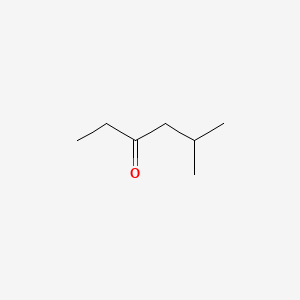
5-methyl-3-hexanone
Found in 3 ingredients. We hold no measured concentration for it in any of them yet, so we cannot say where it is strong enough to smell.
Working on a formulation or a product line? This compound data is available by API for R&D teams.
01How little it takes
No published odour threshold on file for 5-methyl-3-hexanone.
02Where it turns up
- Drinks2
- Grains, nuts & fats1
of the 3 ingredients that contain it, by food group
03What it travels with
Too few ingredients to say what it travels with.
What does 5-methyl-3-hexanone smell like?
We hold no odour description for 5-methyl-3-hexanone.
Which foods contain 5-methyl-3-hexanone?
We list 3 ingredients that contain it, but presence is not the same as smell. What matters is how much is there compared with how little it takes to notice it. That ratio is the odour activity value (OAV): above 1, you can smell it.
Found in
Measured foods first, then real food profiles, then thin or composite records (marked). The figure beside each is how many compounds that ingredient has in total, not the amount of 5-methyl-3-hexanone in it. ✓n = sources that recorded the link.
How strong is 5-methyl-3-hexanone?
Our working odour threshold is 56.92 ppb, from 1 source (none by SIDA, so treat it as approximate).
Thresholds in published tables
| Medium | Median | Range | Values | Papers | Papers agree? |
|---|---|---|---|---|---|
| air | 51.7 µg/L air | 51.7–51.7 | 3 | 1 | one paper |
Numbers printed in open-access papers, grouped by the medium the table states. Median and full range; “agree” means two or more papers whose middle 80% of values sit within 100×. Not reviewed.
- Volatility
- high
Is 5-methyl-3-hexanone safe to eat?
A substance matching this name is listed by FEMA as generally recognized as safe (GRAS) for use as a flavoring: FEMA number 4769, published in GRAS 26. Check current FDA and EFSA guidance for your market and use level.
- FEMA number
- 4769 ? partial match
- Publication
- GRAS 26
- FEMA name
- 5-Mercapto-5-methyl-3-hexanone
| Food category | Typical | Maximum |
|---|---|---|
| baked goods | 2.5 | 5 |
| beverages, alcoholic | 0.3 | 2.5 |
| beverages, nonalcoholic | 0.1 | 0.5 |
| breakfast cereals | 0.1 | 0.3 |
| cheeses | 0.3 | 0.5 |
| chewing gum | 5 | 10 |
| condiments and relishes | 0.3 | 0.5 |
| confections and frostings | 0.3 | 2.5 |
| egg products | 0.3 | 0.5 |
| fish products | 0.3 | 0.5 |
| frozen dairy | 1 | 10 |
| fruit ices | 0.5 | 5 |
| gelatins and puddings | 0.3 | 2.5 |
| gravies | 0.3 | 0.5 |
| hard candy | 2.5 | 12.5 |
| instant coffee and tea | 0.1 | 1 |
| jams and jellies | 0.5 | 2.5 |
| meat products | 0.3 | 0.5 |
| milk products | 0.1 | 0.5 |
| poultry | 0.3 | 0.5 |
| processed vegetables | 0.3 | 0.5 |
| seasonings and flavors | 0.3 | 0.5 |
| snack foods | 0.3 | 0.5 |
| soft candy | 0.5 | 2.5 |
| soups | 0.3 | 0.5 |
| sweet sauces | 0.3 | 0.5 |
Typical vs maximum reported addition levels in finished food. A regulatory ceiling reference; verify against the current GRAS publication for your product category.
Source: FEMA GRAS publications 1–33.
5-methyl-3-hexanone questions
Which foods contain 5-methyl-3-hexanone?
We list 3 ingredients that contain 5-methyl-3-hexanone.
How strong is 5-methyl-3-hexanone?
Our working odour threshold for 5-methyl-3-hexanone is 56.9 ppb.
Look up another compound — search by name, CAS number, PubChem CID, or FEMA #.
Get a molecule-level pairing breakdown each week — which ingredients share a compound, and why it matters at the table. Free, no spam.
Prefer an account? Create a free account to save pairings and unlock the full chemistry.
Try the pairing tools to see which ingredient combinations rely on 5-methyl-3-hexanone, or compare two ingredients side by side.
Cite this analysis
Compound Kitchen (2026). 5-methyl-3-hexanone compound data sheet. https://compkitchen.com/compound/5-methyl-3-hexanone. Accessed 2026-11-03.
@misc{compkitchen_compound_5_methyl_3_hexanone_compound_data_sheet_2026,
  title  = {5-methyl-3-hexanone compound data sheet},
  author = {{Compound Kitchen}},
  year   = {2026},
  url    = {https://compkitchen.com/compound/5-methyl-3-hexanone},
  note   = {Accessed: 2026-11-03}
}
Methodology DOI: 10.5281/zenodo.19719459 · CC BY 4.0 · Citations are a request, not a requirement.