Champaca
Floral and sweet notes from cis-linalool oxide; floral from trans-beta-ionone.
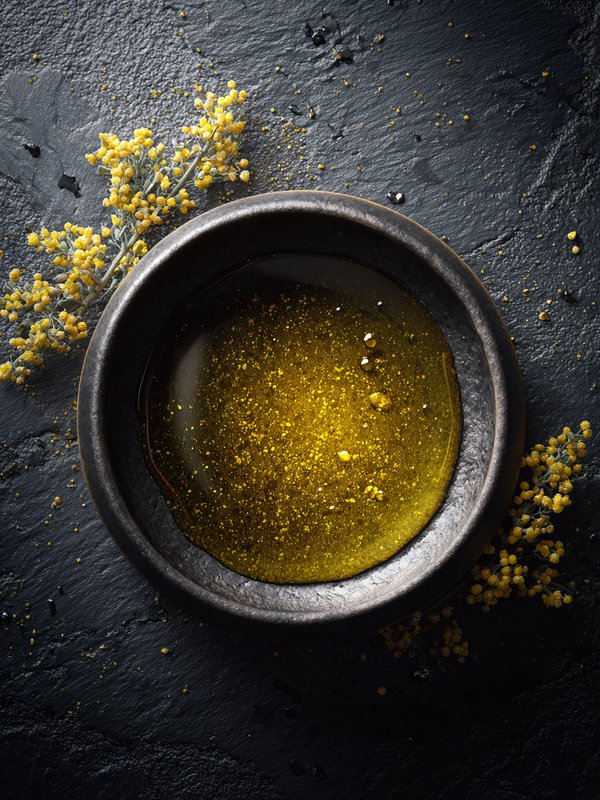
Champaca is a flower whose aroma is led by cis-linalool oxide (floral, sweet) and trans-beta-ionone (floral).
What goes with champaca
No recipe in our pairing index combines champaca with another ingredient often enough to list.
Champaca pairing chart
Scroll sideways to see every column →
| Partner | Shared aroma | Shared molecules | Recipes together | Rank among all pairs |
|---|---|---|---|---|
| apricot | moderate | 45 | 0 | top 26% |
| mango | moderate | 48 | 0 | top 28% |
| plumcot | moderate | 19 | 0 | top 33% |
| plum | moderate | 47 | 0 | top 33% |
| raspberry | moderate | 43 | 0 | top 33% |
| plum wine | moderate | 24 | 0 | top 34% |
| passionfruit | moderate | 37 | 0 | top 34% |
| port wine | moderate | 26 | 0 | top 34% |
| blackberry | moderate | 47 | 0 | top 34% |
| rose wine | moderate | 24 | 0 | top 35% |
| champagne | moderate | 23 | 0 | top 35% |
| peach | moderate | 47 | 0 | top 35% |
| jasmine | moderate | 14 | 0 | top 35% |
| tamarind | moderate | 36 | 0 | top 36% |
| litchi | moderate | 27 | 0 | top 36% |
| fig | moderate | 39 | 0 | top 36% |
| starfruit | moderate | 31 | 0 | top 37% |
| papaya | moderate | 44 | 0 | top 37% |
| cognac brandy | moderate | 32 | 0 | top 38% |
| strawberry | moderate | 53 | 0 | top 39% |
Ordered by pairing score. Shared aroma: how much of their aroma chemistry overlaps (strong, moderate or low against all ingredient pairs). Rank: where the pair sits among random ingredient pairs on CompKitchen. Shared molecules counts every molecule the two have in common, not only aroma ones. Each partner links to a side-by-side comparison.
Champaca flavor profile
Champaca carries 112 flavor molecules in our data, 89 of them volatile enough to smell and 29 of them key food odorants, the molecules shown to drive food aroma. The aromas that lead its profile, strongest measured first: cis-linalool oxide (floral, sweet), trans-beta-ionone (floral), methyl decanoate (wine) and trans-linalool oxide (floral, sweet).
Why champaca pairs the way it does
Champaca's pairing hooks are hexyl acetate (fruity, apple), which 10 of its 10 best partners also carry but only 14% of all ingredients do; and ethyl octanoate (fruity, wine), which 9 of its 10 best partners also carry but only 12% of all ingredients do. Partners that share them, like apricot, mango and plumcot, share more with champaca than the background chemistry most foods carry.
How cooks use champaca
Key aroma molecules in champaca
Scroll sideways to see every column →
| Molecule | Smells like | Why it matters |
|---|---|---|
| cis-linalool oxide | floral, sweet, earthy | In 11 of 861 ingredients. |
| trans-beta-ionone | floral | In 7 of 861 ingredients; a key food odorant. Shared with raspberry. |
| methyl decanoate | wine | In 12 of 861 ingredients. Shared with plum and blackberry. |
| trans-linalool oxide | floral, sweet, earthy | In 9 of 861 ingredients. |
| cis-3-hexenyl isovalerate | green, fruity, apple | In 15 of 861 ingredients. |
| dihydro-beta-ionone | amber, dry, earthy | In 21 of 861 ingredients. Shared with apricot, raspberry and passionfruit. |
| cis-beta-ocimene | citrus, herb, flower | In 7 of 861 ingredients. |
| alpha-ionone | violet, fruity, woody | In 46 of 861 ingredients. Shared with apricot, raspberry and blackberry. |
Ordered by measured strength in champaca (concentration against odour threshold) where studies report it, then by how rare the molecule is across foods. Smell words are each molecule's own published description. Key food odorants are the molecules shown to drive food aroma (Dunkel et al. 2014).
Does it go with what you have?
ButterUntested
No recipe in our pairing index uses both, moderate shared aroma, top 49% of pairs. They share ethyl octanoate (fruity, wine). Compare →
LemonUntested
No recipe in our pairing index uses both, moderate shared aroma, bottom 32% of pairs. They share eucalyptol (eucalyptus, herbal). Compare →
GarlicUntested
No recipe in our pairing index uses both, low shared aroma, bottom 20% of pairs. Compare →
SugarUntested
No recipe in our pairing index uses both, low shared aroma, bottom 29% of pairs. Compare →
ChiliUntested
No recipe in our pairing index uses both, moderate shared aroma, top 50% of pairs. They share ethyl octanoate (fruity, wine). Compare →
GingerUntested
No recipe in our pairing index uses both, moderate shared aroma, top 45% of pairs. They share eucalyptol (eucalyptus, herbal). Compare →
Champaca pairing questions
What makes champaca smell like champaca?
Its leading aroma molecules are cis-linalool oxide (floral, sweet), trans-beta-ionone (floral) and methyl decanoate (wine), out of the 89 aroma molecules on record for it.
What's a good substitute for champaca?
The closest molecular substitutes for champaca are cassia, plum, raspberry — ingredients that share the highest fraction of champaca's flavor compounds.
Is champaca vegan, gluten-free, or kosher?
Champaca is vegan and is gluten-free, dairy-free, nut-free, kosher, halal.
The science in full
Scientific name: Magnolia. Wikidata Q157017 (CC0)
All 112 molecules on record
67 of 112 are distinctive to champaca (in under 10% of foods). Ordered by measured impact in champaca, then by how distinctive the molecule is.
340 research papers on champaca
- Analytical and biological assessment of Magnolia champaca L. stem bark: Integrating ATR-FTIR, GC-MS, thrombolytic activity, brine shrimp lethality and molecular docking. · 2025
- Chemometric-guided diversity study of black turmeric essential oils from Eastern India revealed industrially feasible quality chemotypes with promising bioactivities. · 2025
- Integrative omics reveals mechanisms of biosynthesis and regulation of floral scent in Cymbidium tracyanum. · 2025
- Physiological and Biochemical Analysis Revealing the Key Factors Influencing 2-Phenylethanol and Benzyl Alcohol Production in Crabapple Flowers. · 2024
- A high-quality haplotype genome of Michelia alba DC reveals differences in methylation patterns and flower characteristics. · 2024
Explore more: pair it · find substitutes · discover novel pairings · get this data via the API · how we score pairs