Fried Potato
Sweet notes from 2-undecenal; alliaceous and cabbage from diisopropyl disulfide.
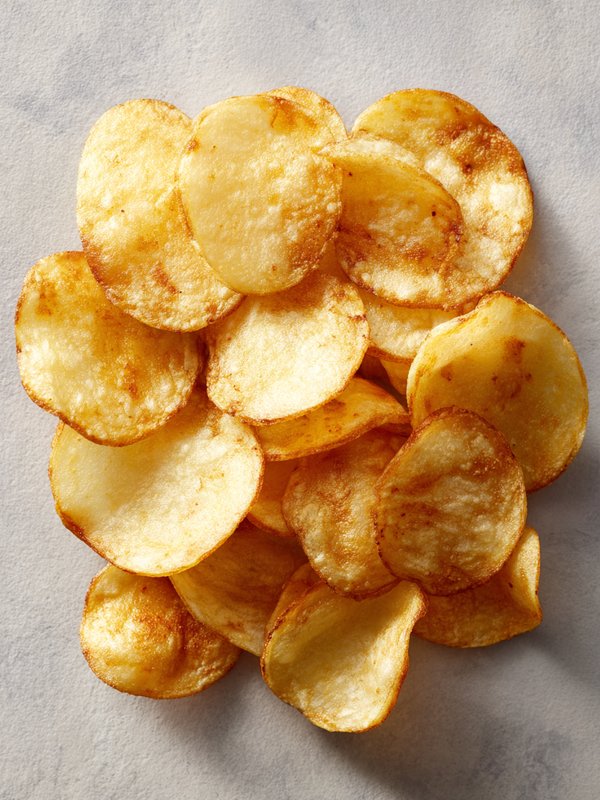
Fried Potato is a bakery whose aroma is led by 2-undecenal (sweet) and diisopropyl disulfide (alliaceous, cabbage).
What goes with fried potato
No recipe in our pairing index combines fried potato with another ingredient often enough to list.
Fried Potato pairing chart
Scroll sideways to see every column →
| Partner | Shared aroma | Shared molecules | Recipes together | Rank among all pairs |
|---|---|---|---|---|
| beef processed | moderate | 35 | 0 | top 32% |
| filbert | moderate | 27 | 0 | top 33% |
| pecans | moderate | 21 | 0 | top 35% |
| butter | moderate | 26 | 0 | top 40% |
| onion | low | 20 | 0 | top 41% |
| clam | moderate | 16 | 0 | top 41% |
| caviar | moderate | 12 | 0 | top 41% |
| wholewheat bread | moderate | 12 | 0 | top 41% |
| peanut oil | moderate | 11 | 0 | top 42% |
| fatty fish | moderate | 10 | 0 | top 43% |
| mutton | moderate | 17 | 0 | top 43% |
| trassi | moderate | 10 | 0 | top 45% |
| pork | low | 31 | 0 | top 46% |
| peanut | moderate | 33 | 0 | top 46% |
| durian | moderate | 18 | 0 | top 46% |
| krill | moderate | 8 | 0 | top 47% |
| malt | moderate | 21 | 0 | top 47% |
| canola oil | low | 17 | 0 | top 48% |
| green beans | moderate | 22 | 0 | top 48% |
| brioche | low | 4 | 0 | top 48% |
Ordered by pairing score. Shared aroma: how much of their aroma chemistry overlaps (strong, moderate or low against all ingredient pairs). Rank: where the pair sits among random ingredient pairs on CompKitchen. Shared molecules counts every molecule the two have in common, not only aroma ones. Each partner links to a side-by-side comparison.
Fried Potato flavor profile
Fried Potato carries 59 flavor molecules in our data, 42 of them volatile enough to smell and 17 of them key food odorants, the molecules shown to drive food aroma. The aromas that lead its profile, strongest measured first: 2-undecenal (sweet), diisopropyl disulfide (alliaceous, cabbage), 2-acetyl-3-methylpyrazine (roasted, nutty) and trans-2-nonenal (cardboard, fatty).
Why fried potato pairs the way it does
Fried Potato's pairing hooks are 2-nonanone (fruity, floral), which 8 of its 10 best partners also carry but only 18% of all ingredients do; and 2,3-pentanedione (butter, sweet), which 6 of its 10 best partners also carry but only 10% of all ingredients do. Partners that share them, like filbert, pecans and butter, share more with fried potato than the background chemistry most foods carry.
How cooks use fried potato
Key aroma molecules in fried potato
Scroll sideways to see every column →
| Molecule | Smells like | Why it matters |
|---|---|---|
| 2-undecenal | sweet | In 29 of 861 ingredients; a key food odorant. Shared with beef processed, filbert and pecans. |
| diisopropyl disulfide | alliaceous, cabbage, meaty | In 7 of 861 ingredients. Shared with beef processed. |
| 2-acetyl-3-methylpyrazine | roasted, nutty, toasted | In 9 of 861 ingredients. Shared with clam. |
| trans-2-nonenal | cardboard, fatty, cucumber | In 47 of 861 ingredients; a key food odorant. Shared with beef processed, filbert and butter. |
| 1-propanethiol | sulfurous, onion, cabbage | In 24 of 861 ingredients. Shared with beef processed and onion. |
| methyl isobutyrate | flower | In 24 of 861 ingredients; a key food odorant. |
| trans-2-decenal | waxy, orange, fatty | In 35 of 861 ingredients; a key food odorant. Shared with beef processed, filbert and butter. |
| cis-2-hexen-1-ol | green, leafy, fresh | In 15 of 861 ingredients. Shared with butter. |
Ordered by measured strength in fried potato (concentration against odour threshold) where studies report it, then by how rare the molecule is across foods. Smell words are each molecule's own published description. Key food odorants are the molecules shown to drive food aroma (Dunkel et al. 2014).
Does it go with what you have?
ButterUntested
No recipe in our pairing index uses both, moderate shared aroma, top 40% of pairs. They share trans-2-nonenal (cardboard, fatty). Compare →
LemonUntested
No recipe in our pairing index uses both, low shared aroma, bottom 19% of pairs. Compare →
GarlicUntested
No recipe in our pairing index uses both, low shared aroma, bottom 42% of pairs. Compare →
SugarUntested
No recipe in our pairing index uses both, low shared aroma, bottom 7% of pairs. Compare →
ChiliUntested
No recipe in our pairing index uses both, low shared aroma, top 49% of pairs. Compare →
GingerUntested
No recipe in our pairing index uses both, low shared aroma, bottom 17% of pairs. Compare →
Fried Potato pairing questions
What makes fried potato smell like fried potato?
Its leading aroma molecules are 2-undecenal (sweet), diisopropyl disulfide (alliaceous, cabbage) and 2-acetyl-3-methylpyrazine (roasted, nutty), out of the 42 aroma molecules on record for it.
What's a good substitute for fried potato?
The closest molecular substitutes for fried potato are filbert, pecans, basmati rice — ingredients that share the highest fraction of fried potato's flavor compounds.
Is fried potato vegan, gluten-free, or kosher?
Fried Potato is vegan and is gluten-free, dairy-free, nut-free, kosher, halal.
The science in full
All 59 molecules on record
40 of 59 are distinctive to fried potato (in under 10% of foods). Ordered by measured impact in fried potato, then by how distinctive the molecule is.
136 research papers on fried potato
- Establishment of a quantitative GC-MS method for acrylamide detection and in situ kinetic study of acrylamide formation in fried potato slices. · 2026
- Characterization of differences in volatile compounds and metabolites of six varieties of potato with different processing properties. · 2025
- Formation of Aroma Characteristics in Roasted Camellia oleifera Seeds. · 2025
- Comparative analysis of physicochemical properties, sensory characteristics, and volatile flavor compounds in five types of potato chips. · 2025
- Analysis of volatile and odor-active compounds in charcoal-grilled marinated beef using gas chromatography-mass spectrometry and gas chromatography-olfactometry. · 2025
Explore more: pair it · find substitutes · discover novel pairings · get this data via the API · how we score pairs