legume roasted & savory fruity Vegan Gluten-free Dairy-free Nut-free Kosher Halal
Allergens soy

Soybean

Soybean is a legume with 520 known flavor compounds. The most distinctive molecule is 2-methyl-3-(methyldisulfanyl)furan. It pairs most strongly with gochujang, sharing 28 flavor compounds. Soybean appears in 185 recipes, most commonly in korean cuisine.

Scientific name: Glycine max
species of plant in the Fabaceae family
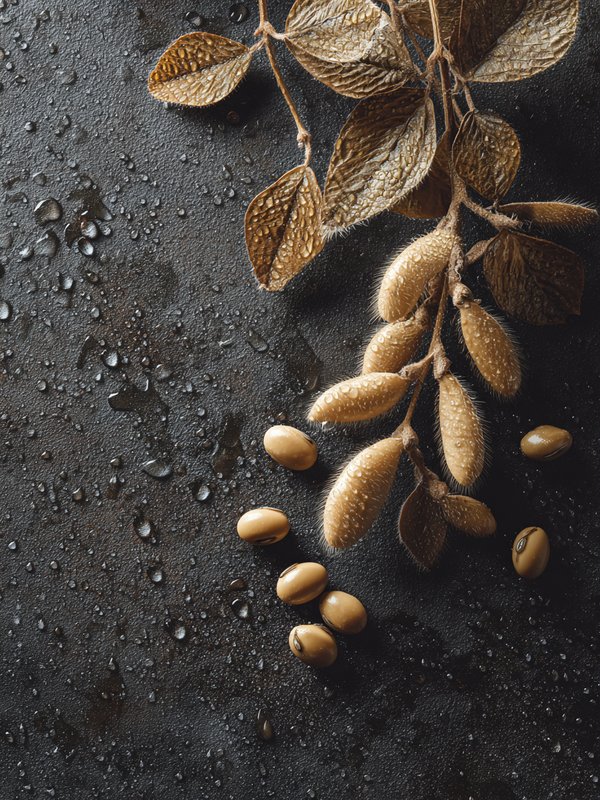
Soybean — ingredient reference image
520
Flavor Compounds
8
Top Pairings of 860 scored

Flavor Science

Flavor Profile Breakdown

520 compounds

How Soybean's 520 known compounds break down by aroma category. Percentages are of compounds with a known label.

fruity 83 · 16.0%
floral 62 · 11.9%
sour 62 · 11.9%
green 48 · 9.2%
roasted 45 · 8.7%
other 45 · 8.7%
caramel 22 · 4.2%
herbal 22 · 4.2%
spicy 20 · 3.8%
sulfurous 17 · 3.3%

Most Used In

Flavor Compounds

240 of 520 are distinctive to soybean — they appear in under 10% of foods. The remainder are the background most foods share.

Ordered by measured impact in soybean — concentration against odour threshold where both are published, then by how distinctive the molecule is across the graph. Molecules measured here but not established as odorants sit below those that are.

Molecules volatile enough to reach the nose.
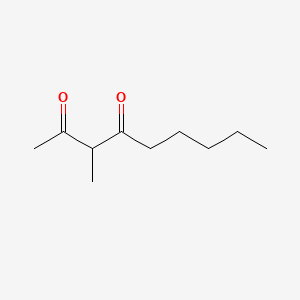
3-methylbutanal linalool 2-heptenal 2-octenal 2-pentylfuran decanoic acid heptanol 2-methyl-3-(methyldisulfanyl)furan isoamyl aldehyde 3-methyl-2,4-nonanedione 3-isobutyl-2-methoxypyrazine 2-furfurylthiol ethyl 2-mercaptopropionate nonyl aldehyde 2-methyl-3-furanthiol methyl furfuryl disulfide octan-3-one butanoic acid ethyl ester sotolone ethyl 4-methylpentanoate 3-hydroxy-4,5-dimethyl-2(5h)-furanone hexanoic acid methyl ester sotolon 2,3-diethyl-5-methylpyrazine 2-acetyl-1-pyrroline phenylmethanol homofuraneol 1-octene-3-ol ethyl 2-phenylacetate benzoic acid, methyl ester +296 more pterin-6-carboxylic acid asparagine citric acid catechin inositol stearic acid fisetin rutin isoquercitrin lignoceric acid procyanidin b2 vitexin taxifolin daidzein squalene genistein stigmasterol luteolin phloretin apigenin zeaxanthin aconitic acid naringenin myricetin quercetin kaempferol nervonic acid thiamine hydrochloride maltose lotaustralin niacinamide 1-octen-one 2-phenylfuran 3-methylation-propanal benzoaldehyde beta-laurene n-pentylpyrazine 2-ethyl-4-hydroxy-5-methylfuran-3-one 4-methylnonane 5(or 2)-ethyl-4-hydroxy-2(or 5)-methyl-3(2h)-furanone 5-pentyl-2-oxolanone ehrlich-derived aldehydes linear fatty aldehydes methanethiol ester caproate glutamic acid 3-methyl-4-heptanone phenethylethanol 4-hexenoic acid 4-penten-2-ol trans-2-undecen-1-ol 2-octene 3-furfural butane-2,3-diol furanones 2,3-heptanedione 2-hydroxy-3-pentanone 2,3-diethylpyrazine 3-penten-2-ol ethyl carbamate 2-phenyl-2-butenal

Most Abundant Molecules

7 of 520 quantified

Ranked by median concentration across published studies. Only 7 of Soybean's 520 compounds have a measured concentration in the literature — the rest are confirmed present but not yet quantified. Bars are log-scaled.

1 3-methylbutanal 6.0 mg/kg
2 linalool 580 µg/kg
3 2-heptenal 43 µg/kg
4 2-octenal 4 µg/kg
5 decanoic acid 4 µg/kg
6 2-pentylfuran 0.06 µg/kg
7 heptanol 0.008 µg/kg

Best Pairings for Soybean

Ranked by how often cooks actually use them together, across 453,403 recipes — the familiar answer first. Each pairing still carries its molecular score and shared-compound count; only the ORDER differs. Counts cover every characterised molecule the two ingredients have in common, not only the aroma-active ones, so they can exceed an ingredient’s aroma-compound count. For the chemistry-first view — where the surprising pairings live — see the molecular network below, the side-by-side comparison, or the Pairing Tool.

Molecular Neighborhood

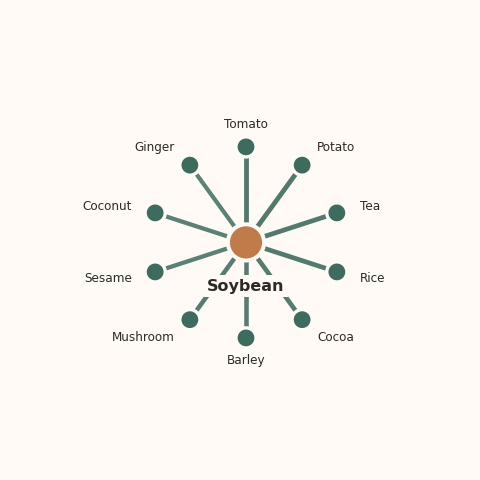
Soybean and its 10 closest compound-sharing relatives. Spoke thickness = shared compounds; circle size = that ingredient's own compound count. Drag to rearrange, scroll to zoom, click to open.

Molecular neighborhood diagram of soybean — top 10 ingredients ranked by shared volatile compounds

Recipes with Soybean

View all →
Research basis

Soybean is supported by 2,156 peer-reviewed papers

Drawn from PubMed + Europe PMC + food-science journals. Click any title to read the full abstract on the original source.