Why it works: Clove and nutmeg match in chemistry and in kitchens. They rank in the top 1% of all ingredient pairs, and cooks put them together in 8,686 recipes. Both carry estragole, which smells anise, licorice. The science ↓
Haunch of Venison Roasted
Ingredients
Directions
The book gives no oven temperature. The 400°F (200°C) in the steps was added when the recipe was transcribed, as a starting point.
Prepare the haunch
Wash the haunch in lukewarm water if the outside is hard, then rub it with butter or lard.
Place it in a dripping pan and cover the top and sides with a paste made of flour and water, about ½ inch thick.
Lay a thin buttered paper over the paste.
Cover with a sheet of parchment paper, securing it with buttered twine.
Pour a little water into the pan.
Roast
Place the pan in a 400°F (200°C) oven.
Baste occasionally with butter and hot water to prevent the paper from burning.
Maintain a strong, steady fire and roast for four to five hours if the haunch is large, checking doneness with a skewer.
In the last half hour, remove the paper and paste.
Baste frequently with claret and butter.
Make the gravy and serve
For the gravy, stew the venison scraps in 1½ pints of water with cloves, nutmeg, salt, and cayenne until reduced by one third.
Strain the mixture and return it to the saucepan, adding currant jelly, claret, and butter mixed with browned and white flour.
Serve the gravy in a gravy boat alongside the venison.
Transcribed from a scanned cookbook and modernised for today's kitchens. Where the book gave no heat or time, or said "a moderate oven", the temperatures and times here may be modern equivalents rather than the book's own figures.
Explore the science
The flavor team
The pairs that carry this dish. Each one is judged two ways: how much their aromas overlap, and how often cooks already put them together.
-
Clove + nutmegtop 1% of all pairsSmell alikestrongCooked together8,686 recipes
Shared aroma: estragole (anise, licorice).
-
Flour + nutmegtop 8% of all pairsSmell alikemoderateCooked together18,623 recipes
Shared aroma: isobutyraldehyde (malty, green).
-
Butter + flourtop 12% of all pairsSmell alikelowCooked together124,287 recipes
Shared aroma: isobutyraldehyde (malty, green).
-
Venison + curranttop 13% of all pairsSmell alikelowCooked together443 recipes
Shared aroma: 1-octen-3-ol (mushroom, earthy).
-
Clove + curranttop 15% of all pairsSmell alikelowCooked together3,038 recipes
Shared aroma: ethyl cinnamate (sweet, balsamic).
Butter and flour barely smell alike, yet cooks put them together in 124,287 recipes: they work on texture and structure more than aroma.
Ranks compare each pair with 20,000 random ingredient pairs on CompKitchen. How we score pairs
What each ingredient does
- Venison haunch
- Forms the main meat, which the paste and paper protect during the long roast.
- Flour
- Forms a protective paste that shields the meat from drying and burning in the oven.
- Butter
- Adds fat and richness, and helps the surface brown and stay moist while basting.
- Currant jelly
- Adds sweetness and a touch of acidity that balances the rich gravy.
- Claret
- Adds acidity and wine flavour to the basting and the gravy.
The step that matters
Removing the paper and paste in the last half hour. Taking the protective layers off late lets the surface dry and brown, while leaving them on too long keeps the outside pale and soft.
Swap the currant
How well each one fits the dish's main ingredients (venison, butter, flour, clove, nutmeg):
- Raisinfits better
- Figfits better
- Lemonfits better
- Currantthe original
Fit is the average pairing score against venison, butter, flour, clove, nutmeg. Candidates are from the same food group and used in at least 100 recipes.
“What each ingredient does” and “The step that matters” were written by Claude from this recipe’s own method and reviewed in samples by CompKitchen.
You might also like
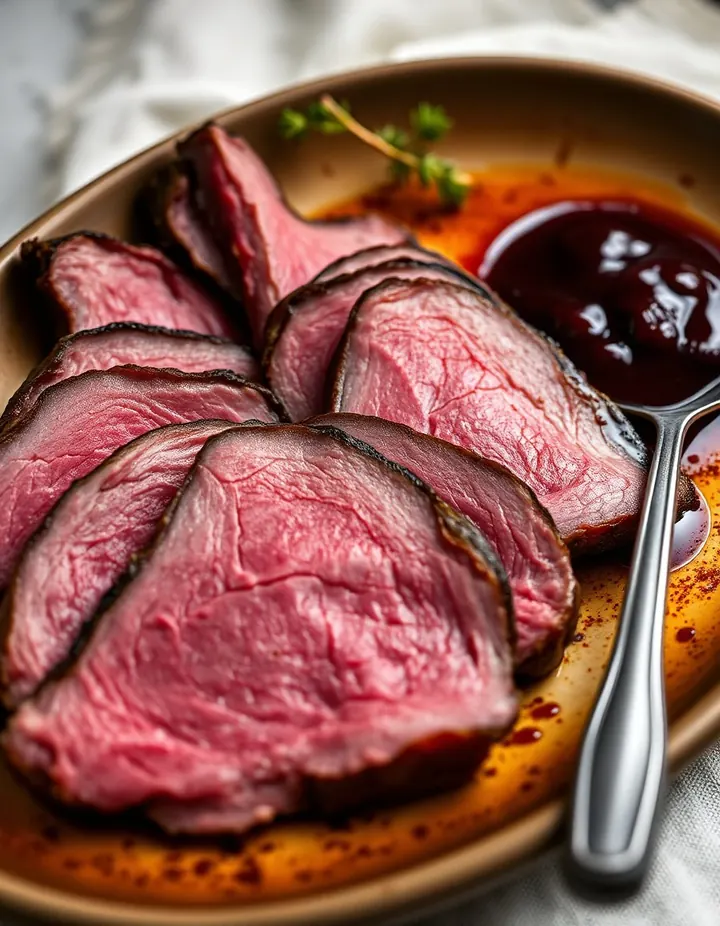 Roast Venison20 recipes
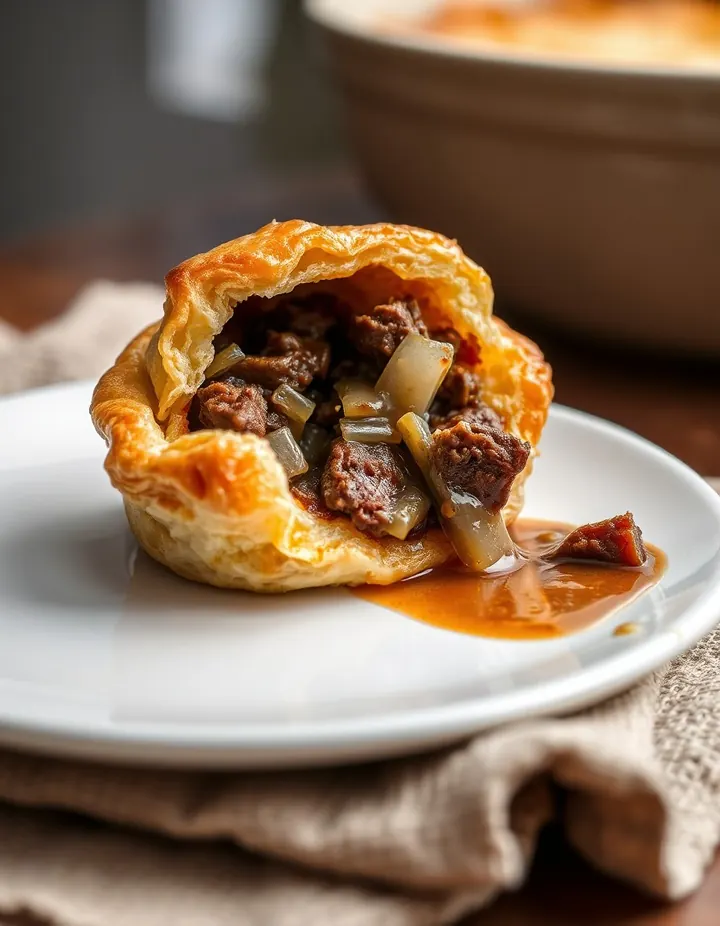 Venison Pasty7 recipes
 Tomato Soup526 recipes
 Brown Bread461 recipes
The free Flavor Lab newsletter: one surprising pairing a week and the molecular reason it works, in 60 seconds. No spam, unsubscribe anytime.
Prefer an account? Create a free account to save pairings and unlock the full chemistry.