Why it works: Cucumber and lettuce match in chemistry and in kitchens. They rank in the top 1% of all ingredient pairs, and cooks put them together in 1,409 recipes. Both carry 2-isopropyl-3-methoxypyrazine, which smells earthy, pea. The science ↓
Dariole of Fillets of Soles
Ingredients
Directions
The book gives no oven temperature. The 350°F (175°C) in the steps was added when the recipe was transcribed, as a starting point.
Prepare the fish
Preheat the oven to 350°F (175°C).
Arrange the fillets of sole in dariole moulds and place them on a baking sheet.
Cover with buttered paper and another baking sheet on top.
Bake for 15 minutes, ensuring the oven is not too hot.
Check if done, then let them cool in the moulds until the next day.
Make the sauce
Make the mayonnaise sauce and warm the aspic jelly until melted.
Mix the aspic into the mayonnaise sauce with a whisk.
If the sauce sets, warm it gently in a bowl of warm water and stir until smooth.
Assemble and serve
To finish, carefully run a knife around each mould and gently release the dariole onto a dish.
Dip each fillet of sole in the mayonnaise sauce to coat them evenly.
Arrange the coated fillets on a clean dish.
Sprinkle finely chopped parsley on top of the fillets.
Peel the cucumber thinly and slice it into rounds.
Finely chop the white part of the cos lettuce.
Transcribed from a scanned cookbook and modernised for today's kitchens. Where the book gave no heat or time, or said "a moderate oven", the temperatures and times here may be modern equivalents rather than the book's own figures.
Explore the science
The flavor team
The pairs that carry this dish. Each one is judged two ways: how much their aromas overlap, and how often cooks already put them together.
-
Cucumber + lettucetop 1% of all pairsSmell alikestrongCooked together1,409 recipes
Shared aroma: 2-isopropyl-3-methoxypyrazine (earthy, pea).
-
Parsley + lettucetop 5% of all pairsSmell alikestrongCooked together1,483 recipes
Shared aroma: trans-2-hexenal (green, leafy).
-
Parsley + cucumbertop 7% of all pairsSmell alikestrongCooked together1,564 recipes
Shared aroma: trans-2-hexenal (green, leafy).
-
Butter + saucetop 15% of all pairsSmell alikelowCooked together15,338 recipes
Shared aroma: ethanol (alcoholic, ethereal).
-
Butter + parsleytop 15% of all pairsSmell alikemoderateCooked together28,563 recipes
Shared aroma: trans-2-hexenal (green, leafy).
Butter and sauce barely smell alike, yet cooks put them together in 15,338 recipes: they work on texture and structure more than aroma.
Ranks compare each pair with 20,000 random ingredient pairs on CompKitchen. How we score pairs
What each ingredient does
- Fillets of sole
- Form the main body of the dariole, setting into a delicate, tender structure when baked gently.
- Mayonnaise sauce
- Adds richness and a smooth, glossy coating over the cooked fish.
- Aspic jelly
- Sets the sauce so it holds a firm, glossy coat on the fish.
- Butter
- Greases the paper that covers the fish, keeping it from sticking during baking.
The step that matters
Keep the oven gentle and let the fish cool fully in the moulds. Fish proteins toughen and dry out when cooked too hot, so a low, gentle oven keeps the fillets tender. Cooling them in the moulds lets them firm up so they release cleanly.
Swap the parsley
How well each one fits the dish's main ingredients (butter, sauce, cucumber, lettuce):
- Capersfits better
- Tarragonfits better
- Parsleythe original
- Dillfits about as well
Fit is the average pairing score against butter, sauce, cucumber, lettuce. Candidates are from the same food group and used in at least 100 recipes.
“What each ingredient does” and “The step that matters” were written by Claude from this recipe’s own method and reviewed in samples by CompKitchen.
You might also like
 Creamy Lettuce Soup8 recipes
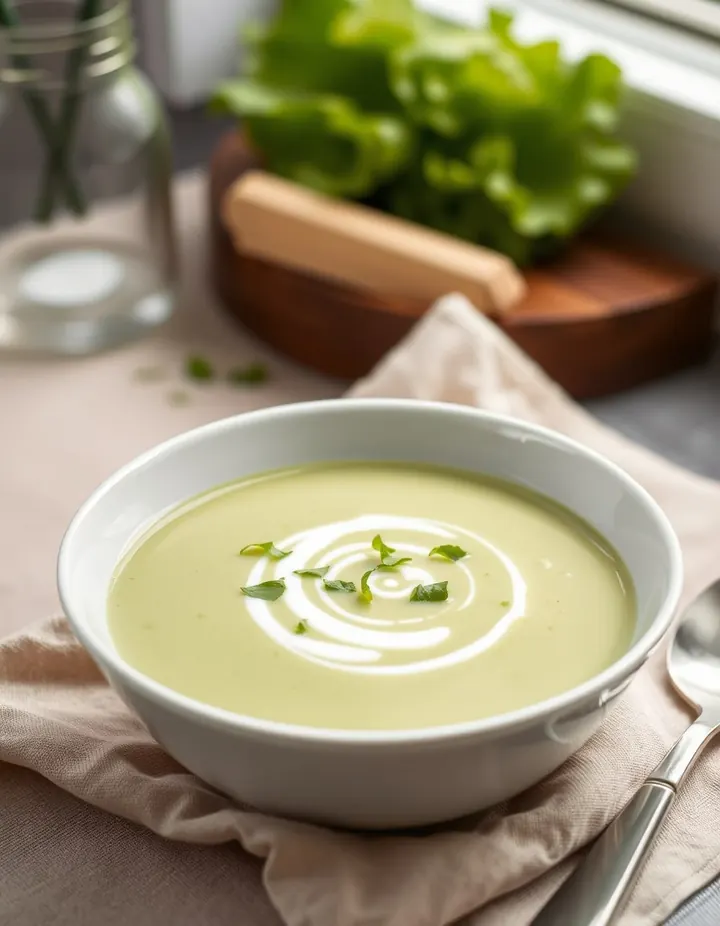 Lettuce Soup8 recipes
 Tomato Soup526 recipes
 Brown Bread461 recipes
The free Flavor Lab newsletter: one surprising pairing a week and the molecular reason it works, in 60 seconds. No spam, unsubscribe anytime.
Prefer an account? Create a free account to save pairings and unlock the full chemistry.