Why it works: Artichoke and lemon match in chemistry and in kitchens. They rank in the top 2% of all ingredient pairs, and cooks put them together in 636 recipes. Both carry 1-octen-3-ol, which smells mushroom, earthy. The science ↓
Artichokes Preserved in Quarters
Ingredients
Directions
Prepare the artichokes
Cut off the stem and trim all the hard leaves from the artichokes.
Cut them into quarters and remove all the fibrous parts.
Round off the bottoms and trim the edges of the remaining leaves.
Parboil the artichoke quarters for 5 minutes, then immerse them in cold water.
Rub each piece with lemon juice.
Prepare them as you would for Artichoke Bottoms.
Can and process
Add the juice of 2 lemons to each quart can.
Seal the cans and boil them in a hot water bath for 1 hour.
Transcribed from a scanned cookbook and modernised for today's kitchens. Where the book gave no heat or time, or said "a moderate oven", the temperatures and times here may be modern equivalents rather than the book's own figures.
Explore the science
The flavor team
The pairs that carry this dish. Each one is judged two ways: how much their aromas overlap, and how often cooks already put them together.
-
Artichoke + lemontop 2% of all pairsSmell alikestrongCooked together636 recipes
Shared aroma: 1-octen-3-ol (mushroom, earthy).
Ranks compare each pair with 20,000 random ingredient pairs on CompKitchen. How we score pairs
What each ingredient does
- Artichokes
- Form the main body of the dish and carry its tender, edible texture.
- Lemons
- Add acidity that brightens flavour and helps keep the artichoke pieces pale.
The step that matters
Sealing and processing the cans. Artichokes are low in acid, so they must be sealed airtight and held at a full boil for the full hour to kill spoilage microbes and keep the contents safe to store.
“What each ingredient does” and “The step that matters” were written by Claude from this recipe’s own method and reviewed in samples by CompKitchen.
You might also like
 Lemon Sauce236 recipes
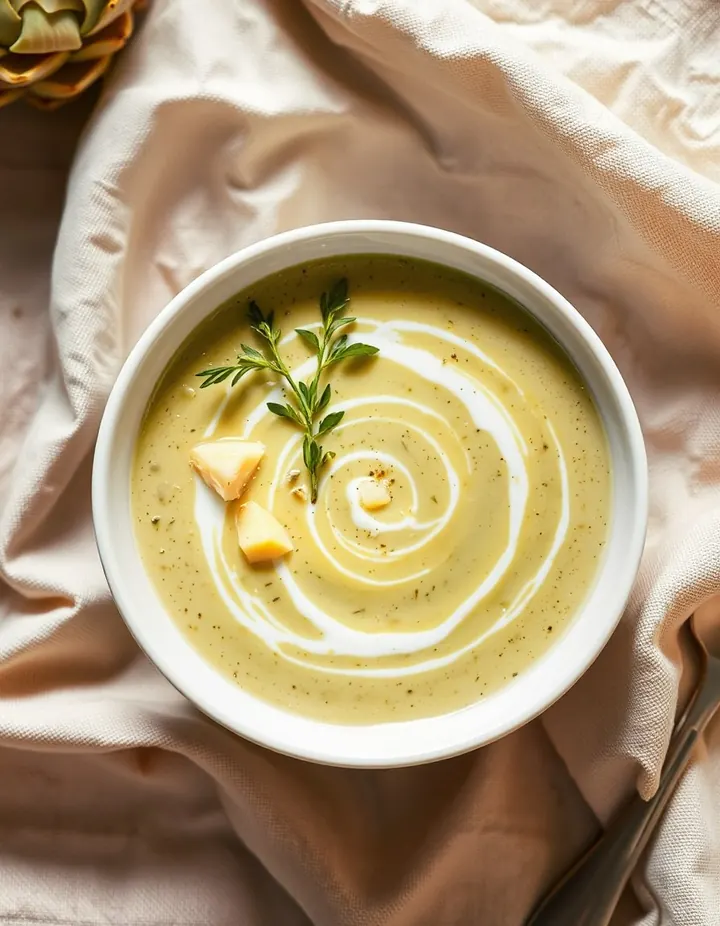 Artichoke Soup55 recipes
 Tomato Soup526 recipes
 Brown Bread461 recipes
The free Flavor Lab newsletter: one surprising pairing a week and the molecular reason it works, in 60 seconds. No spam, unsubscribe anytime.
Prefer an account? Create a free account to save pairings and unlock the full chemistry.