Why it works: Wheat and walnut match in chemistry and in kitchens. They rank in the top 3% of all ingredient pairs, and cooks put them together in 246 recipes. Both carry 1-hexanal, which smells fruit. The science ↓
Graham Bread
Ingredients
Directions
The book says “a hot oven”. The 400°F (200°C) in the steps is the modern equivalent, not the book's own figure.
Make the dough
In a bowl, combine wheat flour, molasses, yeast, salt, and warm water.
Add enough Graham flour to make a stiff dough that can be stirred with a strong spoon.
Mix the dough at night and let it rise overnight.
Shape and bake
In the morning, dissolve baking soda in a little water and mix it into the dough.
Pour the dough into two medium-sized greased pans, filling them about halfway.
Let the dough rise in a warm place until it reaches the top of the pans.
Preheat the oven to 400°F (200°C) and bake for one hour.
Cover the bread with thick brown paper or an old tin cover for the first 20 minutes to prevent hardening.
Transcribed from a scanned cookbook and modernised for today's kitchens. Where the book gave no heat or time, or said "a moderate oven", the temperatures and times here may be modern equivalents rather than the book's own figures.
Explore the science
The flavor team
The pairs that carry this dish. Each one is judged two ways: how much their aromas overlap, and how often cooks already put them together.
-
Wheat + walnuttop 3% of all pairsSmell alikestrongCooked together246 recipes
Shared aroma: 1-hexanal (fruit).
-
Wheat + flourtop 12% of all pairsSmell alikemoderateCooked together4,373 recipes
Shared aroma: isobutyraldehyde (malty, green).
-
Flour + buttertop 12% of all pairsSmell alikelowCooked together124,287 recipes
Shared aroma: isobutyraldehyde (malty, green).
-
Flour + walnuttop 12% of all pairsSmell alikemoderateCooked together5,873 recipes
Shared aroma: isobutyraldehyde (malty, green).
-
Wheat + buttertop 14% of all pairsSmell alikemoderateCooked together2,002 recipes
Shared aroma: (z)-4-heptenal (biscuit, cream).
Flour and butter barely smell alike, yet cooks put them together in 124,287 recipes: they work on texture and structure more than aroma.
Ranks compare each pair with 20,000 random ingredient pairs on CompKitchen. How we score pairs
What each ingredient does
- Wheat flour
- Provides the base structure that the Graham flour stiffens into a workable dough.
- Yeast
- Produces gas during the overnight rise, leavening the dough.
- Porto rico molasses
- Adds sweetness, moisture, and a dark colour to the crumb.
- Baking soda
- Reacts with the dough's acidity to give additional lift and a lighter crumb.
- Graham flour
- Supplies the coarse bran and body that make up the stiff dough and its hearty texture.
The step that matters
Covering the bread for the first 20 minutes. Covering the loaves early limits surface drying and heat exposure, so the crust does not harden before the interior has finished baking.
Swap the walnut
The recipe marks walnut as optional. How well each one fits the dish's main ingredients (wheat, flour, molasses, butter):
- Almondfits better
- Walnutthe original
- Flaxseedfits about as well
- Beansfits about as well
Fit is the average pairing score against wheat, flour, molasses, butter. Candidates are from the same food group and used in at least 100 recipes.
“What each ingredient does” and “The step that matters” were written by Claude from this recipe’s own method and reviewed in samples by CompKitchen.
More graham bread recipes
You might also like
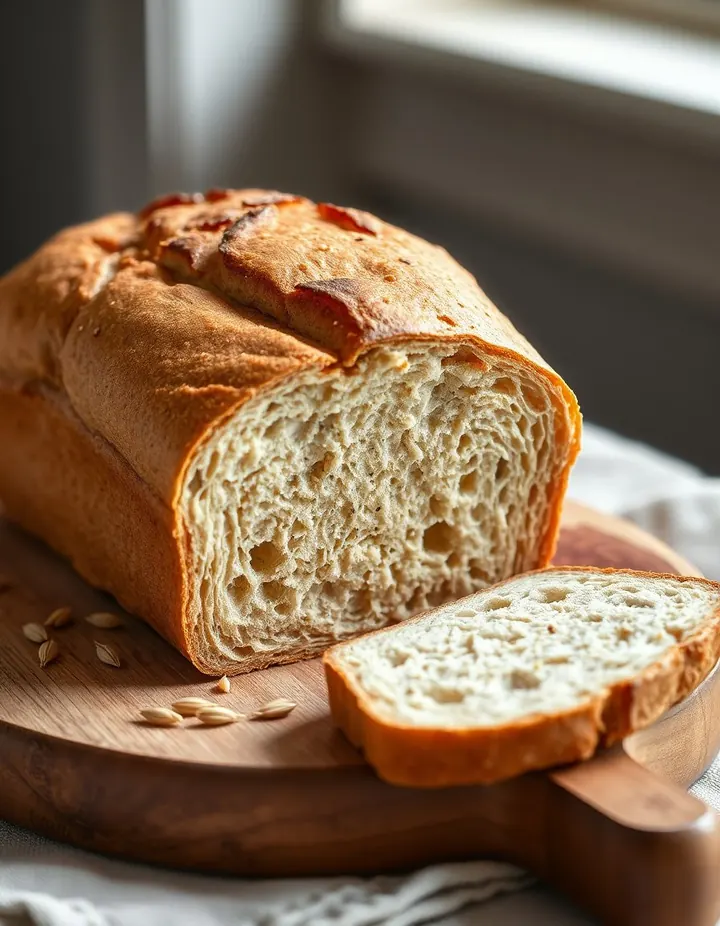 Wheat Bread65 recipes
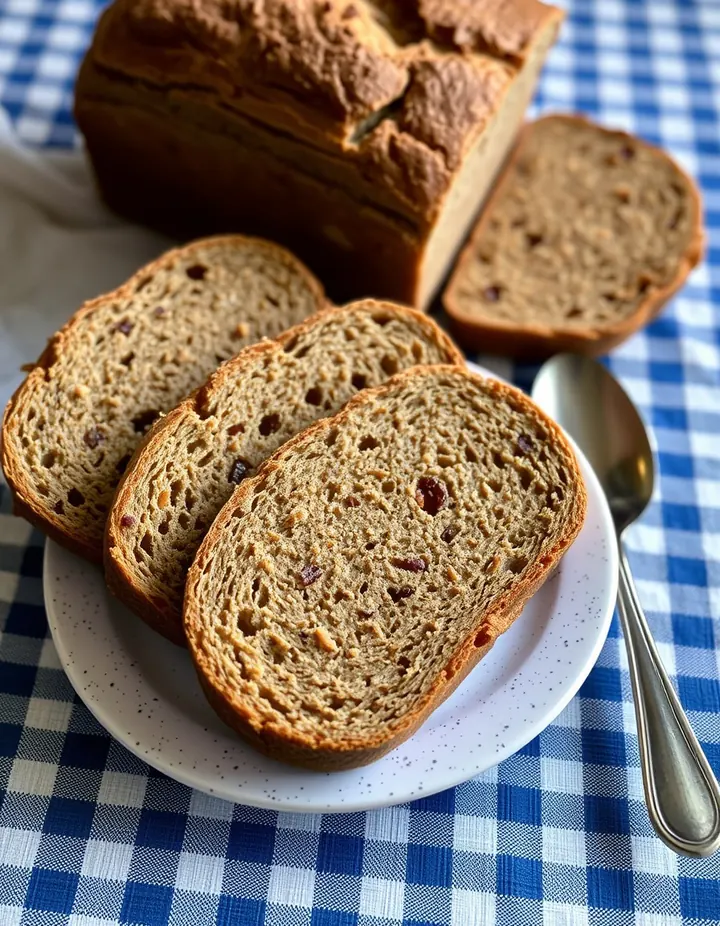 Whole Wheat Bread55 recipes
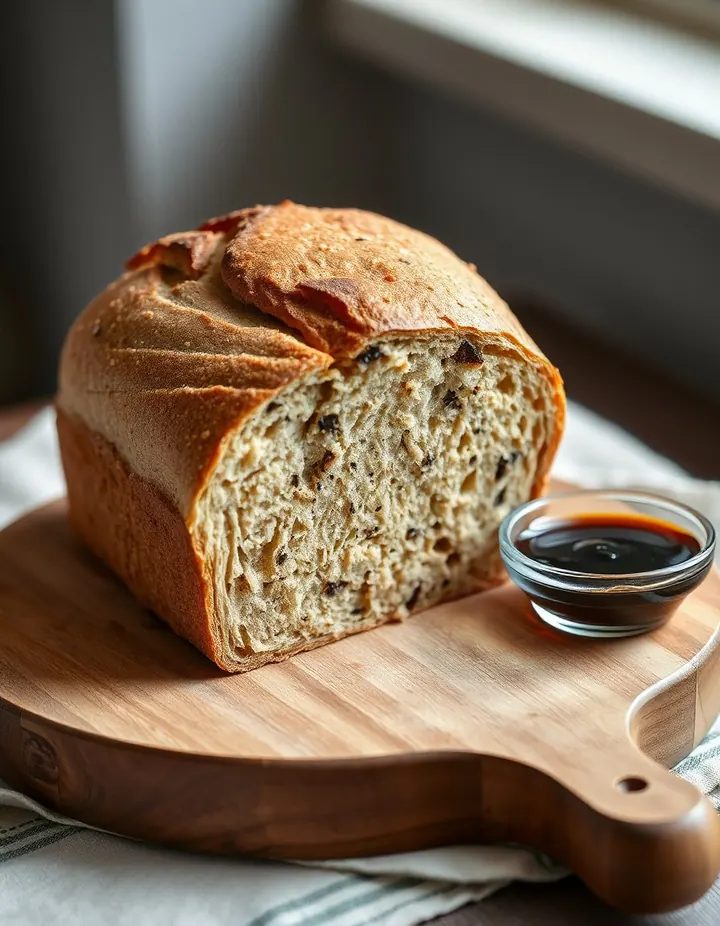 Barley Wheat Bread6 recipes
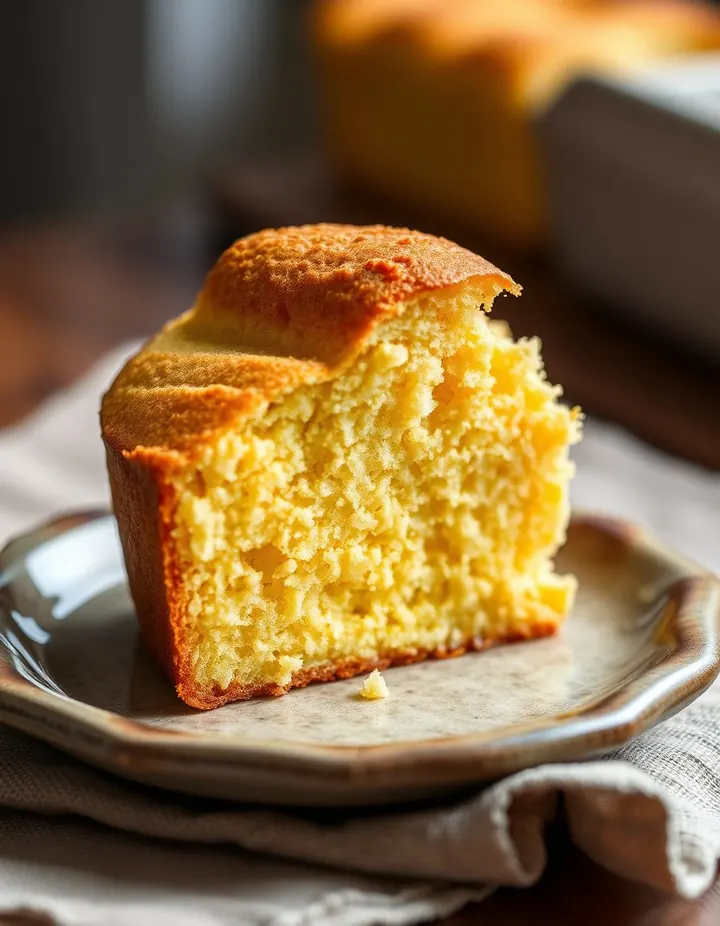 Cornbread345 recipes
The free Flavor Lab newsletter: one surprising pairing a week and the molecular reason it works, in 60 seconds. No spam, unsubscribe anytime.
Prefer an account? Create a free account to save pairings and unlock the full chemistry.