Why it works: Apple and cider are a kitchen classic. They rank in the top 2% of all ingredient pairs, and cooks put them together in 1,238 recipes. Both carry 1-octen-3-one, which smells mushroom, metallic. The science ↓
Cooked Meat for Mince Pies
Ingredients
Directions
Cook the beef
Wash the beef and place it in a kettle with enough water to cover it.
Remove the scum as it reaches boiling point.
Add hot water as needed until the beef is tender.
Season the beef with salt and pepper.
Boil the beef uncovered until it is almost dry.
Set the cooked beef aside to cool, preferably overnight.
Make the filling
The next day, remove bones, gristle, and any tough bits from the beef and chop it finely.
In a large bowl, combine the chopped beef, apples, suet, raisins, currants, citron, brown sugar, molasses, sweet cider, boiled cider, salt, pepper, mace, allspice, cinnamon, nutmegs, and cloves.
Mix the mixture thoroughly.
Warm the mixture on the stove until it is heated through.
Remove the mixture from heat.
Stir in the brandy and Madeira wine.
Store
Transfer the mixture to a crock.
Cover the crock tightly.
Store the mixture in a cold place.
Transcribed from a scanned cookbook and modernised for today's kitchens. Where the book gave no heat or time, or said "a moderate oven", the temperatures and times here may be modern equivalents rather than the book's own figures.
Explore the science
The flavor team
The pairs that carry this dish. Each one is judged two ways: how much their aromas overlap, and how often cooks already put them together.
-
Apple + cidertop 2% of all pairsSmell alikemoderateCooked together1,238 recipes
Shared aroma: 1-octen-3-one (mushroom, metallic).
-
Beef + peppertop 10% of all pairsSmell alikemoderateCooked together18,971 recipes
Shared aroma: 2-isopropyl-3-methoxypyrazine (earthy, pea).
-
Currant + cidertop 10% of all pairsSmell alikelowCooked together500 recipes
Shared aroma: isoamyl acetate (banana, pear).
-
Raisin + curranttop 10% of all pairsSmell alikelowCooked together6,180 recipes
Shared aroma: gamma-nonanolactone (coconut, creamy).
-
Sugar + molassestop 11% of all pairsSmell alikemoderateCooked together9,225 recipes
Shared aroma: ethanol (alcoholic, ethereal).
Ranks compare each pair with 20,000 random ingredient pairs on CompKitchen. How we score pairs
What each ingredient does
- Lean beef
- Provides the meaty base that gives the filling its body and savory depth.
- Suet
- Adds richness and fat that carries flavor and keeps the filling moist.
- Apples
- Contribute moisture and tartness that balance the sweetness of the sugar and molasses.
- Raisins
- Add concentrated sweetness and chewy texture throughout the filling.
- Brown sugar
- Adds sweetness and depth, and helps preserve the filling.
- Molasses
- Adds dark color, sweetness and a rich, slightly bitter flavor.
The step that matters
Boil the beef uncovered until it is almost dry. Boiling off the water concentrates the meat's flavor and leaves it firm enough to chop finely. If it stays wet, the filling will be watery and may spoil sooner in storage.
Flavor stand-ins for the currant
How well each one fits the dish's main ingredients (beef, pepper, apple, raisin, sugar, molasses, cider):
- Figbetter flavor fit
- Plumbetter flavor fit
- Grapebetter flavor fit
- Currantthe original
Fit is the average pairing score against beef, pepper, apple, raisin, sugar, molasses, cider. Candidates are from the same food group and used in at least 100 recipes. This compares flavor only: it does not check the job the ingredient does in the dish (bulk, moisture, acidity, structure).
“What each ingredient does” and “The step that matters” were written by Claude from this recipe’s own method and reviewed in samples by CompKitchen.
You might also like
 Roast Beef211 recipes
 Beef Loaf175 recipes
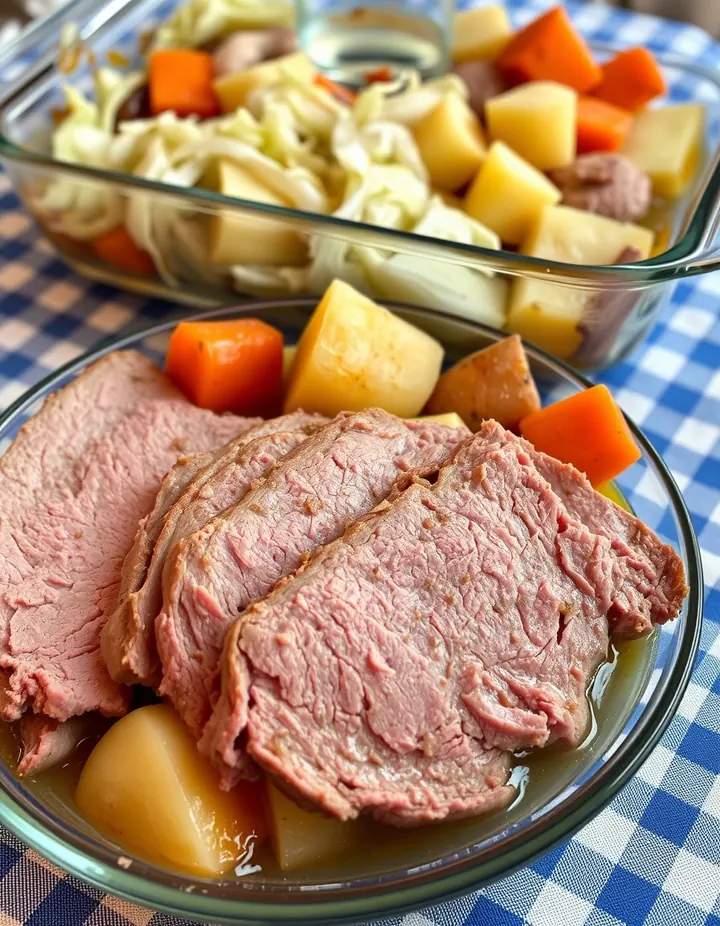 Corned Beef87 recipes
 Beef Broth67 recipes
The free Flavor Lab newsletter: one surprising pairing a week and the molecular reason it works, in 60 seconds. No spam, unsubscribe anytime.
Prefer an account? Create a free account for sign-in; Pro adds the full results and chemistry.