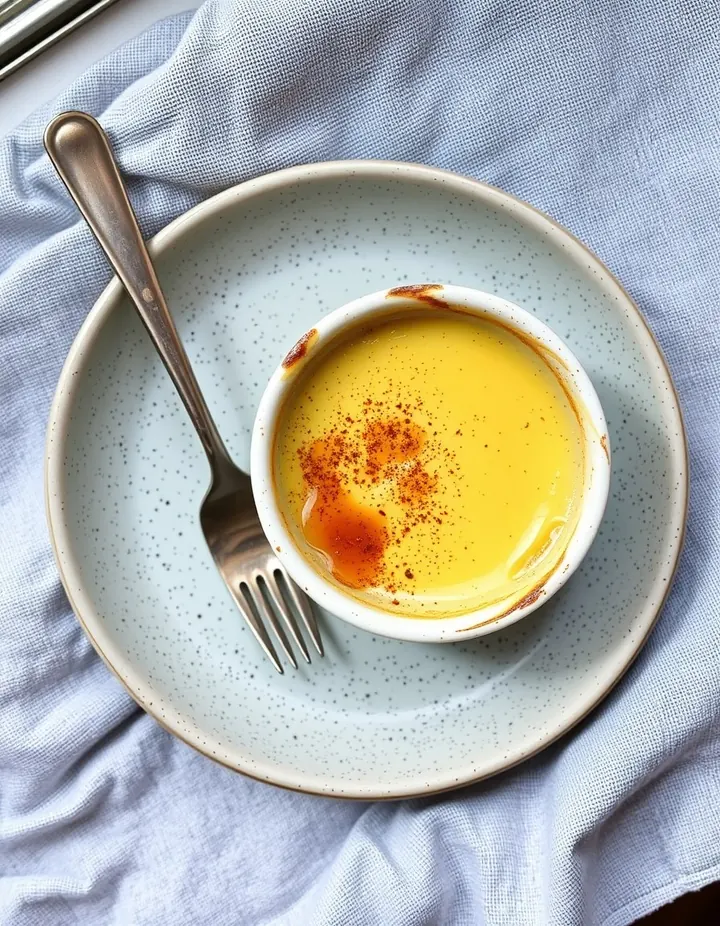
Why it works: Currant and orange are a kitchen classic. They rank in the top 15% of all ingredient pairs, and cooks put them together in 2,034 recipes. Both carry alpha-pinene, which smells pine, turpentine. The science ↓
Cup Custard
Ingredients
Directions
Assemble the glasses
Fill small glasses nearly to the top with cold custard.
Whip the egg whites until stiff, then beat in the currant jelly if using.
Spoon a heaping tablespoon of the meringue onto each glassful and chill until serving.
Make the custard
In a bowl, beat the egg yolks with sugar, orange rind, and salt.
Heat the milk to boiling, then slowly pour it into the egg mixture while beating continuously.
Fill six half-pint custard cups with the mixture.
Place the cups over a steamer set over boiling water, cover, and cook for 10 minutes.
Make the meringue and bake
For the meringue, beat the egg whites until stiff, adding sugar gradually and the orange juice.
Spoon a little meringue onto each custard cup and place in a pan of boiling water in the oven for about 10 minutes to harden.
Transcribed from a scanned cookbook and modernised for today's kitchens. Where the book gave no heat or time, or said "a moderate oven", the temperatures and times here may be modern equivalents rather than the book's own figures.
Photo for illustrative purposes only · Contact us to use it
Explore the science
The flavor team
The pairs that carry this dish. Each one is judged two ways: how much their aromas overlap, and how often cooks already put them together.
-
Currant + orangetop 15% of all pairsSmell alikelowCooked together2,034 recipes
Shared aroma: alpha-pinene (pine, turpentine).
-
Orange + milktop 15% of all pairsSmell alikemoderateCooked together4,696 recipes
Shared aroma: 1-octen-3-one (mushroom, metallic).
-
Currant + milktop 16% of all pairsSmell alikelowCooked together5,475 recipes
Shared aroma: isoamyl acetate (banana, pear).
-
Egg + milktop 18% of all pairsSmell alikemoderateCooked together88,785 recipes
Shared aroma: 2-nonenal (fatty, green).
-
Sugar + milktop 18% of all pairsSmell alikelowCooked together77,875 recipes
Shared aroma: 2-nonenal (fatty, green).
Sugar and milk barely smell alike, yet cooks put them together in 77,875 recipes: they work on texture and structure more than aroma.
Ranks compare each pair with 20,000 random ingredient pairs on CompKitchen. How we score pairs
What each ingredient does
- Egg yolks
- Thicken the custard as they set during gentle heating, giving it body.
- Egg whites
- Whipped into a foam that holds air, giving the meringue its light structure.
- Milk
- Forms the liquid base of the custard, which sets softly as the proteins coagulate.
- Sugar
- Sweetens the custard and helps stabilise the whipped egg white meringue.
The step that matters
Steaming the custard cups gently. Egg proteins thicken as they heat, but too much heat makes them tighten and curdle, leaving the custard grainy and watery. Keeping the cups over gently simmering water sets the custard smoothly.
Swap the currant
The recipe marks currant as optional. How well each one fits the dish's main ingredients (egg, sugar, orange, milk):
- Vanillafits better
- Lemonfits better
- Figfits better
- Currantthe original
Fit is the average pairing score against egg, sugar, orange, milk. Candidates are from the same food group and used in at least 100 recipes.
“What each ingredient does” and “The step that matters” were written by Claude from this recipe’s own method and reviewed in samples by CompKitchen.
You might also like
 Orange Bundt Cake349 recipes
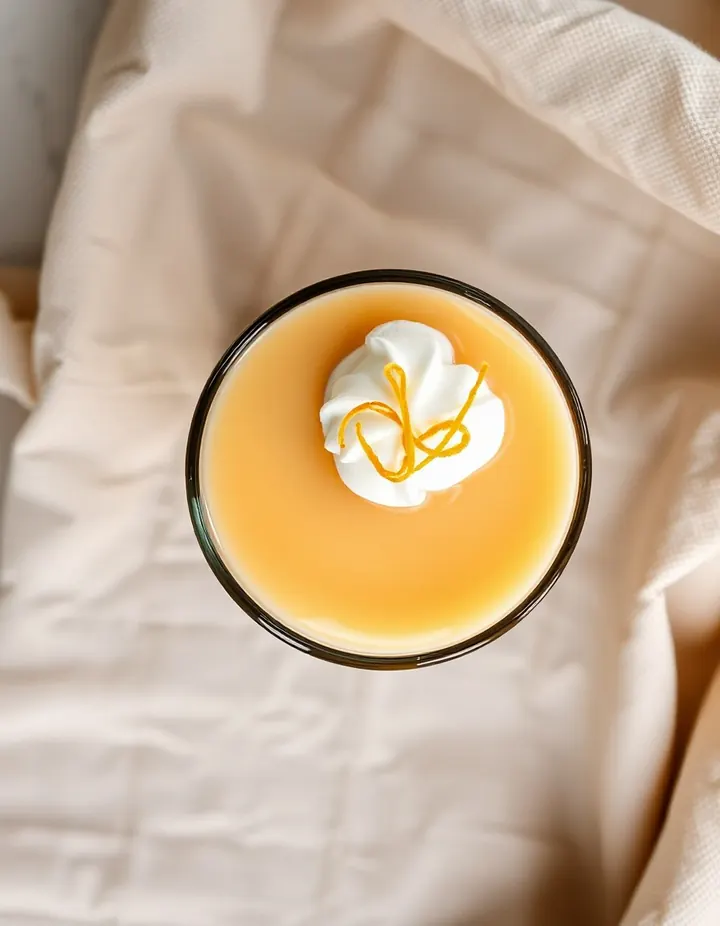 Orange Cream Rice Pudding121 recipes
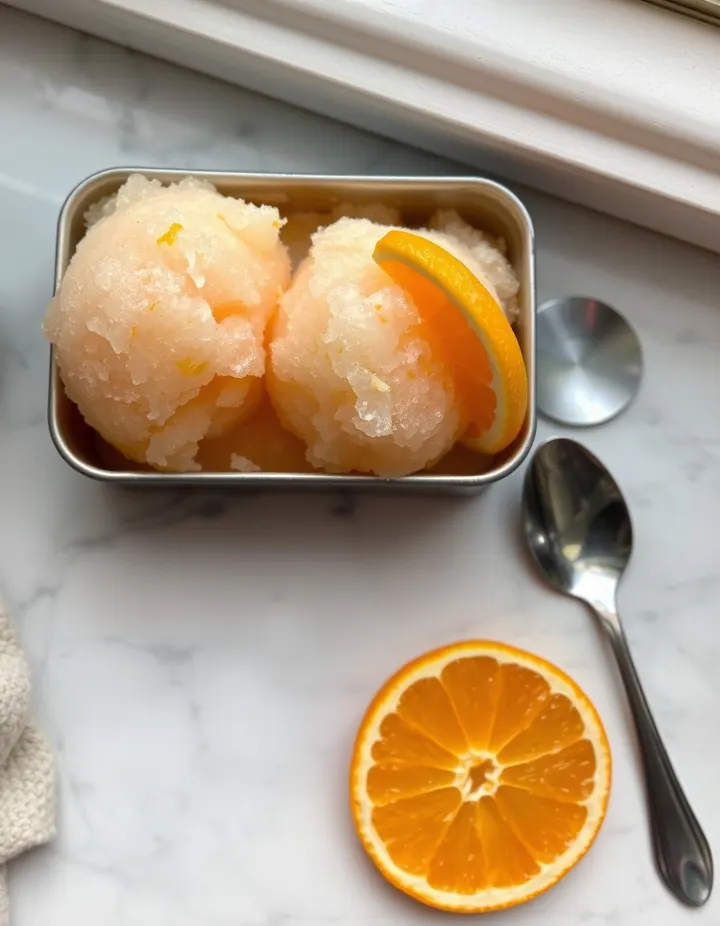 Orange Gelatin100 recipes
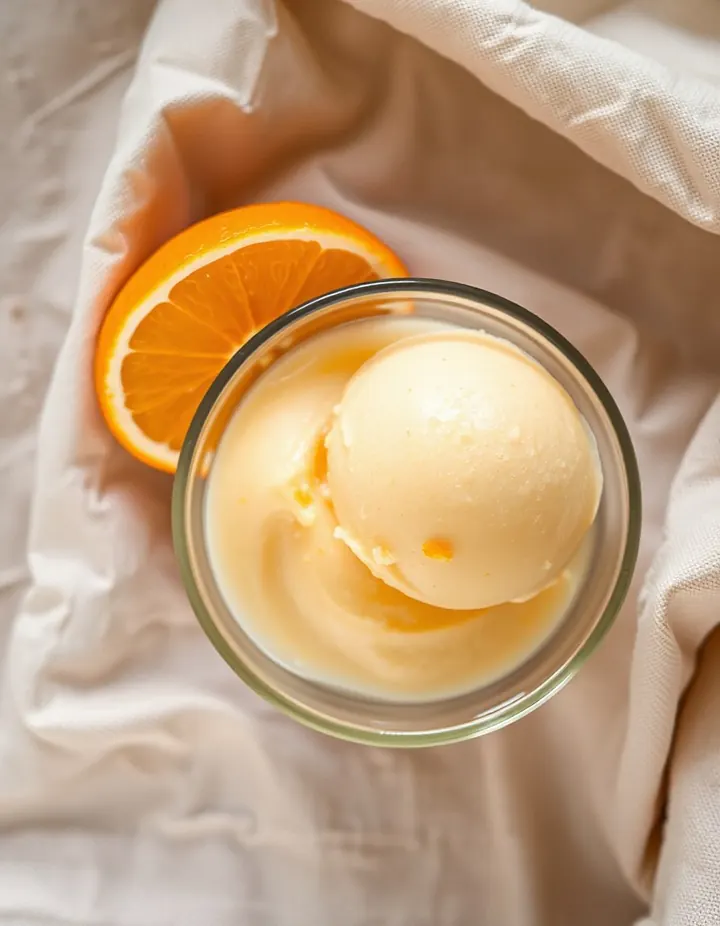 Orange Sherbet73 recipes
The free Flavor Lab newsletter: one surprising pairing a week and the molecular reason it works, in 60 seconds. No spam, unsubscribe anytime.
Prefer an account? Create a free account to save pairings and unlock the full chemistry.