Why it works: Pork and corn are a kitchen classic. They rank in the top 9% of all ingredient pairs, and cooks put them together in 1,069 recipes. Both carry 2-nonenal, which smells fatty, green. The science ↓
Processed Beans with Pork
Ingredients
Directions
Prepare the beans
Select and clean fresh pea beans, placing 2 bushels in a 50-gallon barrel.
Fill the barrel nearly with a solution of 2 lbs. coarse sea salt in 12½ gallons water and soak for 12 hours.
Drain off the surplus liquid.
For old beans, soak for 18 to 24 hours.
Soak 1 bushel of beans in brine for 4 to 8 hours. Replace with fresh brine and soak again for 4 to 8 hours.
Cover beans with fresh water and soak for 4 hours. Drain.
Fill and seal the cans
Slice salt pork and place in the bottom of cans: ½ oz. in No. 1 cans, ¾ oz. in No. 2 cans, and ½ oz. in No. 3 cans.
Fill cans half full with soaked beans.
Prepare hot dip with 2 lbs. salt, 3 lbs. sugar, ½ lb. ground white pepper, ½ pint caramel, and 12½ gallons water.
Cap and tip the cans.
Process
Process at 240°F (115°C) for 2 hours for No. 1 cans, 2½ hours for No. 2 cans, and 3 hours for No. 3 cans.
Add ½ hour more for a chloride calcium bath at 234°F (112°C). Double the processing time for an open bath at 212°F (100°C).
Thicken with 2½ to ½ lbs. corn starch if a thick sauce is desired.
Transcribed from a scanned cookbook and modernised for today's kitchens. Where the book gave no heat or time, or said "a moderate oven", the temperatures and times here may be modern equivalents rather than the book's own figures.
Explore the science
The flavor team
The pairs that carry this dish. Each one is judged two ways: how much their aromas overlap, and how often cooks already put them together.
-
Pork + corntop 9% of all pairsSmell alikemoderateCooked together1,069 recipes
Shared aroma: 2-nonenal (fatty, green).
-
Sugar + corntop 21% of all pairsSmell alikelowCooked together7,168 recipes
Shared aroma: 2-nonenal (fatty, green).
-
Pork + white peppertop 30% of all pairsSmell alikelowCooked together791 recipes
Shared aroma: methyl butyrate (fruity, apple).
-
White pepper + corntop 32% of all pairsSmell alikelowCooked together164 recipes
Shared aroma: eucalyptol (eucalyptus, herbal).
-
Pork + sugartop 37% of all pairsSmell alikelowCooked together4,579 recipes
Shared aroma: beta-damascenone (apple, rose).
Ranks compare each pair with 20,000 random ingredient pairs on CompKitchen. How we score pairs
What each ingredient does
- Pea beans (in the method)
- Form the main body of the dish, softening during soaking and processing.
- Salt pork
- Adds savory fat and flavor as it renders into the beans and dip.
- Sugar
- Adds sweetness that balances the salt and pepper in the dip.
- Caramel
- Adds color and a burnt-sugar aroma to the dip.
- Corn starch
- Thickens the dip into a sauce when a thick sauce is wanted.
The step that matters
Processing time and bath temperature. Cans must be processed for the time matching their size, and the bath temperature changes the required time. Too short a process can leave beans unsafe or underdone, so follow the timing for each can size and bath type exactly.
Swap the white pepper
How well each one fits the dish's main ingredients (pork, sugar, corn):
- Cinnamonfits better
- Gingerfits better
- Nutmegfits better
- White pepperthe original
Fit is the average pairing score against pork, sugar, corn. Candidates are from the same food group and used in at least 100 recipes.
“What each ingredient does” and “The step that matters” were written by Claude from this recipe’s own method and reviewed in samples by CompKitchen.
You might also like
 Corn Fritters203 recipes
 Pork Cake107 recipes
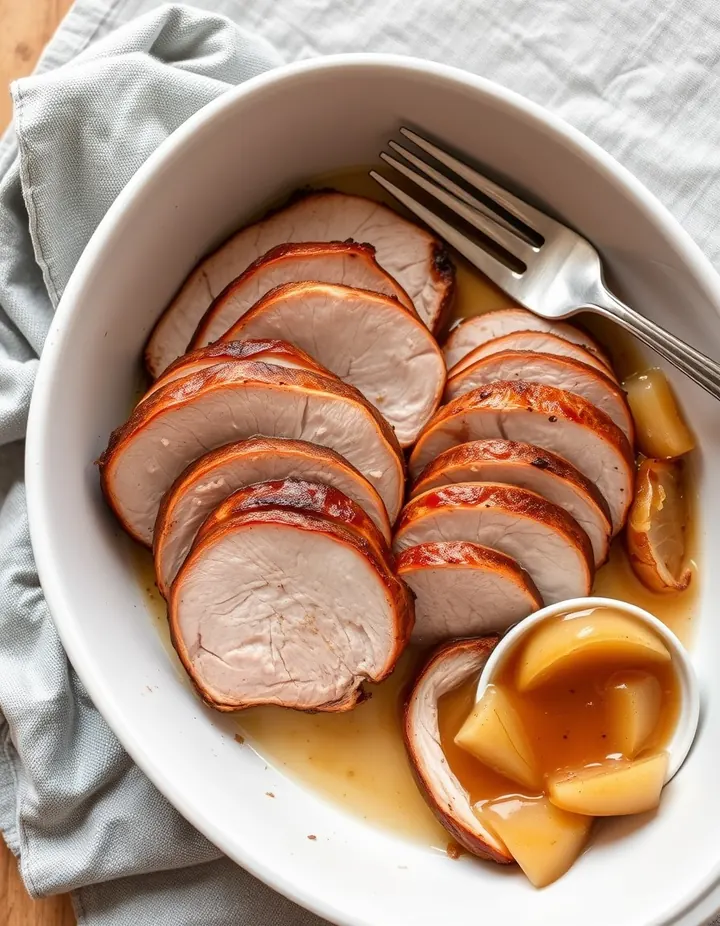 Roast Pork82 recipes
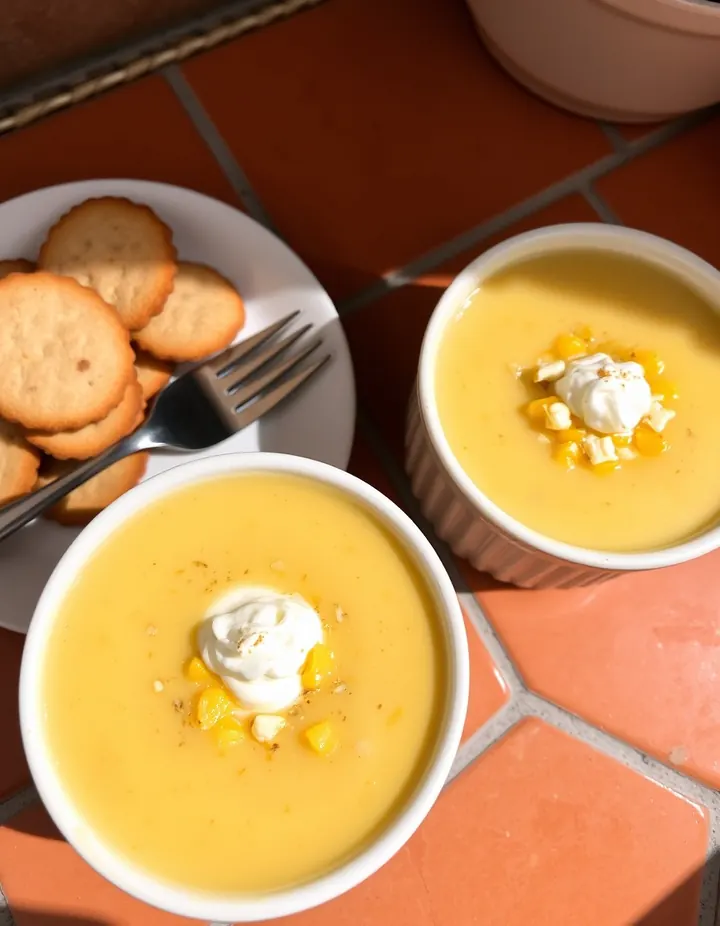 Cream of Corn Soup50 recipes
The free Flavor Lab newsletter: one surprising pairing a week and the molecular reason it works, in 60 seconds. No spam, unsubscribe anytime.
Prefer an account? Create a free account to save pairings and unlock the full chemistry.