Why it works: Ham and beef are a kitchen classic. They rank in the top 15% of all ingredient pairs, and cooks put them together in 1,729 recipes. Both carry 2-acetyl-1-pyrroline, which smells popcorn, roasted. The science ↓
Meat Canning
Ingredients
Directions
Prepare
Cure hams in mild sweet pickle for 30 days, repacking in new pickle as needed.
Bone the hams.
Trim excess fat, leaving a slight covering.
Wrap the skin back over the ham.
Bind it tightly with twine.
Cook and fill
Place hams in heated water at 180°F (82°C) for 14½ hours, then remove them.
Place them hot in cans filled with jelly made from boiling beef bones.
Seal the cans while still hot.
Process and seal
Process in a retort at 5 lbs pressure for 14½ hours.
Open vents with a fine awl after processing.
Close vents when pressure is off.
Return cans to the retort.
Heat for another 1½ hours at 9 lbs pressure.
Open vents again.
Quickly solder them shut.
Cool the cans in a shower room.
Transcribed from a scanned cookbook and modernised for today's kitchens. Where the book gave no heat or time, or said "a moderate oven", the temperatures and times here may be modern equivalents rather than the book's own figures.
Explore the science
The flavor team
The pairs that carry this dish. Each one is judged two ways: how much their aromas overlap, and how often cooks already put them together.
-
Ham + beeftop 15% of all pairsSmell alikemoderateCooked together1,729 recipes
Shared aroma: 2-acetyl-1-pyrroline (popcorn, roasted).
Ranks compare each pair with 20,000 random ingredient pairs on CompKitchen. How we score pairs
What each ingredient does
- Hams
- Provides the main meat, whose texture is set by curing and gentle heating.
- Mild sweet pickle
- Salt and sugar cure the meat, seasoning it and helping it keep.
- Beef bones
- Release gelatin as they simmer, which sets into a jelly that moistens the ham.
The step that matters
Retort processing at pressure. The sealed cans must be held at the stated pressure and time in the retort. Heat at this level destroys microbes that survive ordinary cooking, so a shortfall in time or pressure can leave the sealed ham unsafe.
“What each ingredient does” and “The step that matters” were written by Claude from this recipe’s own method and reviewed in samples by CompKitchen.
You might also like
 Roast Beef211 recipes
 Beef Loaf175 recipes
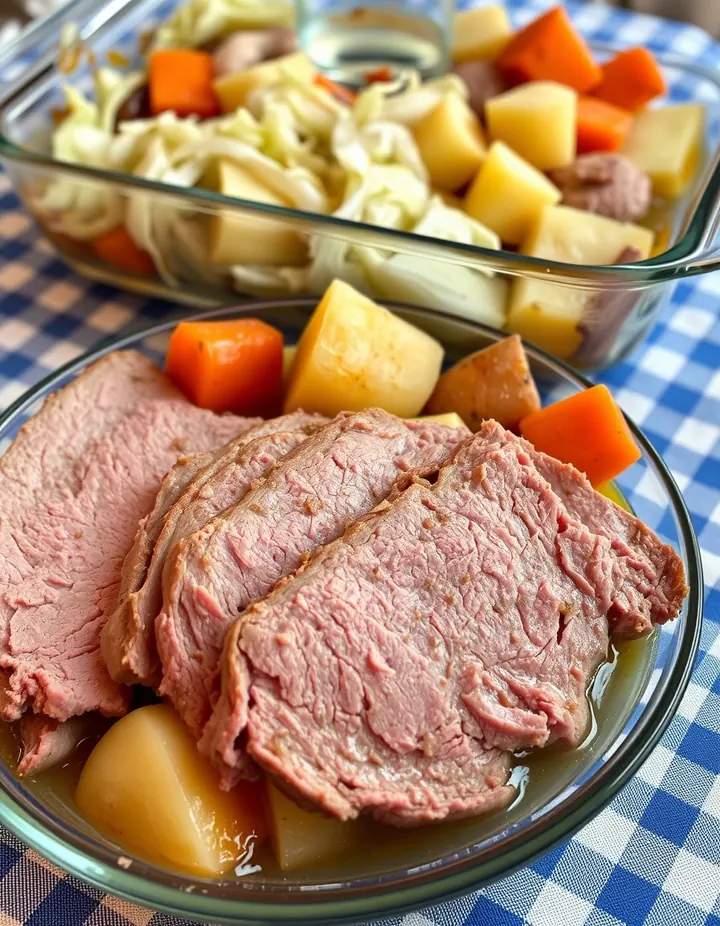 Corned Beef87 recipes
 Beef Broth67 recipes
The free Flavor Lab newsletter: one surprising pairing a week and the molecular reason it works, in 60 seconds. No spam, unsubscribe anytime.
Prefer an account? Create a free account to save pairings and unlock the full chemistry.