Why it works: Garlic and shallot match in chemistry and in kitchens. They rank in the top 4% of all ingredient pairs, and cooks put them together in 2,000 recipes. Both carry coumarin, which smells sweet, hay. The science ↓
Russian Polony
Ingredients
Directions
Prepare the meats
Peel the boiled ox tongues, discarding the roots and tips.
Cut the ham, beef, and tongues into small dice and pound them separately into smooth pastes with gum tragacanth and fresh butter.
Cut the bacon into small cubes, ensuring no rind or gristle remains.
Mix and mellow
Mix all the meats together with minced garlic, shallots, juniper berries, Jamaica pepper, black peppercorns, sea salt, and sugar.
Season the mixture well and place it in a jar for a week to mellow.
After a week, work the mixture for half an hour.
Fill and tie
Soak the largest ox intestines in lukewarm saltwater, then dry them.
Fill the intestines with the meat mixture, ensuring to keep out air by applying even pressure and pricking only where necessary.
Make the polonies about a foot long and set them aside until the next day.
Repeat the pressure and tie them up securely.
Cook, dry and smoke
Boil the polonies in water with a little salt and saltpetre, then simmer for half an hour.
Remove them, wipe dry, and hang in a current of air for a week, turning daily.
Smoke the polonies with oak lops.
Transcribed from a scanned cookbook and modernised for today's kitchens. Where the book gave no heat or time, or said "a moderate oven", the temperatures and times here may be modern equivalents rather than the book's own figures.
Explore the science
The flavor team
The pairs that carry this dish. Each one is judged two ways: how much their aromas overlap, and how often cooks already put them together.
-
Garlic + shallottop 4% of all pairsSmell alikestrongCooked together2,000 recipes
Shared aroma: coumarin (sweet, hay).
-
Garlic + peppertop 8% of all pairsSmell alikemoderateCooked together27,090 recipes
Shared aroma: beta-phellandrene (minty, terpene).
-
Beef + peppertop 10% of all pairsSmell alikemoderateCooked together18,971 recipes
Shared aroma: 2-isopropyl-3-methoxypyrazine (earthy, pea).
-
Shallot + peppertop 11% of all pairsSmell alikemoderateCooked together5,898 recipes
Shared aroma: 2,4-decadienal (seaweed).
-
Beef + garlictop 14% of all pairsSmell alikemoderateCooked together6,165 recipes
Shared aroma: furaneol (caramel, strawberry).
Ranks compare each pair with 20,000 random ingredient pairs on CompKitchen. How we score pairs
What each ingredient does
- Lean belfast smoked ham
- Provides the main savoury meaty flavour and firm body of the filling.
- Fat belfast smoked ham
- Adds richness and smoky flavour that carries through the sausage.
- Hung beef
- Contributes deep, concentrated meaty flavour and a firm bite.
- Smoked ox tongues
- Adds a soft, rich texture and savoury depth to the paste.
- Hard back fat of bacon
- Keeps the mixture moist and tender as the polonies dry and cook.
- Minced garlic
- Adds sharp aromatic flavour that mellows during the week of resting.
The step that matters
Filling the intestines without trapped air. Air pockets let the mixture spoil and dry unevenly, so steady, even pressure and minimal pricking keep the polonies firm and safe to hang.
Swap the garlic
How well each one fits the dish's main ingredients (ham, beef, shallot, pepper, sugar):
- Tarragonfits better
- Capersfits better
- Parsleyfits better
- Garlicthe original
Fit is the average pairing score against ham, beef, shallot, pepper, sugar. Candidates are from the same food group and used in at least 100 recipes.
“What each ingredient does” and “The step that matters” were written by Claude from this recipe’s own method and reviewed in samples by CompKitchen.
You might also like
 Roast Beef211 recipes
 Beef Loaf175 recipes
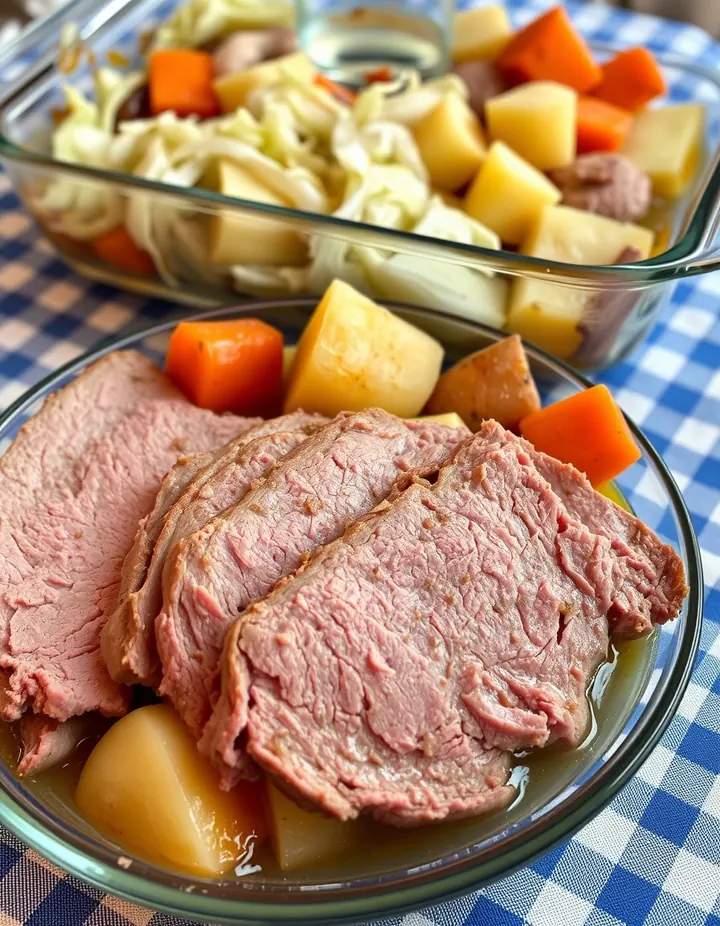 Corned Beef87 recipes
 Beef Broth67 recipes
The free Flavor Lab newsletter: one surprising pairing a week and the molecular reason it works, in 60 seconds. No spam, unsubscribe anytime.
Prefer an account? Create a free account to save pairings and unlock the full chemistry.