Why it works: Sugar and peanut are a kitchen classic. They rank in the top 27% of all ingredient pairs, and cooks put them together in 2,545 recipes. Both carry guaiacol, which smells smoky, sweet. The science ↓
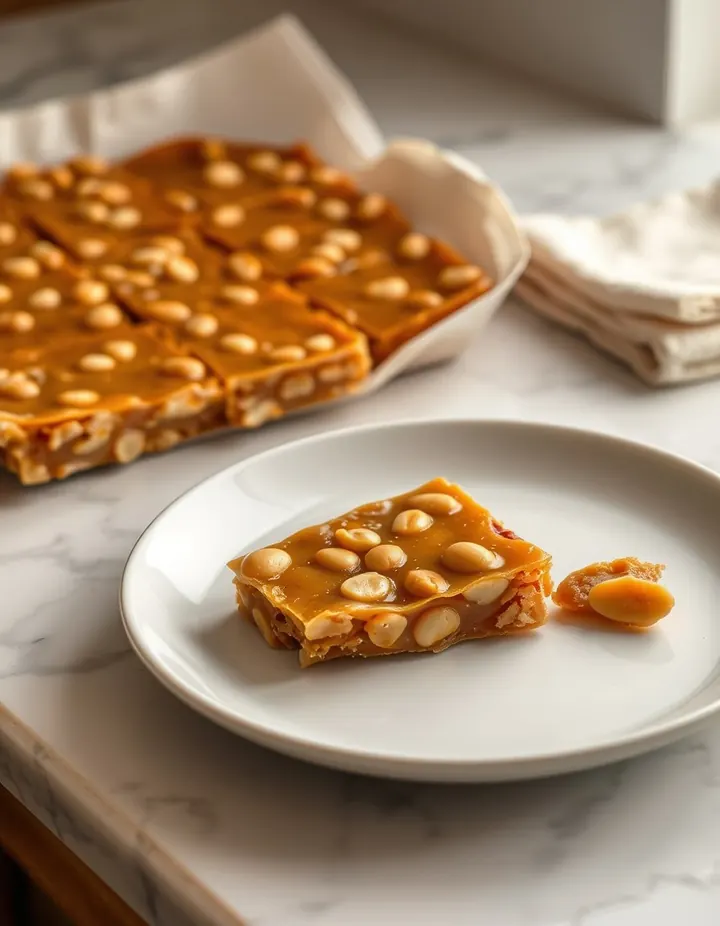
Peanut Bar
Ingredients
Directions
The book gives no oven temperature. The 240°F (115°C) in the steps was added when the recipe was transcribed, as a starting point.
Make the syrup
Combine sugar, glucose, and water in a kettle and stir until boiling.
Wash down the sides of the kettle with a damp cloth and cook to 240°F (115°C).
Roast the peanuts
Remove the thermometer, add raw peanuts, and stir continuously until they turn yellowish and pop.
Avoid browning the peanuts too much in the kettle; they will continue to roast after being poured out.
Once roasted, remove from heat, scrape onto a greased slab, and spread evenly with a knife.
Smooth the top with a greased rolling pin.
Cut and serve
When almost cool, run a knife under the batch to loosen it from the slab.
Cut into bars while still warm.
Transcribed from a scanned cookbook and modernised for today's kitchens. Where the book gave no heat or time, or said "a moderate oven", the temperatures and times here may be modern equivalents rather than the book's own figures.
Explore the science
The flavor team
The pairs that carry this dish. Each one is judged two ways: how much their aromas overlap, and how often cooks already put them together.
-
Sugar + peanuttop 27% of all pairsSmell alikelowCooked together2,545 recipes
Shared aroma: guaiacol (smoky, sweet).
Ranks compare each pair with 20,000 random ingredient pairs on CompKitchen. How we score pairs
What each ingredient does
- Sugar
- Forms the crisp, hard brittle matrix that holds the peanuts together as it cools.
- Glucose
- Inhibits sugar crystallisation, keeping the brittle smooth and preventing it from turning grainy.
- Raw spanish peanuts
- Provide the main body and nutty flavour, roasting in the hot syrup as they set.
The step that matters
Avoid over-browning the peanuts. Peanuts keep roasting after they leave the kettle because residual heat continues cooking them. Removing them too late makes the brittle bitter and burnt-tasting.
“What each ingredient does” and “The step that matters” were written by Claude from this recipe’s own method and reviewed in samples by CompKitchen.
You might also like
 Peanut Candy82 recipes
 White Cake431 recipes
 Pound Cake373 recipes
 Orange Bundt Cake349 recipes
The free Flavor Lab newsletter: one surprising pairing a week and the molecular reason it works, in 60 seconds. No spam, unsubscribe anytime.
Prefer an account? Create a free account to save pairings and unlock the full chemistry.