Why it works: Chestnut and syrup work together. They rank in the top 16% of all ingredient pairs, and cooks put them together in 87 recipes. Both carry ethanol, which smells alcoholic, ethereal. The science ↓
Italian Confectioner
Ingredients
Directions
Candy the chestnuts
Simmer chestnuts for a whole day, ensuring they do not boil.
Add a little syrup from time to time.
Continue simmering the next day until the syrup reaches a good consistency.
Remove chestnuts from the syrup and let them drain.
Glaze and dry
In a small copper pan, boil a small quantity of syrup until it reaches a blow.
Remove syrup from heat.
When slightly cool, work the syrup against the edges of the pan with a spatula until it becomes brilliant.
Dip the chestnuts in the syrup.
Remove the chestnuts from the syrup.
Let the chestnuts drain on a wire rack.
Dry the chestnuts for a few minutes in a warm oven.
Transcribed from a scanned cookbook and modernised for today's kitchens. Where the book gave no heat or time, or said "a moderate oven", the temperatures and times here may be modern equivalents rather than the book's own figures.
Explore the science
The flavor team
The pairs that carry this dish. Each one is judged two ways: how much their aromas overlap, and how often cooks already put them together.
-
Chestnut + syruptop 16% of all pairsSmell alikemoderateCooked together87 recipes
Shared aroma: ethanol (alcoholic, ethereal).
Ranks compare each pair with 20,000 random ingredient pairs on CompKitchen. How we score pairs
What each ingredient does
- Chestnuts
- Form the main body of the confection, softening and absorbing syrup during slow simmering.
- Syrup
- Sweetens and preserves the chestnuts, and its cooked sugar forms the shiny glaze when worked.
The step that matters
Working the glaze until brilliant. The syrup must be cooled slightly before it is worked against the pan edges. Stirring while it cools encourages fine sugar crystals to form, which makes the coating opaque and cloudy rather than brilliant. Cooling too far, though, makes it set before dipping.
“What each ingredient does” and “The step that matters” were written by Claude from this recipe’s own method and reviewed in samples by CompKitchen.
You might also like
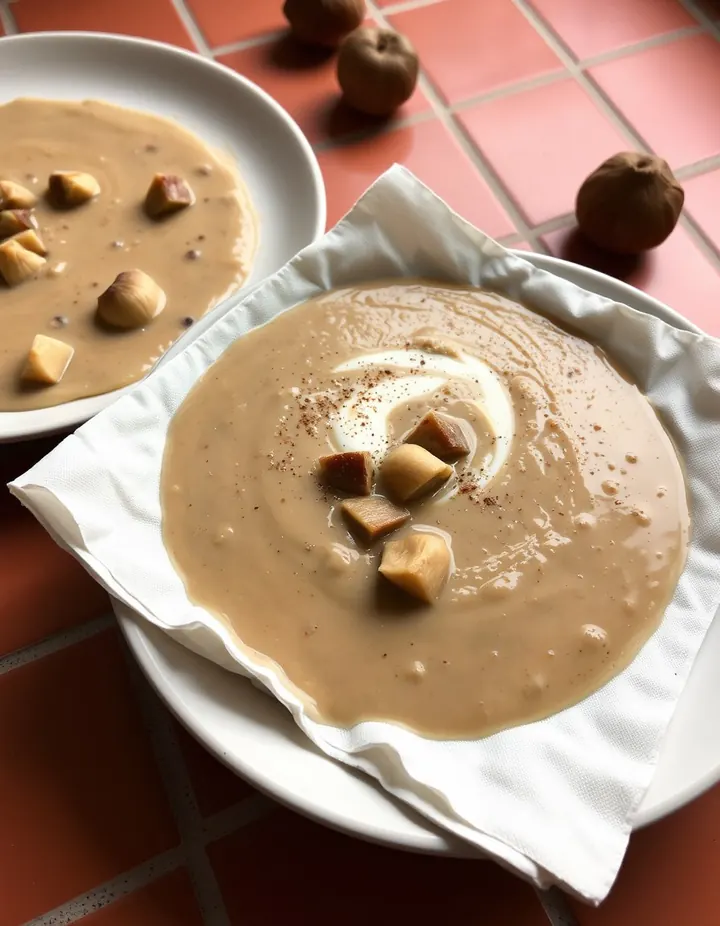 Chestnut Soup52 recipes
 Tomato Soup526 recipes
 Brown Bread461 recipes
 Mutton Broth292 recipes
The free Flavor Lab newsletter: one surprising pairing a week and the molecular reason it works, in 60 seconds. No spam, unsubscribe anytime.
Prefer an account? Create a free account to save pairings and unlock the full chemistry.