Why it works: Wheat and milk are a kitchen classic. They rank in the top 6% of all ingredient pairs, and cooks put them together in 2,418 recipes. Both carry (e,z)-2,6-nonadienal, which smells cucumber, melon. The science ↓
Malt Bread
Ingredients
Directions
Prepare the dough
Dissolve the yeast in 1 gallon of water at 85°F with the yeast food and malt extract. Set aside for 10 minutes.
In a mixer, combine salt, sugar, dry milk, and the remaining water. Mix until dissolved.
Gradually add flour to the mixer. When partly mixed, add the yeast mixture and melted lard or oil.
Mix on high speed for 16‑20 minutes or on low speed for 23‑35 minutes until dough reaches 78°F.
Rise and shape
Let the dough rest for 2½ hours. Fold over the sides without punching down.
Allow the dough to rise for 1½ hours. Punch down. Let it rest for 1 hour.
Punch down again. Let it rest for another 30 minutes.
Divide the dough. Round it. Place it in the proofer for 15‑16 minutes.
Proof and bake
Transfer loaves to pans. Place in racks. Proof with steam.
Bake the loaves with steam until done.
Transcribed from a scanned cookbook and modernised for today's kitchens. Where the book gave no heat or time, or said "a moderate oven", the temperatures and times here may be modern equivalents rather than the book's own figures.
Explore the science
The flavor team
The pairs that carry this dish. Each one is judged two ways: how much their aromas overlap, and how often cooks already put them together.
-
Wheat + milktop 6% of all pairsSmell alikemoderateCooked together2,418 recipes
Shared aroma: (e,z)-2,6-nonadienal (cucumber, melon).
-
Flour + wheattop 12% of all pairsSmell alikemoderateCooked together4,373 recipes
Shared aroma: isobutyraldehyde (malty, green).
-
Flour + milktop 14% of all pairsSmell alikelowCooked together78,219 recipes
Shared aroma: isobutyraldehyde (malty, green).
-
Flour + sugartop 15% of all pairsSmell alikemoderateCooked together92,116 recipes
Shared aroma: phenylacetaldehyde (hawthorne, honey).
-
Wheat + malttop 15% of all pairsSmell alikemoderateCooked together64 recipes
Shared aroma: beta-damascenone (apple, rose).
Flour and milk barely smell alike, yet cooks put them together in 78,219 recipes: they work on texture and structure more than aroma.
Ranks compare each pair with 20,000 random ingredient pairs on CompKitchen. How we score pairs
What each ingredient does
- Flour
- Forms the gluten network that gives the loaves their structure and chew.
- Yeast
- Ferments sugars to produce carbon dioxide, which makes the dough rise.
- Water
- Hydrates the flour so gluten can form and dissolves the yeast and other dry ingredients.
- Sugar
- Feeds the yeast for fermentation and adds sweetness and browning in the crust.
- Lard or oil
- Tenderizes the crumb by coating flour proteins and gluten strands, giving a softer texture.
- Dry milk
- Adds milk solids that enrich flavor and help the crust brown.
The step that matters
Mixing the dough to 78°F. Dough temperature controls yeast activity and fermentation rate. Mixing too long or too short leaves the gluten underdeveloped or overheated, so the dough should be checked for temperature at the end of mixing.
“What each ingredient does” and “The step that matters” were written by Claude from this recipe’s own method and reviewed in samples by CompKitchen.
You might also like
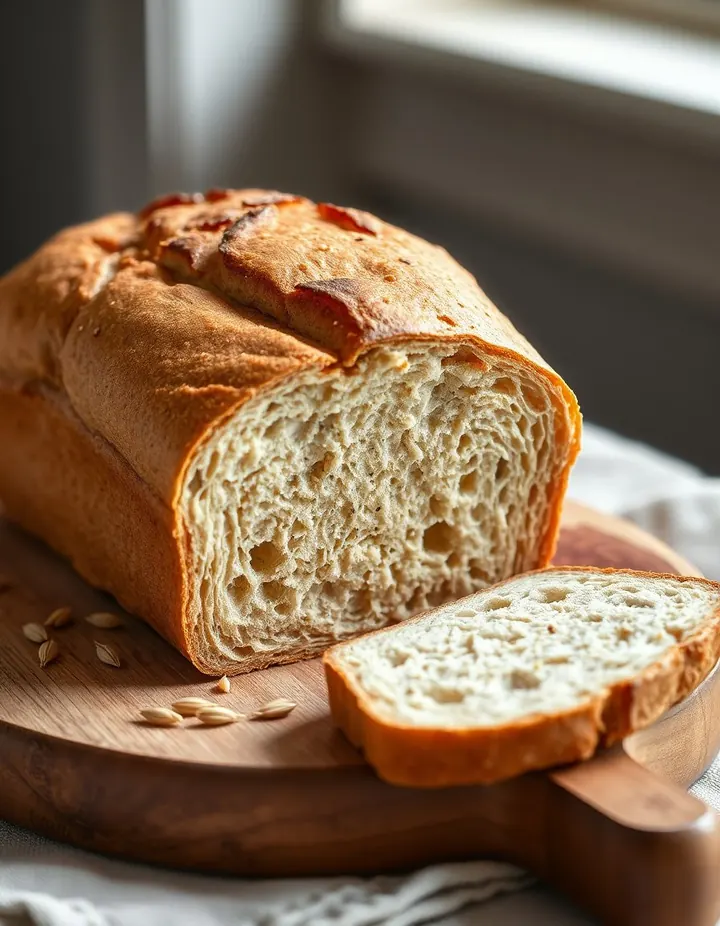 Wheat Bread65 recipes
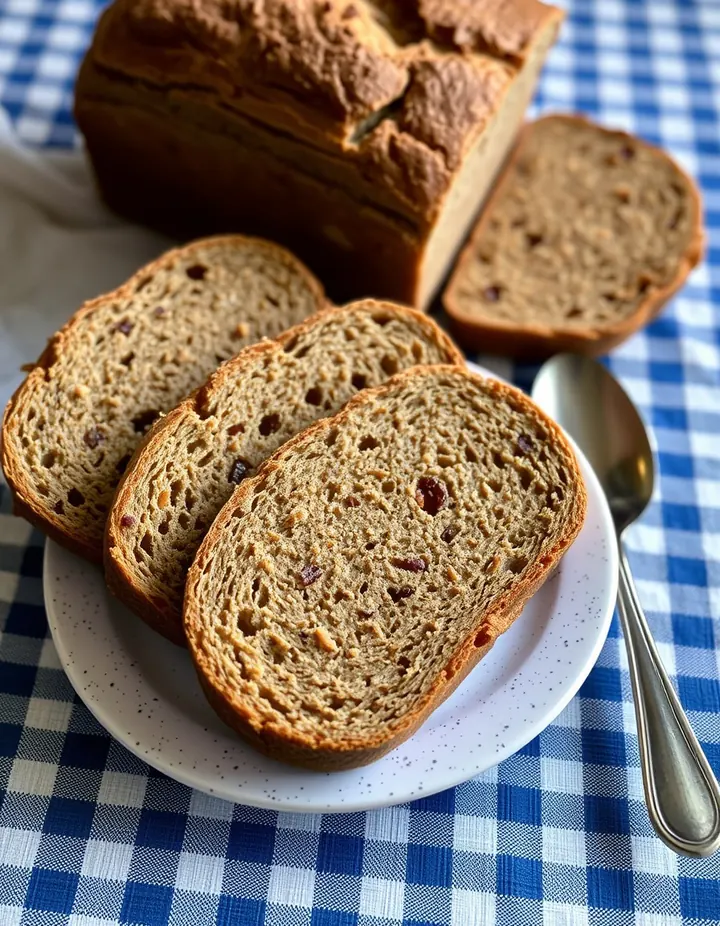 Whole Wheat Bread55 recipes
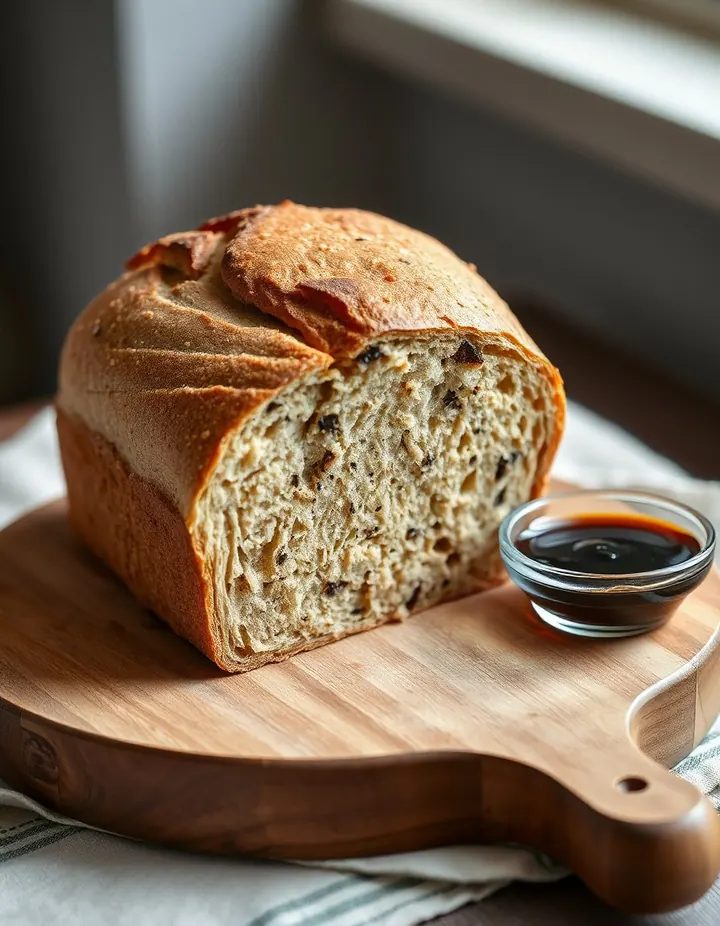 Barley Wheat Bread6 recipes
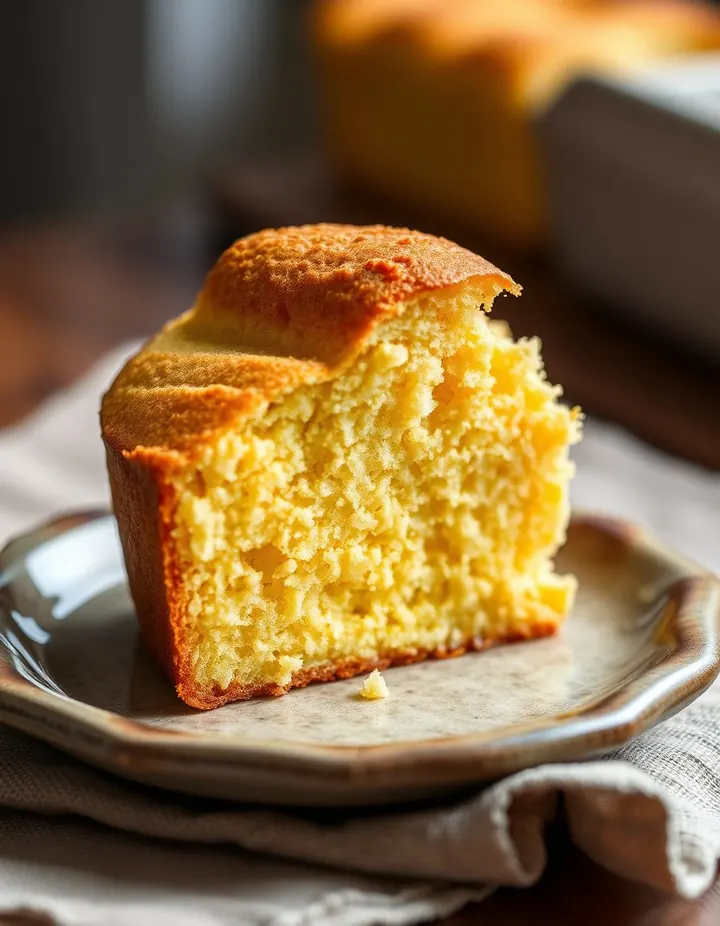 Cornbread345 recipes
The free Flavor Lab newsletter: one surprising pairing a week and the molecular reason it works, in 60 seconds. No spam, unsubscribe anytime.
Prefer an account? Create a free account to save pairings and unlock the full chemistry.