Straight Dough From Compressed Yeast
Ingredients
Directions
Mix the dough
Sift the flour into one end of a trough.
In the other end, mix the ferment, water, and salt well together.
Combine the mixture with the flour to make the dough.
After 2 hours, place the dough on a table.
If the dough has slackened, stiffen it with a little flour.
Roll the dough into manageable pieces.
Return the pieces to the trough for another 2 hours.
Shape and proof
Scale the dough to your desired weight.
Shape the dough into rounds.
Allow the dough to proof.
Shape the dough as desired.
Proof the dough sufficiently.
Bake
Bake the dough in a steady heat.
Transcribed from a scanned cookbook and modernised for today's kitchens. Where the book gave no heat or time, or said "a moderate oven", the temperatures and times here may be modern equivalents rather than the book's own figures.
Explore the science
What each ingredient does
- Flour
- Provides the gluten-forming structure that holds the dough together and lets it stretch.
- Ferment
- Yeast and fermented liquid that leaven the dough, creating gas that makes it rise and gives flavour.
- Water
- Hydrates the flour so gluten can develop and makes the dough workable.
- Coarse sea salt
- Controls yeast activity and strengthens gluten, adding flavour and structure.
The step that matters
Proof the dough sufficiently. Underproofed dough has too little gas and bakes dense, while overproofed dough has weakened gluten and may collapse. Yeast activity and dough strength decide the final rise, so timing matters.
“What each ingredient does” and “The step that matters” were written by Claude from this recipe’s own method and reviewed in samples by CompKitchen.
You might also like
 Cornbread345 recipes
 Bread Pudding336 recipes
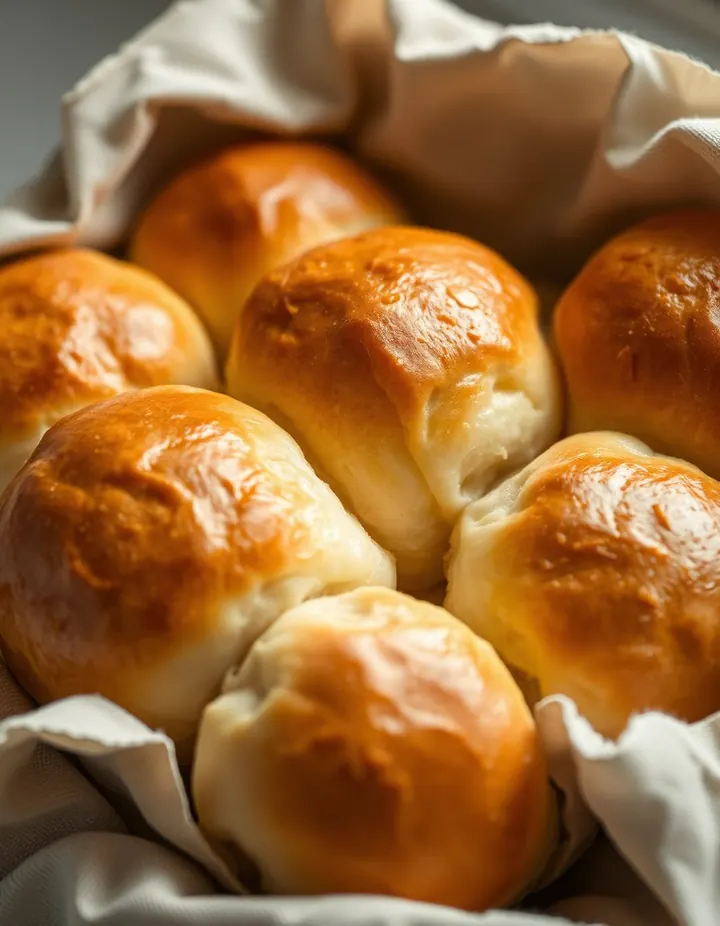 Milk Bread Rolls242 recipes
 Potato Bread124 recipes
The free Flavor Lab newsletter: one surprising pairing a week and the molecular reason it works, in 60 seconds. No spam, unsubscribe anytime.
Prefer an account? Create a free account to save pairings and unlock the full chemistry.