To Make Cider
Ingredients
Directions
Prepare the apples
Gather ripe apples, avoiding any that are rotten.
If the weather is frosty, spread the apples 1 to 2 feet thick on the ground.
If the weather is frosty, cover the apples with straw.
If the weather is mild, let the apples hang on the trees or remain on the ground until ready to make cider.
Do not make cider in warm weather unless the apples are starting to rot.
Make the cider
Grind the apples in a cider mill, using no more than 7 or 8 bushels at a time.
Press the ground apples to extract the juice.
Pour the juice into hogsheads.
Ferment and seal
Rack the cider off into other hogsheads after fermentation.
Let the cider settle.
Seal the hogsheads.
Transcribed from a scanned cookbook and modernised for today's kitchens. Where the book gave no heat or time, or said "a moderate oven", the temperatures and times here may be modern equivalents rather than the book's own figures.
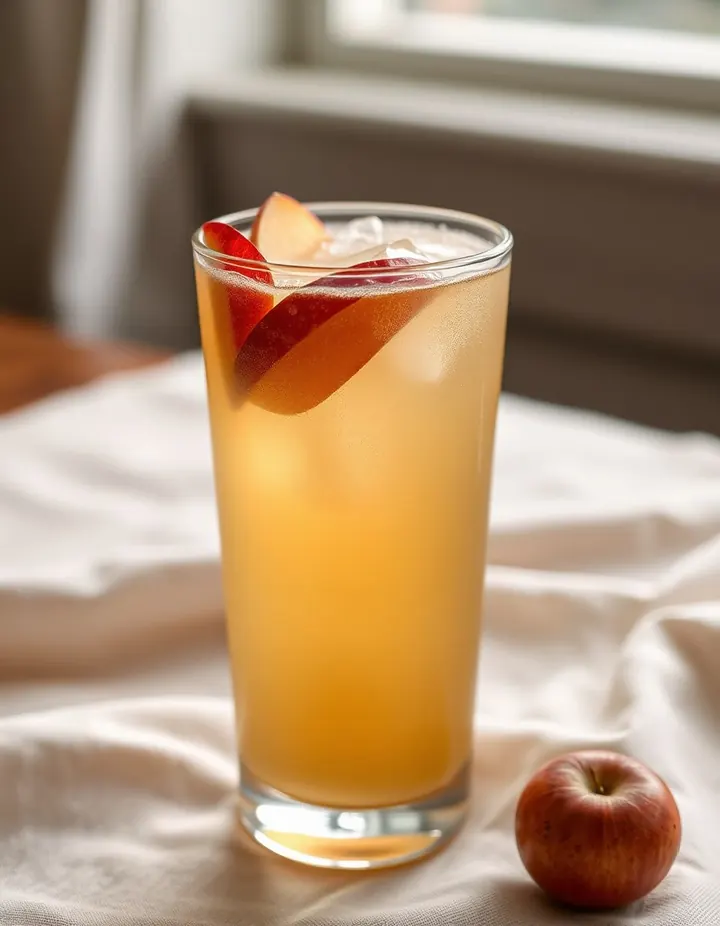
Photo for illustrative purposes only · Contact us to use it
Explore the science
What each ingredient does
- Ripe apples
- Provide the juice and sugars that ferment into the cider.
- Straw
- Covers the frosty apples to protect them from the cold.
The step that matters
Do not make cider in warm weather unless the apples are starting to rot. Warm conditions speed up spoilage and the growth of unwanted microbes in crushed fruit. Cider made in heat can sour or spoil before fermenting cleanly, so timing matters.
“What each ingredient does” and “The step that matters” were written by Claude from this recipe’s own method and reviewed in samples by CompKitchen.
More apple cider recipes
You might also like
 Vegetable Soup350 recipes
 Raspberry Vinegar214 recipes
 Brown Coffee with Egg175 recipes
 Blackberry Cordial129 recipes
The free Flavor Lab newsletter: one surprising pairing a week and the molecular reason it works, in 60 seconds. No spam, unsubscribe anytime.
Prefer an account? Create a free account to save pairings and unlock the full chemistry.