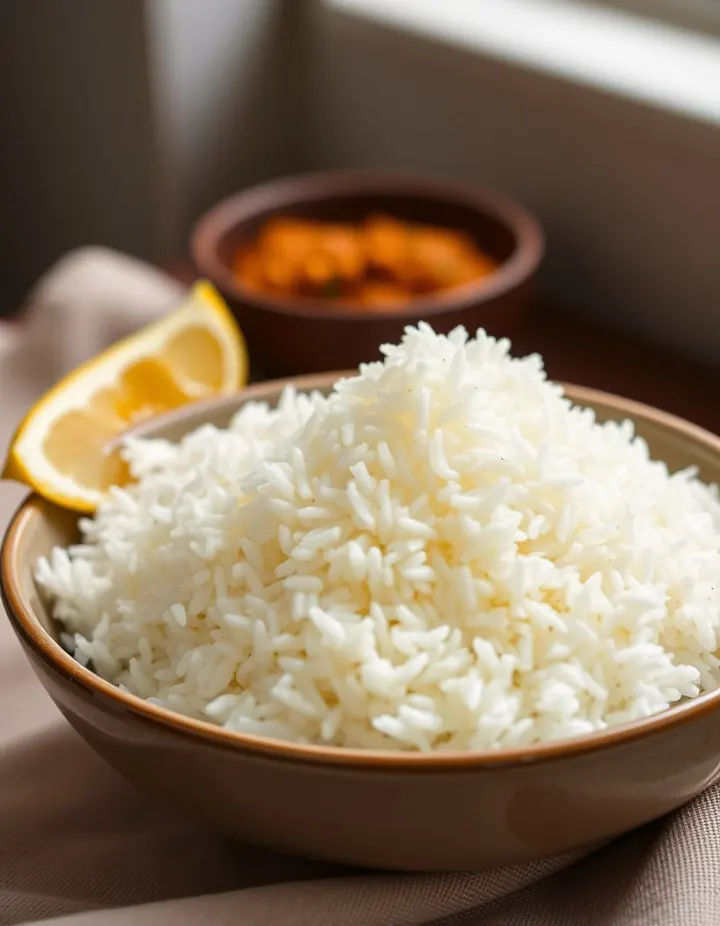
Why it works: Lemon and rice are a kitchen classic. They rank in the top 12% of all ingredient pairs, and cooks put them together in 4,366 recipes. Both carry (e,e)-2,4-decadienal, which smells fatty, deep fried. The science ↓
To Boil Rice for Curry
Ingredients
Directions
Cook the rice
Add ½ gallon of boiling water and 1 tablespoon of lemon juice to a large pot.
While the water is boiling, add ½ pound of Patua rice and boil for 12 minutes, stirring occasionally.
Pour the rice into a sieve over a basin to drain the water.
Rinse and serve
Rinse the rice with warm water to separate the grains and remove any milky water.
Transfer the rice to a hot dish and keep it warm near the fire or in the oven to dry.
Serve the rice around the curry or in a separate dish.
Transcribed from a scanned cookbook and modernised for today's kitchens. Where the book gave no heat or time, or said "a moderate oven", the temperatures and times here may be modern equivalents rather than the book's own figures.
Photo for illustrative purposes only · Contact us to use it
Explore the science
The flavor team
The pairs that carry this dish. Each one is judged two ways: how much their aromas overlap, and how often cooks already put them together.
-
Lemon + ricetop 12% of all pairsSmell alikemoderateCooked together4,366 recipes
Shared aroma: (e,e)-2,4-decadienal (fatty, deep fried).
Ranks compare each pair with 20,000 random ingredient pairs on CompKitchen. How we score pairs
What each ingredient does
- Patua rice
- Provides the starch that cooks into the main body and separate grains of the dish.
- Lemon juice
- Adds a light acidity to the cooking water, which can help keep the grains brighter in colour.
The step that matters
Rinsing the rice after draining. Rinsing with warm water washes away surface starch that would otherwise make the grains clump together. Removing this milky water helps each grain stay separate when served.
“What each ingredient does” and “The step that matters” were written by Claude from this recipe’s own method and reviewed in samples by CompKitchen.
More rice for curry recipes
You might also like
 Lemon Sauce236 recipes
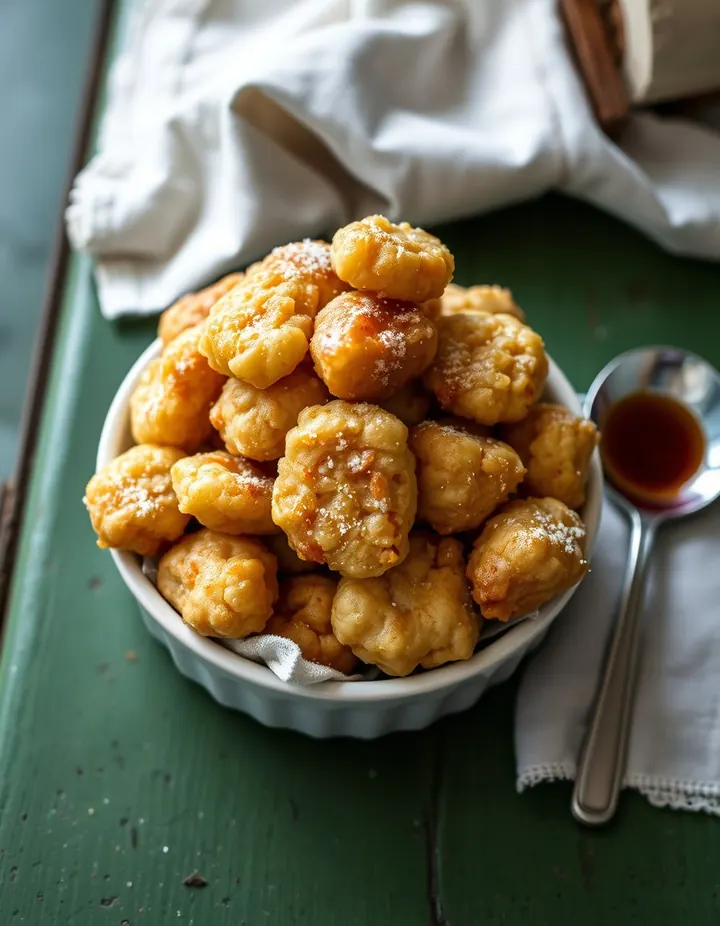 Rice Fritters84 recipes
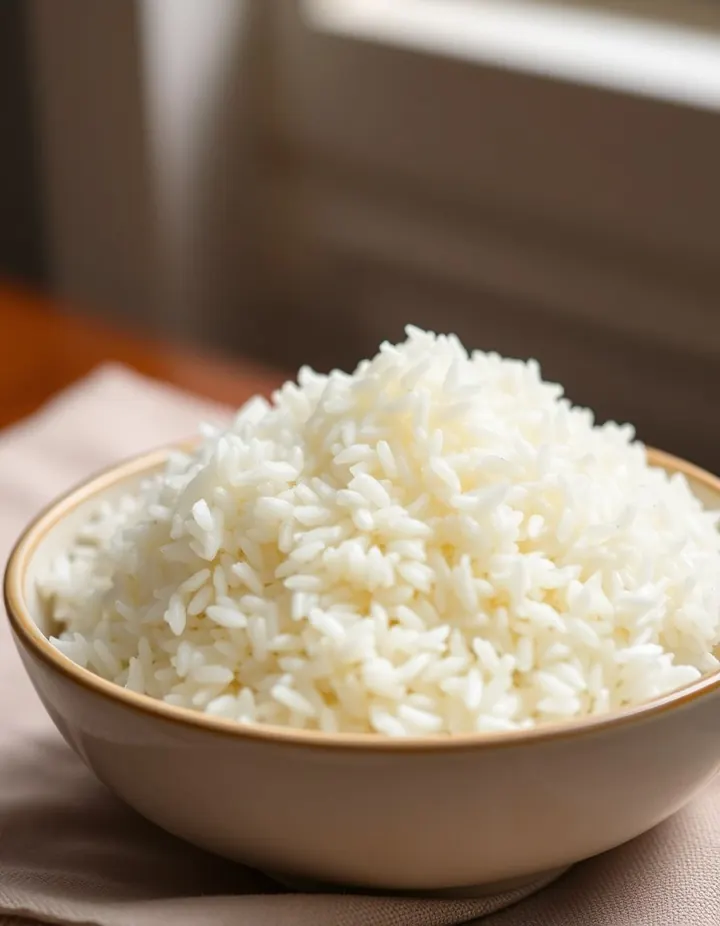 Steamed Rice48 recipes
 Rice Griddle Cakes28 recipes
The free Flavor Lab newsletter: one surprising pairing a week and the molecular reason it works, in 60 seconds. No spam, unsubscribe anytime.
Prefer an account? Create a free account to save pairings and unlock the full chemistry.