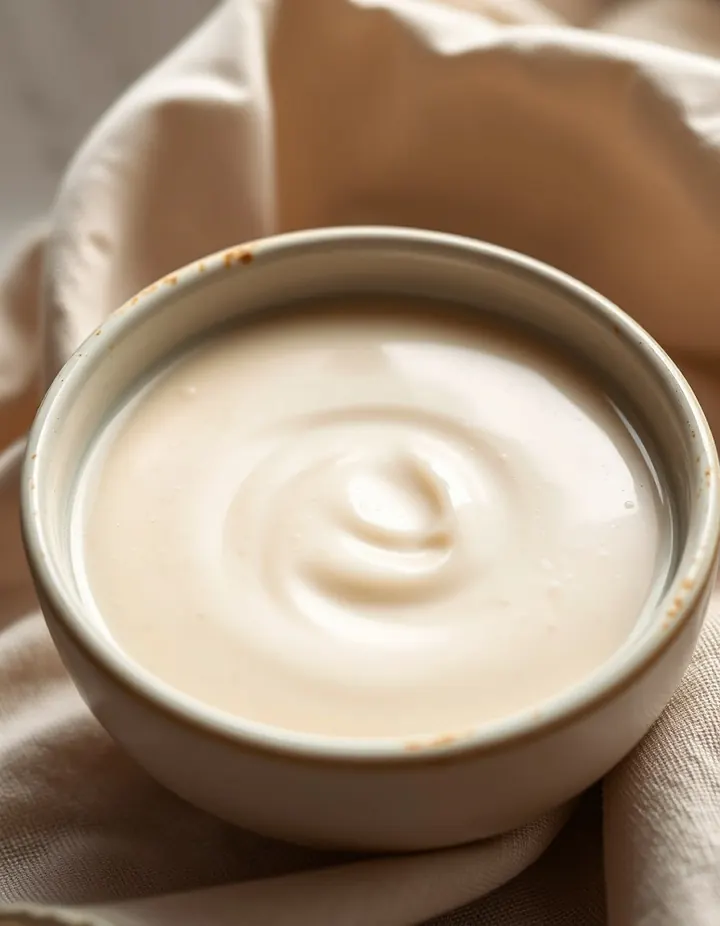
Peptonised Milk Gruel
Ingredients
Directions
The book gives no oven temperature. The 125°F (52°C) in the steps was added when the recipe was transcribed, as a starting point.
Prepare
Prepare a thick gruel from any farinaceous article.
While the gruel is still hot, mix it with an equal amount of cold milk.
In winter, warm the cold milk to 60°F (16°C) before mixing.
Peptonise
Ensure the mixture is at about 125°F (52°C).
Add 2 teaspoons of liquor pancreaticus and 20 grains of bicarbonate of potash to each pint of the mixture.
Transcribed from a scanned cookbook and modernised for today's kitchens. Where the book gave no heat or time, or said "a moderate oven", the temperatures and times here may be modern equivalents rather than the book's own figures.
Photo for illustrative purposes only · Contact us to use it
Explore the science
What each ingredient does
- Gruel
- Provides the starch base that gives the drink its body and bulk.
- Cold milk
- Adds liquid, fat and protein, and cools the hot gruel to a workable temperature.
- Liquor pancreaticus
- Pancreatic enzymes that break down milk proteins and starches into smaller, more digestible molecules.
- Bicarbonate of potash
- Makes the mixture alkaline, which helps the enzymes work effectively.
The step that matters
Holding the mixture at about 125°F (52°C) before adding the enzyme. Pancreatic enzymes are sensitive to heat and work best at body-like temperatures. Too hot and they are destroyed; too cool and digestion is slow, so the mixture should be held at the stated temperature before adding the liquor pancreaticus and bicarbonate.
“What each ingredient does” and “The step that matters” were written by Claude from this recipe’s own method and reviewed in samples by CompKitchen.
The free Flavor Lab newsletter: one surprising pairing a week and the molecular reason it works, in 60 seconds. No spam, unsubscribe anytime.
Prefer an account? Create a free account to save pairings and unlock the full chemistry.