Why it works: Mung bean and sesame share more aroma than cooks usually use. They rank in the top 2% of all ingredient pairs, and 26 recipes mention both. Both carry acetoin, which smells butter, cream. The science ↓
The recipe
Ingredients
Contains: wheat, soy, sesame (auto-detected from the ingredients and method; we can miss things, so check labels)
Directions
Soak and grind
Wash and drain the rice.
Pick over the mung beans, wash and drain them.
Place the rice and beans in a bowl and cover with 5 cups of water.
Let soak for 10 hours.
Remove skins from the beans by rubbing between your hands.
Drain off floating skins now and then, replacing water with fresh water, until most of the skins are removed and drained away.
Drain off remaining water and blend the rice and beans in a food processor until it becomes a thick paste.
With the machine running, gradually add 3/4 cup water to the mixture; blend thoroughly.
Make the batter
Blanch the bean sprouts in boiling water for 2 minutes; drain.
Squeeze out as much moisture as possible.
Stir the sprouts into the batter along with the scallions, green pepper, onion, baking soda, sesame oil, sesame seeds, soy sauce, and salt. Mix well.
Prepare cooking paraphernalia: have 1/4 to 1/2 cup of vegetable oil in a cup or bowl with a small spoon, a larger spoon to spread the batter, a bowl of batter with a 1/3-cup measuring scoop, a metal spatula for turning the pancakes, and a plate for the finished dosas.
Cook the pancakes
Pour 1 teaspoon of oil into the skillet and tilt to distribute evenly.
Heat the skillet over medium-low until the oil is hot.
Pour 1/3 cup of the mixture onto the center of the hot skillet.
Use the large spoon to spread the batter in a spiral motion until the pancake is about 6-7 inches in diameter.
Turn the pancake after 2-3 minutes and cook another 2-3 minutes on the other side.
Remove the pancake to a plate.
Repeat with the remaining batter, adding only enough additional oil to keep the surface evenly greased.
Serve
Mix together all dipping sauce ingredients.
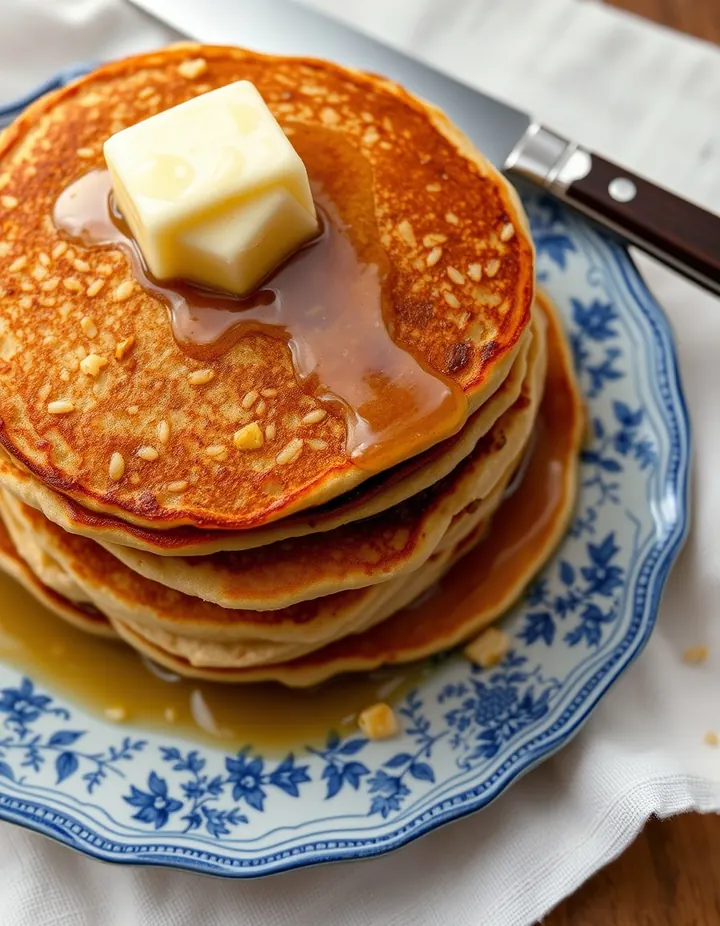
Serve the dipping sauce with hot Bindaetuk.
This recipe comes from the Recipes Wiki on Fandom and is licensed CC BY-SA 4.0. Our formatting and summaries are shared under the same licence.
Steps grouped into stages for easier reading; the method is the source's own.
Explore the science
The flavor team
The pairs that carry this dish. Each one is judged two ways: how much aroma chemistry they share, and how many recipes mention both.
-
Mung bean + sesametop 2% of all pairsAroma overlapstrongMentioned together26 recipes
Shared aroma: acetoin (butter, cream).
-
Rice + mung beantop 3% of all pairsAroma overlapstrongMentioned together43 recipes
Shared aroma: 2-acetyl-1-pyrroline (popcorn, roasted).
-
Rice + sesametop 3% of all pairsAroma overlapstrongMentioned together643 recipes
Shared aroma: 2-methoxy-4-vinylphenol (clove, smoky).
-
Onion + sesametop 3% of all pairsAroma overlapstrongMentioned together2,192 recipes
Shared aroma: gamma-nonanolactone (coconut, sweet).
-
Rice + oniontop 5% of all pairsAroma overlapstrongMentioned together9,990 recipes
Shared aroma: guaiacol (smoky, sweet).
Ranks compare each pair with 20,000 random ingredient pairs on CompKitchen. How we score pairs
What each ingredient does
- Whole mung beans
- Provide the main batter body and protein-rich structure once ground into a paste.
- Glutinous rice
- Adds starch that helps the batter hold together and gives a chewier texture.
- Baking soda
- Releases gas in the batter to lighten it and promote a softer, risen pancake.
- Vegetable oil
- Conducts heat and keeps the pancake surface from sticking, aiding even browning.
The step that matters
Squeezing the sprouts dry. Excess water from the bean sprouts thins the batter and can make the pancake soggy and slow to set, so removing moisture keeps the texture firm.
Flavor stand-ins for the onion
How well each one fits the dish's main ingredients (rice, mung bean, pepper, sesame, sauce, vinegar, sugar):
- Capsicumbetter flavor fit
- Cucumberbetter flavor fit
- Mustardbetter flavor fit
- Onionthe original
Fit is the average pairing score against rice, mung bean, pepper, sesame, sauce, vinegar, sugar. Candidates are from the same food group and used in at least 100 recipes. This compares flavor only: it does not check the job the ingredient does in the dish (bulk, moisture, acidity, structure).
“What each ingredient does” and “The step that matters” were written by Claude from this recipe’s own method and reviewed in samples by CompKitchen.
You might also like
 Illustration
 Illustration
 Illustration
 Illustration
The Sunday pairing: one pairing, the chemistry behind it, and how to cook it. No spam, unsubscribe anytime.
Prefer an account? Create a free account for sign-in; Pro adds the full results and chemistry.