Why it works: Ginger and turmeric match in chemistry and in kitchens. They rank in the top 1% of all ingredient pairs, and cooks put them together in 2,776 recipes. Both carry eucalyptol, which smells eucalyptus, herbal. The science ↓
Nga Baung Doke
Ingredients
Directions
Prepare the fish
Wash the fish fillets and dry them.
Cut the fillets into serving pieces.
Set the pieces aside.
Make the coconut mixture
Place desiccated coconut, hot water, garlic, and grated ginger in a blender and blend until the coconut is finely ground.
Pour the mixture into a bowl and add the remaining seasonings, then mix well.
Wrap and steam
Place the fish fillets on banana or bamboo leaves.
Spoon 3–4 teaspoons of the coconut mixture onto each fish fillet.
Wrap the fish and mixture in foil.
Steam the wrapped fish for 15 minutes.
Nutrition, whole recipe (rough)
Counts 11 of 14 ingredients. The other 3 aren't in our nutrition table and add nothing above, so the real totals are higher.
What these numbers assume: 11 portions
| Ingredient | Portion assumed | kcal |
|---|---|---|
| Flour | 1 cup (125g) all-purpose | 455 |
| Coconut | 1/2 cup shredded (40g) | 283 |
| Salmon | 100g cooked | 208 |
| Rice | 1 cup cooked (158g) white | 206 |
| Banana | 1 medium (118g) | 105 |
| Lemon | juice of 1 lemon (48ml) | 12 |
| Turmeric | 1 tsp ground (3g) | 9 |
| Black Pepper | 1 tsp ground (2.3g) | 6 |
| Garlic | 1 clove (3g) | 4 |
| Ginger | 1 tsp grated fresh (2g) | 2 |
| Salt | 1 tsp (6g) | 0 |
| Water | not in our table | 0 |
| Toasted Sesame Seed | not in our table | 0 |
| Coriander | not in our table | 0 |
One typical portion per ingredient; the recipe's quantities are not counted. A rough guide only, not for medical or dietary planning.
Steps grouped into stages for easier reading; the method is the source's own.
Explore the science
The flavor team
The pairs that carry this dish. Each one is judged two ways: how much their aromas overlap, and how often cooks already put them together.
-
Ginger + turmerictop 1% of all pairsSmell alikestrongCooked together2,776 recipes
Shared aroma: eucalyptol (eucalyptus, herbal).
-
Clove + gingertop 1% of all pairsSmell alikestrongCooked together6,038 recipes
Shared aroma: estragole (anise, licorice).
-
Coconut + turmerictop 2% of all pairsSmell alikestrongCooked together1,027 recipes
Shared aroma: 2-heptanol (bitter, floral).
-
Clove + turmerictop 4% of all pairsSmell alikestrongCooked together1,876 recipes
Shared aroma: eucalyptol (eucalyptus, herbal).
-
Ginger + sesametop 4% of all pairsSmell alikemoderateCooked together1,531 recipes
Shared aroma: nonanal (fat, citrus).
Ranks compare each pair with 20,000 random ingredient pairs on CompKitchen. How we score pairs
What each ingredient does
- Fish fillets
- Provide the main protein, which cooks through gently inside the steamed wrapping.
- Desiccated coconut
- Adds moisture, richness and a sweet, nutty coconut flavour to the coating.
- Rice flour
- Thickens the coconut mixture so it clings to the fish instead of running off.
- Ginger
- Adds a sharp, aromatic warmth that cuts through the richness of the coconut.
- Garlic
- Contributes pungent aroma that mellows as the parcels steam.
- Ground turmeric
- Gives the coating its yellow colour and a mildly earthy, bitter note.
The step that matters
Wrapping the fish tightly in foil. Sealing the parcel traps steam so the fish cooks gently in its own moisture. A loose wrap lets steam escape, leaving the fish dry and the coconut mixture unevenly cooked.
Swap the sesame
How well each one fits the dish's main ingredients (fish, coconut, clove, garlic, ginger, turmeric, pepper):
- Chickpeafits better
- Lentilsfits better
- Cashew nutfits better
- Sesamethe original
Fit is the average pairing score against fish, coconut, clove, garlic, ginger, turmeric, pepper. Candidates are from the same food group and used in at least 100 recipes.
“What each ingredient does” and “The step that matters” were written by Claude from this recipe’s own method and reviewed in samples by CompKitchen.
You might also like
 Lemon Sauce236 recipes
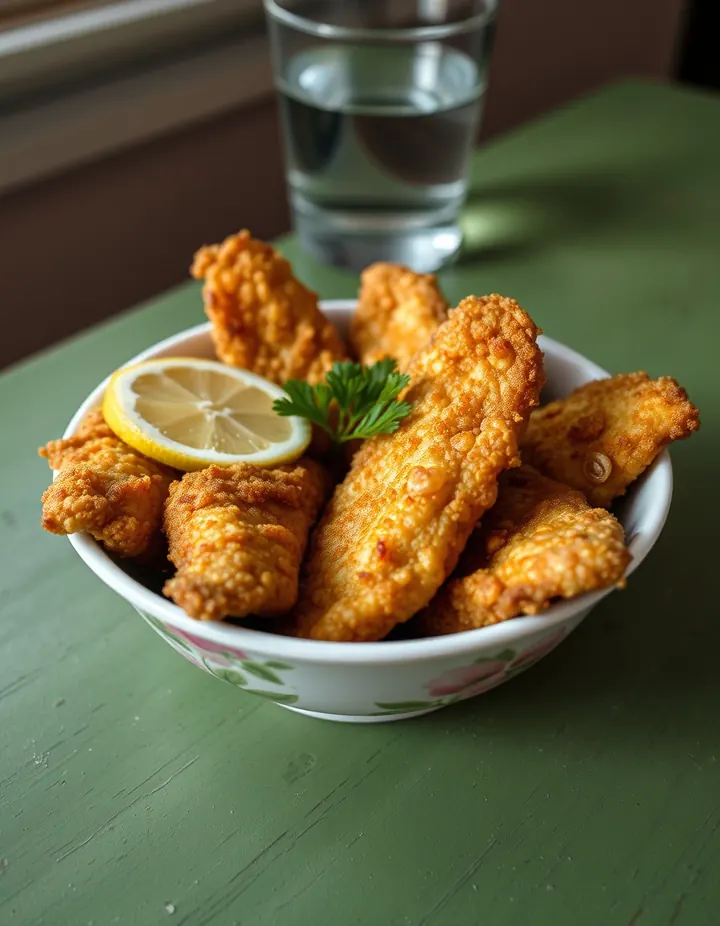 Fried Fish120 recipes
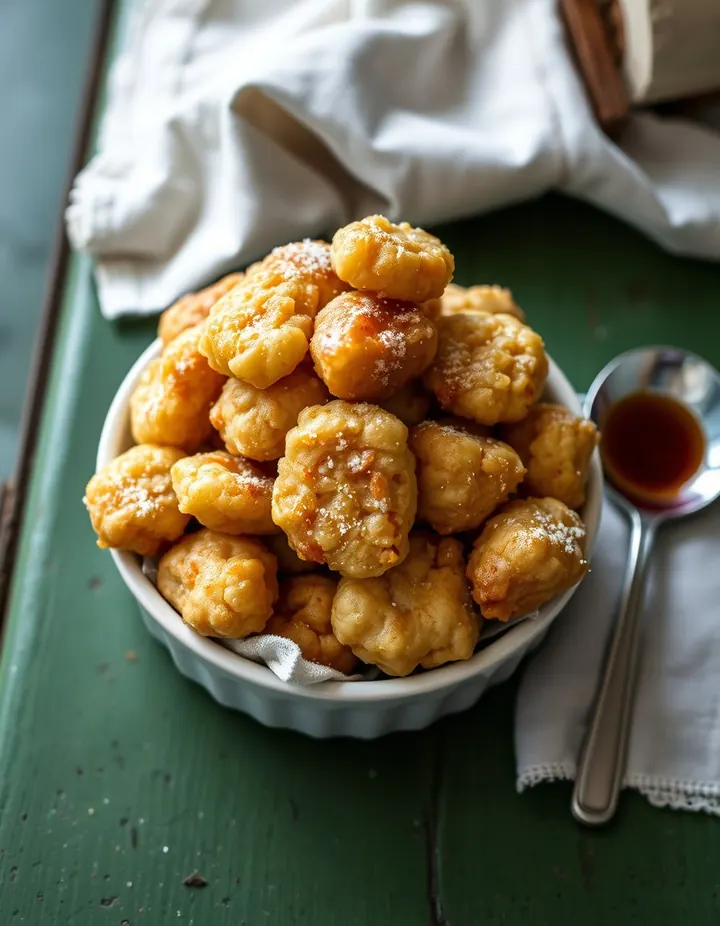 Rice Fritters84 recipes
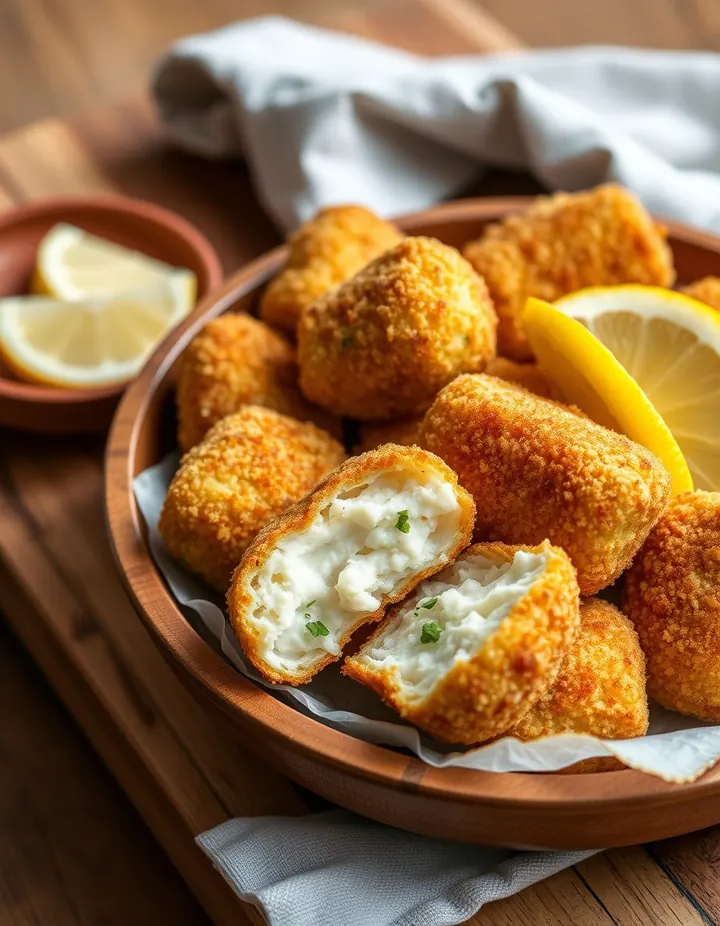 Fish Croquettes81 recipes
The free Flavor Lab newsletter: one surprising pairing a week and the molecular reason it works, in 60 seconds. No spam, unsubscribe anytime.
Prefer an account? Create a free account to save pairings and unlock the full chemistry.