Why it works: Potato and dill work together. They rank in the top 3% of all ingredient pairs, and cooks put them together in 423 recipes. Both carry 2-isopropyl-3-methoxypyrazine, which smells earthy, pea. The science ↓
Swedish Meatballs II
Ingredients
Directions
Make the meatballs
Mix ground beef lightly with mashed potatoes, onion, beets, dill pickles, eggs, cream, 1 tsp salt, and pepper until well blended.
Shape into 36 meatballs, then flatten each slightly.
Brown a few at a time in butter or margarine in a large frying pan, adding butter or margarine as needed.
When cooked through, remove with a slotted spoon and set aside.
Make the gravy and serve
Blend flour and remaining tsp of salt into the drippings in the pan (add more black pepper if you like); stir in the beef broth, milk, nutmeg, and Worcestershire sauce.
Cook, stirring constantly, until the gravy thickens.
Place the meatballs in the gravy and simmer 10-15 minutes on low.
Serve over hot cooked noodles.
Nutrition, whole recipe (rough)
What these numbers assume: 14 portions
| Ingredient | Portion assumed | kcal |
|---|---|---|
| Flour | 1 cup (125g) all-purpose | 455 |
| Beef | 100g cooked | 250 |
| Potato | 1 medium (173g) baked | 161 |
| Milk | 1 cup (244ml) whole | 149 |
| Butter | 1 tbsp (14g) | 102 |
| Egg | 1 large egg (50g) | 78 |
| Cream | 1 tbsp (15ml) heavy | 51 |
| Onion | 1 medium (110g) | 44 |
| Beet | 1/2 cup (85g) | 35 |
| Nutmeg | 1 tsp ground (2.2g) | 12 |
| Soy Sauce | 1 tbsp (15ml) | 9 |
| Black Pepper | 1 tsp ground (2.3g) | 6 |
| Dill | 5 sprigs fresh (1g) / 1 tsp dried | 4 |
| Salt | 1 tsp (6g) | 0 |
One typical portion per ingredient; the recipe's quantities are not counted. A rough guide only, not for medical or dietary planning.
Steps grouped into stages for easier reading; the method is the source's own.
Explore the science
The flavor team
The pairs that carry this dish. Each one is judged two ways: how much their aromas overlap, and how often cooks already put them together.
-
Potato + dilltop 3% of all pairsSmell alikemoderateCooked together423 recipes
Shared aroma: 2-isopropyl-3-methoxypyrazine (earthy, pea).
-
Potato + oniontop 3% of all pairsSmell alikemoderateCooked together9,023 recipes
Shared aroma: 2-isopropyl-3-methoxypyrazine (earthy, pea).
-
Dill + peppertop 4% of all pairsSmell alikestrongCooked together1,630 recipes
Shared aroma: 2-isopropyl-3-methoxypyrazine (earthy, pea).
-
Beef + oniontop 7% of all pairsSmell alikemoderateCooked together17,092 recipes
Shared aroma: 2-isopropyl-3-methoxypyrazine (earthy, pea).
-
Beef + potatotop 8% of all pairsSmell alikemoderateCooked together2,052 recipes
Shared aroma: sotolon (curry, maple).
Ranks compare each pair with 20,000 random ingredient pairs on CompKitchen. How we score pairs
What each ingredient does
- Ground beef
- Forms the main body of the meatballs and provides savory meaty flavor.
- Potatoes
- Add moisture and softness, keeping the meatballs tender rather than dense.
- Eggs
- Bind the mixture so the meatballs hold their shape while cooking.
- All-purpose flour
- Thickens the pan drippings and broth into a smooth, cohesive gravy.
- Light cream
- Adds moisture and richness to the meatball mixture for a tender texture.
- Beef broth
- Forms the savory liquid base of the gravy.
The step that matters
Stirring the gravy as it thickens. Flour thickens liquid only when it is whisked into the fat and hot liquid smoothly; if it is not stirred constantly while cooking, it can clump and leave a lumpy, uneven gravy.
Swap the dill
How well each one fits the dish's main ingredients (beef, potato, onion, egg, cream, pepper, butter):
- Parsleyfits better
- Garlicfits better
- Nutmegfits better
- Dillthe original
Fit is the average pairing score against beef, potato, onion, egg, cream, pepper, butter. Candidates are from the same food group and used in at least 100 recipes.
“What each ingredient does” and “The step that matters” were written by Claude from this recipe’s own method and reviewed in samples by CompKitchen.
You might also like
 Potato Croquettes255 recipes
 Roast Beef211 recipes
 Beef Loaf175 recipes
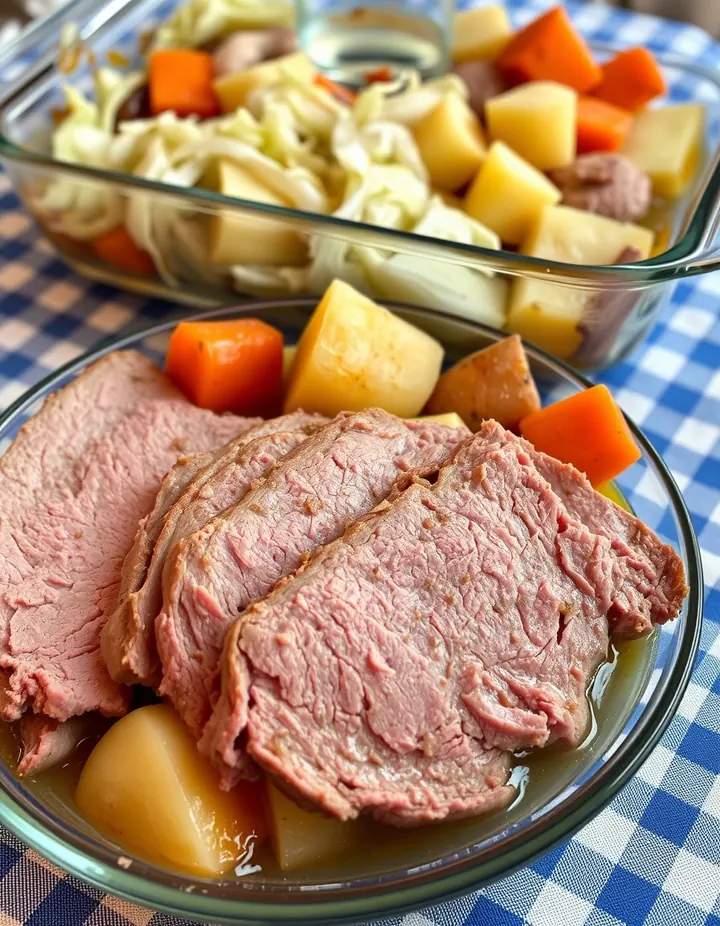 Corned Beef87 recipes
The free Flavor Lab newsletter: one surprising pairing a week and the molecular reason it works, in 60 seconds. No spam, unsubscribe anytime.
Prefer an account? Create a free account to save pairings and unlock the full chemistry.