Why it works: Catfish and lemon work together. They rank in the top 12% of all ingredient pairs, and 97 recipes mention both. Both carry 2-methylbutyraldehyde, which smells malty, chocolate. The science ↓
The recipe
Makes about 3/4 cup sauceIngredients
Contains: egg, fish (auto-detected from the ingredients and method; we can miss things, so check labels)
- For the catfish
- For the lemon-watercress sauce
Directions
Prepare the catfish
Sprinkle catfish with garlic salt and lemon pepper.
Preheat broiler.
Place fish on greased rack of unheated broiler pan.
Tuck under any thin edges.
Broil and make the sauce
Broil 3 inches from heat for 4 to 6 minutes or until fish flakes easily with a fork.
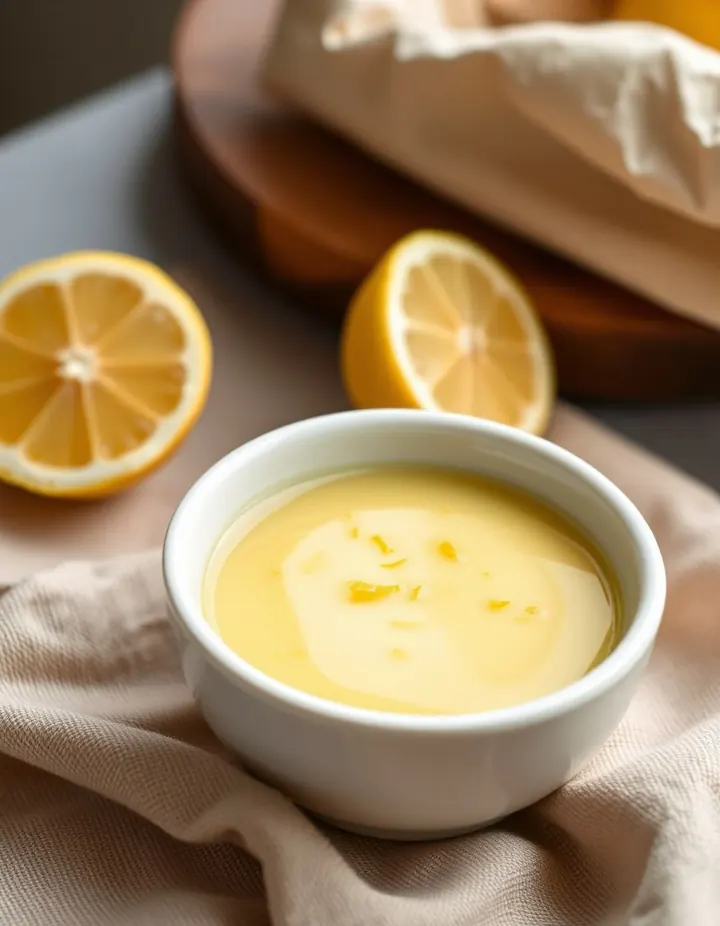
Combine egg yolk, watercress, parsley, lemon peel, lemon juice, mustard, garlic, salt, and pepper in food processor or blender. Process or blend until smooth.
With machine running, slowly add oil in a thin stream, processing or blending until well combined.
Cover and chill. Makes about 3/4 cup sauce.
This recipe comes from the Recipes Wiki on Fandom and is licensed CC BY-SA 4.0. Our formatting and summaries are shared under the same licence.
Steps grouped into stages for easier reading; the method is the source's own.
Found this recipe through an AI assistant? CompKitchen also shows which ingredients go well together and why, from the aroma molecules they share and how often recipes combine them. Try the pairing tools.
Explore the science
The flavor team
The pairs that carry this dish. Each one is judged two ways: how much aroma chemistry they share, and how many recipes mention both.
-
Catfish + lemontop 12% of all pairsAroma overlaplowMentioned together97 recipes
Shared aroma: 2-methylbutyraldehyde (malty, chocolate).
-
Parsley + lemontop 1% of all pairsAroma overlapstrongMentioned together14,036 recipes
Shared aroma: beta-phellandrene (minty, terpene).
-
Pepper + parsleytop 2% of all pairsAroma overlapstrongMentioned together34,118 recipes
Shared aroma: 4'-methylacetophenone (bitter almond).
-
Pepper + lemontop 2% of all pairsAroma overlapstrongMentioned together27,039 recipes
Shared aroma: 2-nonenal (fatty, green).
-
Watercress + mustardtop 3% of all pairsAroma overlapstrongMentioned together293 recipes
Shared aroma: coumarin (sweet, hay).
Ranks compare each pair with 20,000 random ingredient pairs on CompKitchen. How we score pairs
What each ingredient does
- Egg yolk
- Emulsifies the oil into the sauce, giving it a thick, creamy body.
- Dijon mustard
- Helps hold the oil and lemon juice together in a stable emulsion.
- Vegetable oil
- Provides fat that makes the sauce rich and smooth once emulsified.
- Lemon juice
- Adds acidity that brightens the sauce and balances the rich oil.
The step that matters
Adding the oil slowly to the sauce. Oil must be added in a thin stream while the machine runs so the egg yolk can emulsify it. Adding it too fast breaks the mixture, leaving a greasy, separated sauce instead of a smooth, thick one.
Flavor stand-ins for the mustard
How well each one fits the dish's main ingredients (catfish, garlic, pepper, egg, watercress, parsley, lemon):
- Spinachbetter flavor fit
- Chivebetter flavor fit
- Potatobetter flavor fit
- Mustardthe original
Fit is the average pairing score against catfish, garlic, pepper, egg, watercress, parsley, lemon. Candidates are from the same food group and used in at least 100 recipes. This compares flavor only: it does not check the job the ingredient does in the dish (bulk, moisture, acidity, structure).
“What each ingredient does” and “The step that matters” were written by Claude, an AI, from this recipe’s own method. They are not checked recipe by recipe, so they can be wrong.
Make it your own
Stand-ins, a drink, and quick taste fixes for this dish, ranked by how well each fits its other ingredients: shared aroma molecules and how often recipes combine them.
You might also like
 Illustration
 Illustration
 Illustration
 Illustration
The Sunday pairing: one pairing, the chemistry behind it, and how to cook it. No spam, unsubscribe anytime.
Prefer an account? Create a free account for sign-in; Pro adds the full results and chemistry.