Why it works: Thyme and apricot share more aroma than cooks usually use. They rank in the top 7% of all ingredient pairs, and 62 recipes mention both. Both carry methyl 2-methylbutyrate, which smells apple, fatty. The science ↓
The recipe
Ingredients
Contains: egg, milk, wheat (auto-detected from the ingredients and method; we can miss things, so check labels)
- Creole Mustard-Apricot Sauce
Directions
Mix the flour, baking powder, sugar and salt in a bowl. Reserve.
Beat the egg yolks until light, then whisk in the milk, lemon zest, thyme, garlic and cayenne.
Stir in the dry ingredients until just mixed.
Gently fold in the avocado. Reserve.
Whip the egg whites until stiff, then fold them into the avocado mixture.
Heat the vegetable oil to 350-365°F (175-185°C). Deep fry 6 generous tablespoons of batter at a time until golden, about 3 to 4 minutes.
Cut one fritter open to check that the centre is set and reaches 160°F (71°C). Drain on paper towels.
Keep the fritters warm in a 200°F (95°C) oven until all the batter is used, no longer than 2 hours. Refrigerate leftovers within 2 hours.
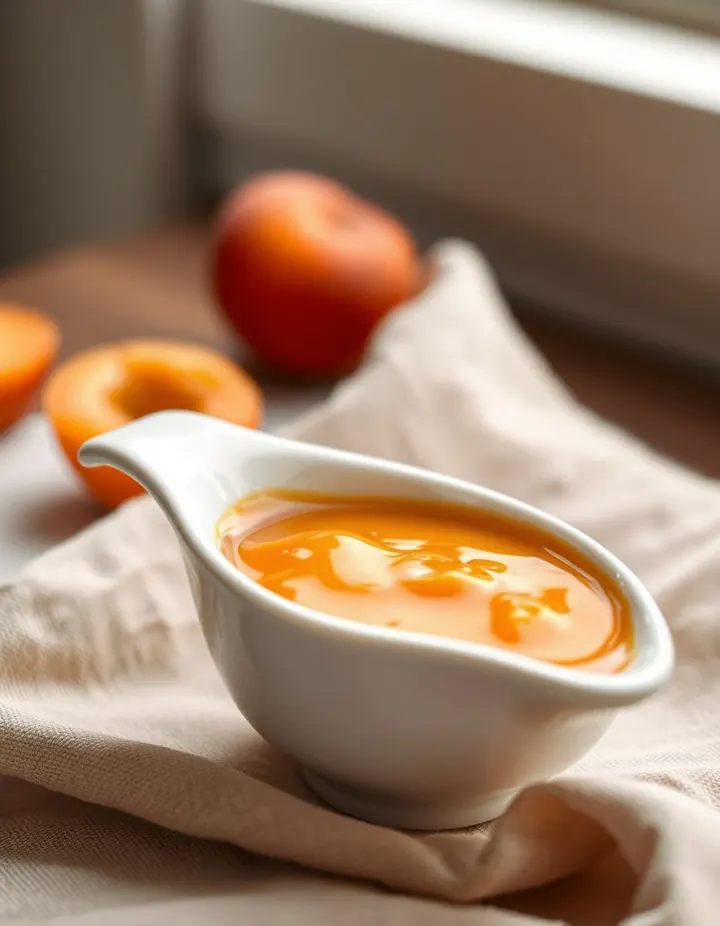
Serve 3 per serving with 1/4 cup Creole Mustard-Apricot Sauce.
Thoroughly mix the apricot jam, mustard and water. Reserve.
Original method from the source (10 steps)
Mix dry ingredients, reserve.
Beat egg yolks until light, whisk in milk, lemon zest, thyme, garlic, and cayenne.
Stir in dry ingredients until just mixed.
Gently fold in avocado, reserve.
Whip egg whites until stiff, fold into avocado mixture.
Deep fry 6 generous tablespoons at a time until golden, about 3 minutes.
Keep warm until all batter is used.
Serve 3 per serving with 1/4 cup Creole Mustard-Apricot Sauce
Sauce Preparation
Thoroughly mix apricot jam, mustard and water, reserve.
This recipe comes from the Recipes Wiki on Fandom and is licensed CC BY-SA 4.0. Our formatting, summaries and food-safety edits to the method are shared under the same licence.
The method has been edited by AI to follow current food-safety guidance (safe cooking temperatures, refrigeration, no raw-egg shortcuts). It hasn't been kitchen-tested. The source's original method is under the method.
Found this recipe through an AI assistant? CompKitchen also shows which ingredients go well together and why, from the aroma molecules they share and how often recipes combine them. Try the pairing tools.
Explore the science
The flavor team
The pairs that carry this dish. Each one is judged two ways: how much aroma chemistry they share, and how many recipes mention both.
-
Thyme + apricottop 7% of all pairsAroma overlapstrongMentioned together62 recipes
Shared aroma: methyl 2-methylbutyrate (apple, fatty).
-
Lemon + thymetop 2% of all pairsAroma overlapstrongMentioned together3,973 recipes
Shared aroma: beta-phellandrene (minty, terpene).
-
Lemon + peppertop 2% of all pairsAroma overlapstrongMentioned together27,039 recipes
Shared aroma: 2-nonenal (fatty, green).
-
Thyme + peppertop 3% of all pairsAroma overlapstrongMentioned together11,585 recipes
Shared aroma: beta-phellandrene (minty, terpene).
-
Thyme + garlictop 4% of all pairsAroma overlapmoderateMentioned together5,608 recipes
Shared aroma: beta-phellandrene (minty, terpene).
Ranks compare each pair with 20,000 random ingredient pairs on CompKitchen. How we score pairs
Flavor stand-ins for the garlic
How well each one fits the dish's main ingredients (flour, sugar, egg, milk, lemon, thyme, pepper):
- Marjorambetter flavor fit
- Cardamombetter flavor fit
- Parsleybetter flavor fit
- Garlicthe original
Fit is the average pairing score against flour, sugar, egg, milk, lemon, thyme, pepper. Candidates are from the same food group and used in at least 100 recipes. This compares flavor only: it does not check the job the ingredient does in the dish (bulk, moisture, acidity, structure).
Make it your own
Stand-ins, a drink, and quick taste fixes for this dish, ranked by how well each fits its other ingredients: shared aroma molecules and how often recipes combine them.
You might also like
 Illustration
 Illustration
 Illustration
 Illustration
The Sunday pairing: one pairing, the chemistry behind it, and how to cook it. No spam, unsubscribe anytime.
Prefer an account? Create a free account for sign-in; Pro adds the full results and chemistry.