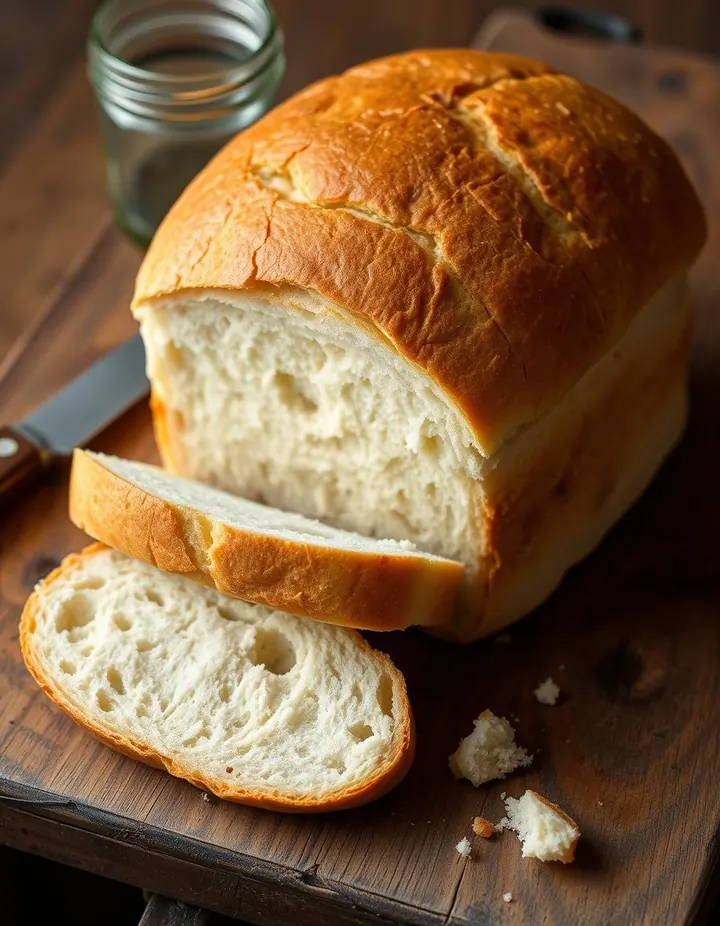
Why it works: Wheat and bread match in chemistry and in kitchens. They rank in the top 5% of all ingredient pairs, and 196 recipes mention both. Both carry 2-acetyl-1-pyrroline, which smells popcorn, roasted. The science ↓
The recipe
Ingredients
Contains: egg, milk, wheat (auto-detected from the ingredients and method; we can miss things, so check labels)
Directions
Prepare the bread
Remove crusts from bread; set crusts aside for another use.
Cover bread slices with paper towels and let stand overnight.
Cut bread into ½ inch cubes (should have about 9 cups).
Make the custard
For custard, in a heavy medium saucepan combine 3 egg yolks, light cream, sugar, and salt.
Cook and stir over medium heat until the mixture coats a metal spoon.
Remove from heat; cool at once by placing the saucepan in a sink of ice water and stirring for 1-2 minutes.
Stir in 1 ½ teaspoons vanilla.
Cover surface with clear plastic wrap.
Soak the fruit
In a small bowl combine raisins.
Place cherries in another bowl.
Heat ¾ cup sherry until warm.
Pour 2/3 cup sherry over raisins; pour remaining sherry over cherries.
Set aside.
Assemble and cook
In a bowl, fold bread into custard until coated.
Grease a 6-½ cup tower mold (without tube).
Drain raisins and cherries, reserving sherry.
Arrange one-fourth of cherries in bottom of the mold; sprinkle 1/3 cup raisins into the mold.
Add one-fourth of bread-cube mixture.
Sprinkle with 2 tablespoons reserved sherry.
Repeat layers three times, arranging cherries and raisins near edges of the mold.
Lightly press last layer with the back of a spoon.
Pour remaining reserved sherry over all.
Cover mold tightly with foil.
Set mold into a 4 quart crockery cooker with liner in place.
Pour 1 cup water into cooker around mold.
Cover; cook on low heat setting about 5 ½ hours or on high-heat setting about 3 hours, or until pudding springs back when touched.
Make the sherry sauce
Meanwhile, for sherry sauce, in a mixing bowl combine 2 egg yolks, powdered sugar, 2 tablespoons sherry, and ¼ teaspoon vanilla.
In a small mixing bowl, beat whipping cream with a rotary beater until soft peaks form.
Gently fold whipped cream into egg-yolk mixture.
Cover and chill until serving time.
Serve
Remove mold from cooker and let stand 10 minutes.
Carefully unmold pudding onto a serving platter.
Serve warm with sherry sauce.
Or, remove pudding from mold, cover, and chill.
To serve, return pudding to the same mold.
Cover with foil and place in the cooker, then pour 1 cup water around mold.
Cover; cook on high-heat setting for 1 ½-2 hours or until warm.
Let stand 10 minutes; unmold and serve with sauce.
For a 5- or 6-quart crockery cooker, use 1 ½ cups water to pour around mold.
Leave remaining ingredient amounts the same.
This recipe comes from the Recipes Wiki on Fandom and is licensed CC BY-SA 4.0. Our formatting and summaries are shared under the same licence.
Steps grouped into stages for easier reading; the method is the source's own.
Found this recipe through an AI assistant? CompKitchen also shows which ingredients go well together and why, from the aroma molecules they share and how often recipes combine them. Try the pairing tools.
Explore the science
The flavor team
The pairs that carry this dish. Each one is judged two ways: how much aroma chemistry they share, and how many recipes mention both.
-
Wheat + breadtop 5% of all pairsAroma overlapstrongMentioned together196 recipes
Shared aroma: 2-acetyl-1-pyrroline (popcorn, roasted).
-
Vanilla + sherrytop 3% of all pairsAroma overlapstrongMentioned together506 recipes
Shared aroma: piperonal (bitter, coconut).
-
Sugar + vanillatop 3% of all pairsAroma overlaplowMentioned together35,031 recipes
Shared aroma: beta-damascenone (apple, rose).
-
Cream + sugartop 5% of all pairsAroma overlapmoderateMentioned together43,437 recipes
Shared aroma: 2,3-butanedione (butter, sweet).
-
Bread + eggtop 6% of all pairsAroma overlapstrongMentioned together22,584 recipes
Shared aroma: 2-nonenal (fatty, green).
Sugar and vanilla share little aroma chemistry, yet 35,031 recipes mention both: they likely work on texture and structure more than aroma.
Ranks compare each pair with 20,000 random ingredient pairs on CompKitchen. How we score pairs
What each ingredient does
- Egg yolks
- Thicken and set the custard that binds the bread cubes together.
- Bread
- Forms the pudding's structure and soaks up the custard.
- Light cream
- Adds richness and a tender, smooth texture to the custard.
- Raisins
- Add pockets of chewy sweetness throughout the pudding.
- Sugar
- Sweetens the custard and supports a soft, tender set.
- Cream sherry
- Adds a fruity, aromatic flavor as it soaks into the raisins and bread.
The step that matters
Cooking the custard. Cook and stir over medium heat only until the mixture coats a spoon. Overheating can scramble the egg yolks and make the custard grainy, so cool it right away.
Flavor stand-ins for the raisin
How well each one fits the dish's main ingredients (wheat, bread, egg, cream, sugar, vanilla, sherry):
- Figbetter flavor fit
- Strawberrybetter flavor fit
- Raspberrybetter flavor fit
- Raisinthe original
Fit is the average pairing score against wheat, bread, egg, cream, sugar, vanilla, sherry. Candidates are from the same food group and used in at least 100 recipes. This compares flavor only: it does not check the job the ingredient does in the dish (bulk, moisture, acidity, structure).
“What each ingredient does” and “The step that matters” were written by Claude, an AI, from this recipe’s own method. They are not checked recipe by recipe, so they can be wrong.
Make it your own
Stand-ins, a drink, and quick taste fixes for this dish, ranked by how well each fits its other ingredients: shared aroma molecules and how often recipes combine them.
You might also like
 Illustration
 Illustration
 Illustration
 Illustration
The Sunday pairing: one pairing, the chemistry behind it, and how to cook it. No spam, unsubscribe anytime.
Prefer an account? Create a free account for sign-in; Pro adds the full results and chemistry.