Why it works: Cider and vinegar are a kitchen classic. They rank in the top 6% of all ingredient pairs, and cooks put them together in 3,431 recipes. Both carry 4-ethyl-2-methoxyphenol, which smells smoky, clove. The science ↓
Brandied Chicken Breasts
Ingredients
Directions
Prepare the chicken
Remove skin and bones from chicken.
Dip chicken in egg.
Roll chicken in breadcrumbs mixed with salt and pepper.
Brown the chicken
Melt butter in a 10‑inch skillet.
Add chicken and brown over medium‑high heat, about 4 minutes on each side.
Discard excess fat.
Make the sauce and finish
Dissolve cornstarch in orange juice in a small saucepan.
Add broth, vinegar, sugar and orange peel.
Cook, stirring, until clear and thickened, about 3 minutes.
Add sauce to chicken and cook, covered, 15 minutes over low heat.
Stir in brandy and heat through.
Serve over fluffy rice.
Nutrition, whole recipe (rough)
Counts 10 of 12 ingredients. The other 2 aren't in our nutrition table and add nothing above, so the real totals are higher.
What these numbers assume: 10 portions
| Ingredient | Portion assumed | kcal |
|---|---|---|
| Flour | 1 cup (125g) all-purpose | 455 |
| Rice | 1 cup cooked (158g) white | 206 |
| Chicken | 100g cooked | 165 |
| Butter | 1 tbsp (14g) | 102 |
| Egg | 1 large egg (50g) | 78 |
| Orange | 1 medium (131g) | 62 |
| Sugar | 1 tbsp (12.5g) granulated | 49 |
| Black Pepper | 1 tsp ground (2.3g) | 6 |
| Vinegar | 1 tbsp (15ml) distilled | 3 |
| Salt | 1 tsp (6g) | 0 |
| Cider | not in our table | 0 |
| Brandy | not in our table | 0 |
One typical portion per ingredient; the recipe's quantities are not counted. A rough guide only, not for medical or dietary planning.
Steps grouped into stages for easier reading; the method is the source's own.
Explore the science
The flavor team
The pairs that carry this dish. Each one is judged two ways: how much their aromas overlap, and how often cooks already put them together.
-
Cider + vinegartop 6% of all pairsSmell alikemoderateCooked together3,431 recipes
Shared aroma: 4-ethyl-2-methoxyphenol (smoky, clove).
-
Pepper + orangetop 10% of all pairsSmell alikestrongCooked together2,402 recipes
Shared aroma: ethyl 2-methylbutyrate (fruity, apple).
-
Pepper + vinegartop 14% of all pairsSmell alikemoderateCooked together27,814 recipes
Shared aroma: 4'-methylacetophenone (bitter almond).
-
Vinegar + sugartop 15% of all pairsSmell alikemoderateCooked together20,806 recipes
Shared aroma: beta-damascenone (apple, rose).
-
Chicken + buttertop 15% of all pairsSmell alikemoderateCooked together13,902 recipes
Shared aroma: 2-furfurylthiol (coffee, roasted).
Ranks compare each pair with 20,000 random ingredient pairs on CompKitchen. How we score pairs
What each ingredient does
- Chicken breasts
- Provide the main protein; the breadcrumb coating holds the meat and browns during searing.
- Egg
- Binds the breadcrumb coating so it adheres to the chicken.
- Dry breadcrumbs
- Form a crisp, browned coating on the outside of the chicken.
- Cornstarch
- Thickens the orange juice and broth into a glossy sauce as it heats.
- Orange juice
- Adds sweetness and acidity, forming the base of the sauce.
- Brandy
- Adds a rich aroma to the sauce; most of its alcohol cooks off during heating.
The step that matters
Thicken the sauce before adding the chicken. Cornstarch only thickens fully when it is cooked until the mixture boils and turns clear. Adding the sauce to the chicken before it has thickened can leave it thin and watery.
Swap the orange
How well each one fits the dish's main ingredients (chicken, egg, pepper, butter, cider, vinegar, sugar):
- Lemonfits better
- Grapefits better
- Plumfits better
- Orangethe original
Fit is the average pairing score against chicken, egg, pepper, butter, cider, vinegar, sugar. Candidates are from the same food group and used in at least 100 recipes.
“What each ingredient does” and “The step that matters” were written by Claude from this recipe’s own method and reviewed in samples by CompKitchen.
You might also like
 Chicken Broth257 recipes
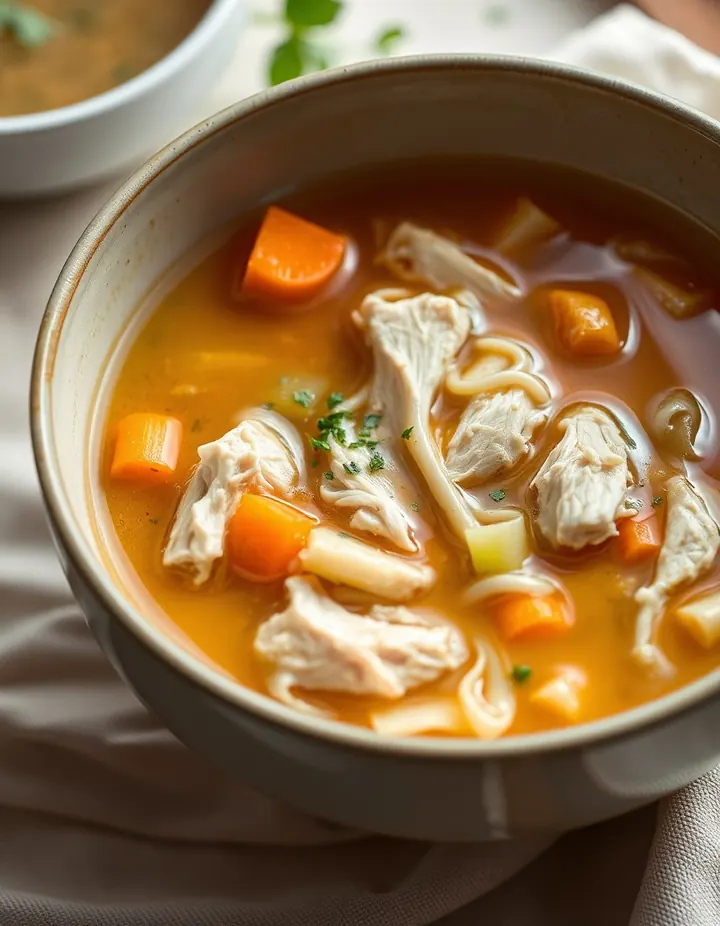 Chicken Soup156 recipes
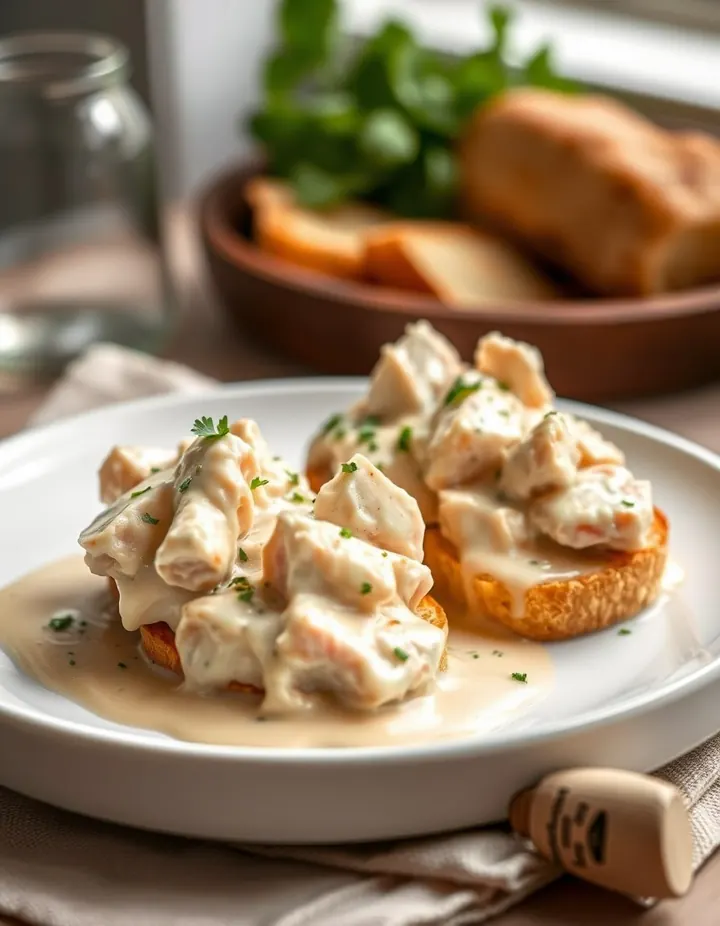 Creamed Chicken89 recipes
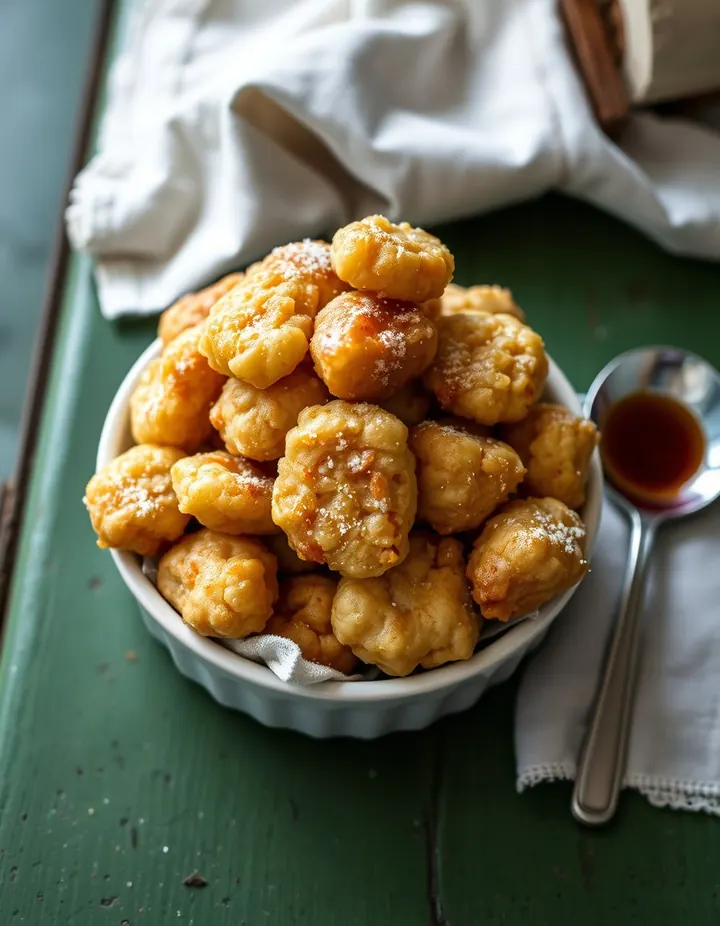 Rice Fritters84 recipes
The free Flavor Lab newsletter: one surprising pairing a week and the molecular reason it works, in 60 seconds. No spam, unsubscribe anytime.
Prefer an account? Create a free account to save pairings and unlock the full chemistry.