Why it works: Pumpkin and chicken work together. They rank in the top 8% of all ingredient pairs, and 700 recipes mention both. Both carry 2,3-pentanedione, which smells butter, sweet. The science ↓
The recipe
four bowlsIngredients
Contains: milk (auto-detected from the ingredients and method; we can miss things, so check labels)
Directions
Make the soup base
Heat the oil in a large saucepan over low heat.
Add the vegetables, fresh pumpkin, thyme, and bay leaf.
Reduce the heat, cover, and let cook gently for 8 minutes. Stir occasionally to keep the vegetables from browning.
Add the broth and the canned pumpkin if using; bring to a boil, reduce heat, and simmer uncovered for 20 minutes (fresh pumpkin) or 10 minutes (canned pumpkin).
Puree and finish
Puree the mixture in batches in a blender.
Pour the pureed soup through a fine strainer back into the saucepan and return to a boil.
If the soup seems too thick, thin with a little hot broth or water.
Reheat the soup to boiling.
Pour the soup back into the blender, add the cottage cheese and powdered milk, and blend for 20 seconds.
Taste for seasoning.
Serve
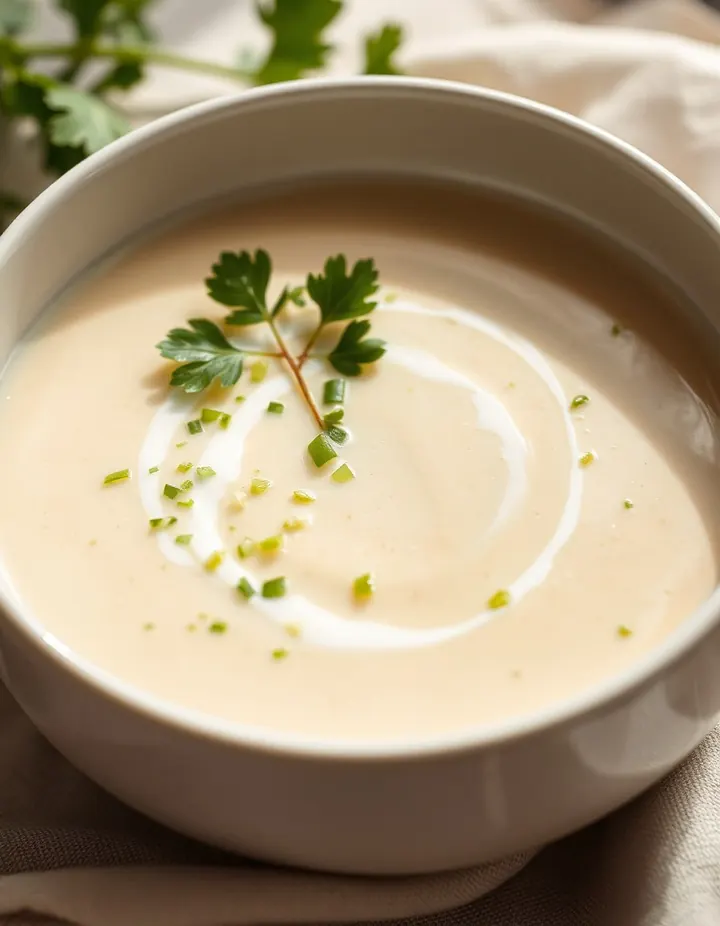
Ladle the soup into four heated bowls and sprinkle two tablespoons of minced fine herbs over each. Serve immediately.
This recipe comes from the Recipes Wiki on Fandom and is licensed CC BY-SA 4.0. Our formatting and summaries are shared under the same licence.
Steps grouped into stages for easier reading; the method is the source's own.
Explore the science
The flavor team
The pairs that carry this dish. Each one is judged two ways: how much aroma chemistry they share, and how many recipes mention both.
-
Pumpkin + chickentop 8% of all pairsAroma overlapmoderateMentioned together700 recipes
Shared aroma: 2,3-pentanedione (butter, sweet).
-
Onion + garlictop 1% of all pairsAroma overlapstrongMentioned together29,030 recipes
Shared aroma: furaneol (caramel, strawberry).
-
Celery + thymetop 3% of all pairsAroma overlapstrongMentioned together3,188 recipes
Shared aroma: beta-phellandrene (minty, terpene).
-
Garlic + chickentop 3% of all pairsAroma overlapmoderateMentioned together10,839 recipes
Shared aroma: 3-ethyl-2,5-dimethylpyrazine (roasted, nutty).
-
Onion + chickentop 4% of all pairsAroma overlapmoderateMentioned together17,808 recipes
Shared aroma: gamma-nonanolactone (coconut, sweet).
Ranks compare each pair with 20,000 random ingredient pairs on CompKitchen. How we score pairs
What each ingredient does
- Pumpkin
- Provides the bulk of the soup and its sweet, smooth body once pureed.
- Chicken broth
- Supplies the liquid that carries the flavor and sets the soup's consistency.
- Cottage cheese
- Adds creaminess and body to the pureed soup without cream.
- Powdered milk
- Adds milk solids that thicken slightly and give a richer, rounder texture.
- Onion
- Builds a savory aromatic base as it softens in the oil.
- Celery
- Contributes aromatic depth to the base as it cooks gently.
The step that matters
Cooking the vegetables gently without browning. Browning the onion and celery over heat adds bitter, toasted notes that clash with the delicate pumpkin. Low heat and stirring keep the vegetables sweet and pale, so the soup stays mild and clean-flavored.
Flavor stand-ins for the safflower
How well each one fits the dish's main ingredients (pumpkin, onion, garlic, celery, thyme, chicken, cheese):
- Rosemarybetter flavor fit
- Oreganobetter flavor fit
- Basilbetter flavor fit
- Safflowerthe original
Fit is the average pairing score against pumpkin, onion, garlic, celery, thyme, chicken, cheese. Candidates are from the same food group and used in at least 100 recipes. This compares flavor only: it does not check the job the ingredient does in the dish (bulk, moisture, acidity, structure).
“What each ingredient does” and “The step that matters” were written by Claude from this recipe’s own method and reviewed in samples by CompKitchen.
You might also like
 Illustration
 Illustration
 Illustration
 Illustration
The Sunday pairing: one pairing, the chemistry behind it, and how to cook it. No spam, unsubscribe anytime.
Prefer an account? Create a free account for sign-in; Pro adds the full results and chemistry.