Why it works: Cheese and asparagus match in chemistry and in kitchens. They rank in the top 9% of all ingredient pairs, and 218 recipes mention both. Both carry 2-isopropyl-3-methoxypyrazine, which smells earthy, pea. The science ↓
The recipe
Ingredients
Contains: egg, milk, wheat (auto-detected from the ingredients and method; we can miss things, so check labels)
Directions
Prepare
Preheat oven to 375°F and place rack on lowest level.
Butter two 8‑oz. ramekins and dust sides and bottoms with 1 Tbsp. Parmesan each, then place on a baking sheet.
Make the béchamel
Warm milk in a saucepan. Melt butter in a second saucepan over medium‑low heat. Stir in flour until smooth and cook 2–3 minutes, stirring with a wooden spoon; allow to bubble but not brown.
Take the pan off heat, whisk in warm milk, and return to heat; whisk vigorously, scraping bottom and sides to prevent scorching. When the mixture simmers, reduce heat to low and cook, stirring often from sides and bottom, 5 minutes or until thick. Season with salt, pepper, and nutmeg. Remove from heat and stir for 1 minute more. Beat in egg yolks one at a time.
Whip and fold
Using electric beaters, beat 4 egg whites in a bowl, starting at low speed and slowly increasing until they begin to foam. Add cream of tartar and salt, and beat until satin‑peaks form and hold their shape; do not overbeat.
Combine the remaining cheeses. Using a rubber spatula, stir one‑quarter of the beaten whites into the béchamel. Pour the béchamel into the center of the remaining whites and fold together. With each fold, sprinkle in a handful of the cheese mixture and a handful of asparagus, giving the bowl a quarter turn. When everything is added and the mixture is uniform, carefully spoon into the soufflé dishes. Put the baking sheet on the bottom rack.
Bake and serve
Bake 20–25 minutes, or until puffy and browned; do not overcook—centers should be slightly runny. Serve.
This recipe comes from the Recipes Wiki on Fandom and is licensed CC BY-SA 4.0. Our formatting and summaries are shared under the same licence.
Steps grouped into stages for easier reading; the method is the source's own.
Explore the science
The flavor team
The pairs that carry this dish. Each one is judged two ways: how much aroma chemistry they share, and how many recipes mention both.
-
Cheese + asparagustop 9% of all pairsAroma overlapstrongMentioned together218 recipes
Shared aroma: 2-isopropyl-3-methoxypyrazine (earthy, pea).
-
Milk + buttertop 3% of all pairsAroma overlapstrongMentioned together81,222 recipes
Shared aroma: (z)-4-heptenal (biscuit, cream).
-
Butter + cheesetop 3% of all pairsAroma overlapstrongMentioned together7,955 recipes
Shared aroma: delta-dodecalactone (sweet, creamy).
-
Butter + creamtop 3% of all pairsAroma overlapstrongMentioned together41,494 recipes
Shared aroma: delta-dodecalactone (sweet, creamy).
-
Milk + cheesetop 4% of all pairsAroma overlapstrongMentioned together4,424 recipes
Shared aroma: delta-dodecalactone (sweet, creamy).
Ranks compare each pair with 20,000 random ingredient pairs on CompKitchen. How we score pairs
What each ingredient does
- Eggs
- Whipped whites trap air and set into the soufflé's light, risen structure, while yolks enrich the base.
- All-purpose flour
- Flour with melted butter forms a roux that thickens the milk into a stable béchamel base.
- Low-fat milk
- Milk forms the liquid of the béchamel, hydrating the flour and creating a smooth, pourable sauce.
- Unsalted butter
- Butter adds fat and a rich flavor to the roux that starts the béchamel.
- Lite jarlsberg cheese
- Melting cheese adds savory flavor and richness and helps the soufflé hold its body as it sets.
- Asparagus
- Asparagus adds vegetable flavor and a tender bite throughout the baked soufflé.
The step that matters
Folding the whites into the base. Whites hold the air that makes the soufflé rise. Stirring in the first portion loosens the base, then folding gently keeps most of the air in. Overbeaten or deflated whites produce a dense, flat result.
“What each ingredient does” and “The step that matters” were written by Claude from this recipe’s own method and reviewed in samples by CompKitchen.
You might also like
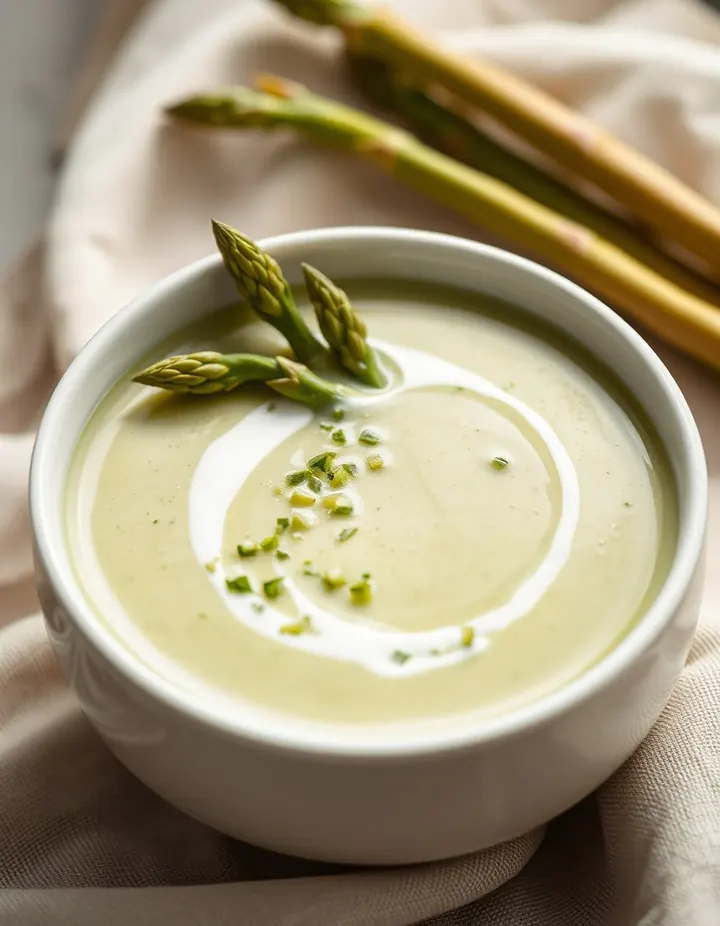 Illustration
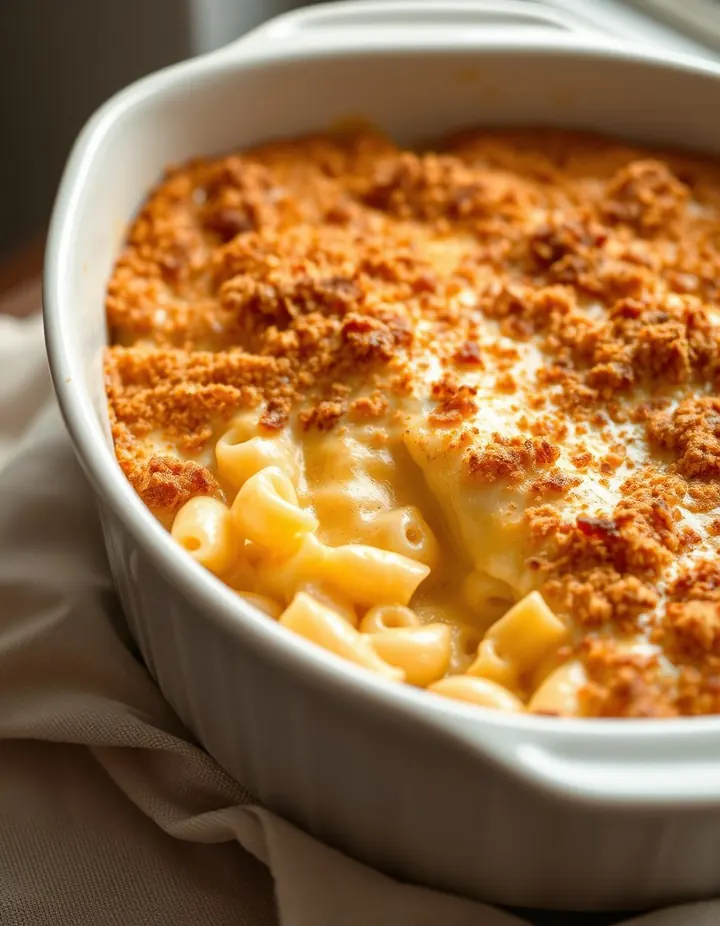 Illustration
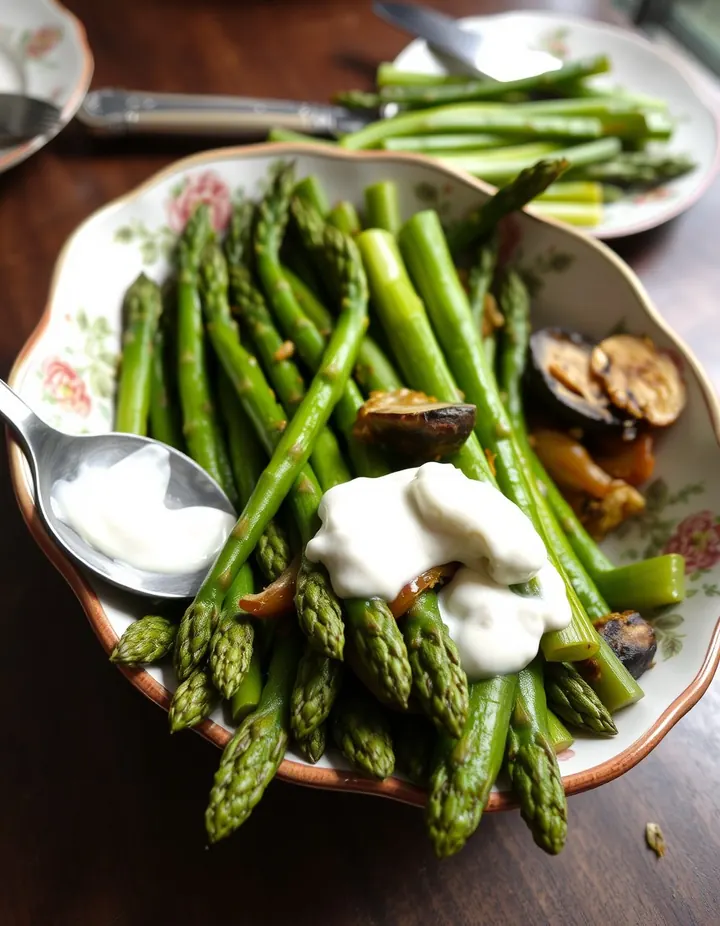 Illustration
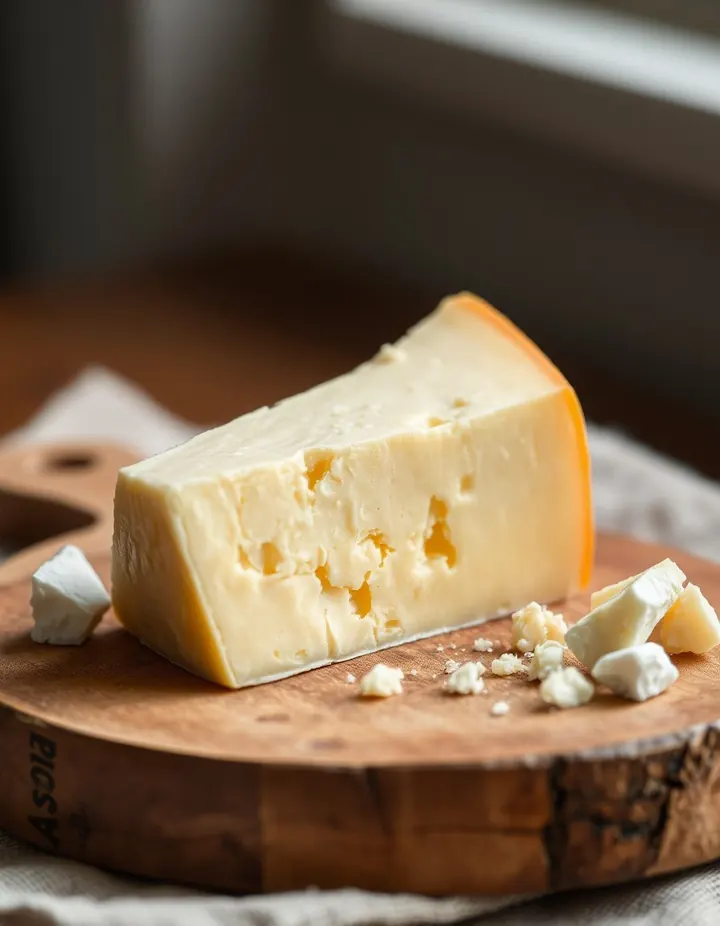 Illustration
The Sunday pairing: one pairing, the chemistry behind it, and how to cook it. No spam, unsubscribe anytime.
Prefer an account? Create a free account for sign-in; Pro adds the full results and chemistry.