Why it works: Beans and olive match in chemistry and in kitchens. They rank in the top 5% of all ingredient pairs, and cooks put them together in 3,470 recipes. Both carry trans,trans-2,4-nonadienal, which smells fatty, green. The science ↓
Gnush
Ingredients
Directions
Prepare
Clean the samp and beans by stirring in water and rinsing.
Put the samp and beans in a pot or saucepan and cover with water to a level at least double that of the samp and beans.
Bring to the boil, then remove from heat and leave to soak in the cooling water for about 8 hours (keep the lid on the pot).
Simmer and finish
Return to heat and simmer for 1 1/2 to 2 hours (until samp and beans soften and water thickens into a sauce).
Top up with water when necessary while cooking so that water level always covers samp and beans.
Add salt and stir it in after at least 1 hour of simmering.
Diced garlic and/or onion rings can be added towards the end of the cooking process.
Stir in margarine or oil when cooked and immediately before serving.
Finely cut parsley can be sprinkled over after serving.
Nutrition, whole recipe (rough)
Counts 4 of 5 ingredients. The other 1 aren't in our nutrition table and add nothing above, so the real totals are higher.
What these numbers assume: 4 portions
| Ingredient | Portion assumed | kcal |
|---|---|---|
| Olive Oil | 1 tbsp (14g) | 119 |
| Butter | 1 tbsp (14g) | 102 |
| Sugar | 1 tbsp (12.5g) granulated | 49 |
| Salt | 1 tsp (6g) | 0 |
| Beans | not in our table | 0 |
One typical portion per ingredient; the recipe's quantities are not counted. A rough guide only, not for medical or dietary planning.
Steps grouped into stages for easier reading; the method is the source's own.
Explore the science
The flavor team
The pairs that carry this dish. Each one is judged two ways: how much their aromas overlap, and how often cooks already put them together.
-
Beans + olivetop 5% of all pairsSmell alikestrongCooked together3,470 recipes
Shared aroma: trans,trans-2,4-nonadienal (fatty, green).
-
Beans + sugartop 26% of all pairsSmell alikemoderateCooked together2,587 recipes
Shared aroma: guaiacol (smoky, sweet).
-
Sugar + olivetop 35% of all pairsSmell alikelowCooked together12,483 recipes
Shared aroma: 1-penten-3-one (fish, pungent).
Sugar and olive barely smell alike, yet cooks put them together in 12,483 recipes: they work on texture and structure more than aroma.
Ranks compare each pair with 20,000 random ingredient pairs on CompKitchen. How we score pairs
What each ingredient does
- Dried maize kernels (samp)
- Forms the thick body of the stew as its starch softens and gelatinises during long simmering.
- Dried beans
- Add protein-rich bulk and a creamy texture as they soften and release starch into the liquid.
- Margarine or olive oil
- Adds richness and a smooth mouthfeel to the finished stew.
The step that matters
Keep the samp and beans fully submerged while simmering. Dried samp and beans absorb water as they cook. If the level drops and they are exposed, they cook unevenly and can scorch on the pot base, so topping up with water keeps them tender and the sauce even.
Swap the beans
How well each one fits the dish's main ingredients (sugar, olive):
- Almondfits better
- Chickpeafits better
- Cashew nutfits about as well
- Beansthe original
Fit is the average pairing score against sugar, olive. Candidates are from the same food group and used in at least 100 recipes.
“What each ingredient does” and “The step that matters” were written by Claude from this recipe’s own method and reviewed in samples by CompKitchen.
You might also like
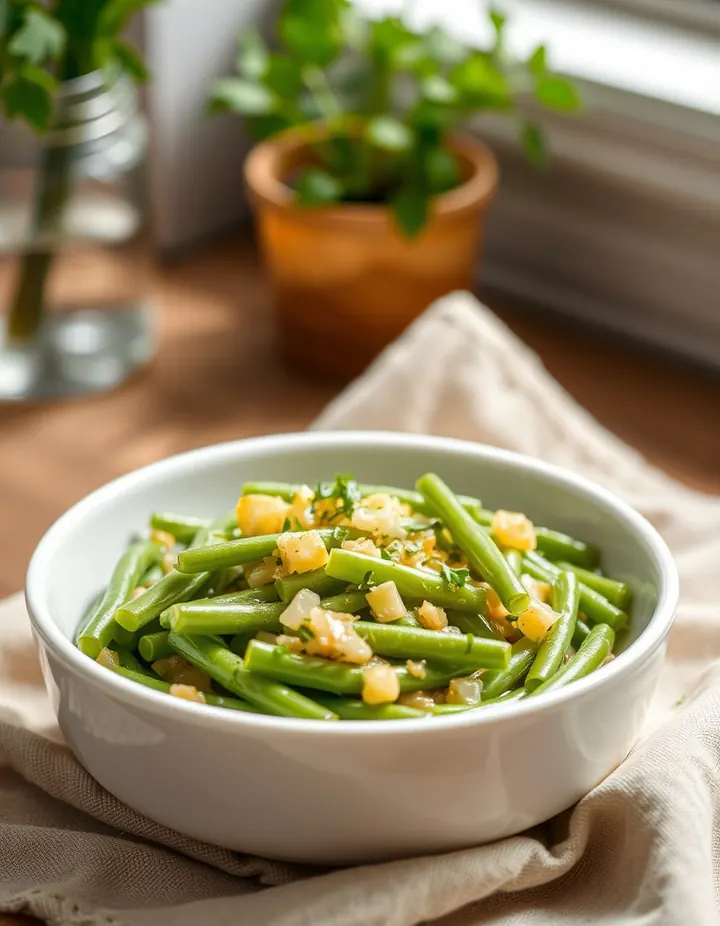 German Style String Beans7 recipes
 Tomato Soup526 recipes
 Brown Bread461 recipes
 Mutton Broth292 recipes
The free Flavor Lab newsletter: one surprising pairing a week and the molecular reason it works, in 60 seconds. No spam, unsubscribe anytime.
Prefer an account? Create a free account to save pairings and unlock the full chemistry.