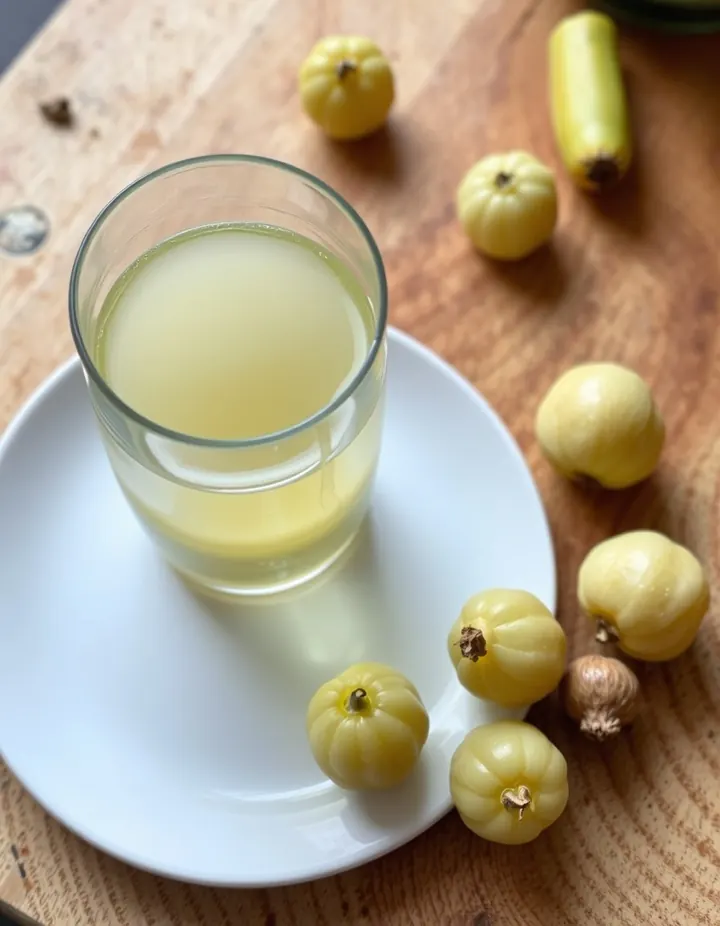
 Illustration
Why it works: Sugar and champagne work together. They rank in the top 14% of all ingredient pairs, and 400 recipes mention both. Both carry guaiacol, which smells smoky, sweet. The science ↓
The recipe
Ingredients
Contains: wheat (auto-detected from the ingredients and method; we can miss things, so check labels)
Directions
Prepare the must
Boil the water with the sugar or honey and skim if necessary.
Take the stems of the berries (tails may be left) and put them in a straining bag.
Crush the berries in the bag with clean hands or a sterilized potato masher.
Be careful to pick only berries that still look good, as bad berries can cause mold.
Pour the hot water over the crushed berries in the bag.
Add the yeast nutrient.
Wait for the mixture to cool before adding the Campden tablet.
Add the Campden tablet.
Cover and fit with an airlock.
Twelve hours after adding the Campden tablet, add the pectic enzyme.
Cover and fit the airlock again.
Wait another twelve hours.
Add the yeast.
Ferment
Stir down daily.
After one week, remove the bag, being careful not to squeeze it.
After the sediment has settled again, rack the wine into a demijohn.
Bung and fit with an airlock.
Rack the wine once or twice during this secondary fermentation.
Taste and mature
After about four to six months, taste the wine.
If it is too dry, add 57 to 170 grams of sugar boiled in water.
The wine will be drinkable in about a year.
This recipe comes from the Recipes Wiki on Fandom and is licensed CC BY-SA 4.0. Our formatting and summaries are shared under the same licence.
Steps grouped into stages for easier reading; the method is the source's own.
The picture is an illustration, not a photo of this recipe · Contact us to use it
Explore the science
The flavor team
The pairs that carry this dish. Each one is judged two ways: how much aroma chemistry they share, and how many recipes mention both.
-
Sugar + champagnetop 14% of all pairsAroma overlaplowMentioned together400 recipes
Shared aroma: guaiacol (smoky, sweet).
Ranks compare each pair with 20,000 random ingredient pairs on CompKitchen. How we score pairs
What each ingredient does
- Gooseberries
- Provide the fruit flavour, acidity and pectin that give the wine its body and character.
- Sugar or honey
- Feeds the yeast to produce alcohol and adds sweetness that balances the acidity.
- Champagne yeast
- Ferments the sugar into alcohol and carbon dioxide.
- Campden tablet
- Sulphites the must to suppress wild microbes and oxidation before fermentation.
- Pectic enzyme
- Breaks down pectin in the fruit so the wine becomes clearer.
The step that matters
Adding the Campden tablet after the mixture cools. Adding sulphite to hot liquid drives off its effect, so the tablet should go in only once the mixture has cooled. It then suppresses wild microbes that could spoil the wine before the yeast takes over.
“What each ingredient does” and “The step that matters” were written by Claude from this recipe’s own method and reviewed in samples by CompKitchen.
More gooseberry wine recipes
You might also like
 Illustration
 Illustration
 Illustration
 Illustration
The Sunday pairing: one pairing, the chemistry behind it, and how to cook it. No spam, unsubscribe anytime.
Prefer an account? Create a free account for sign-in; Pro adds the full results and chemistry.