Why it works: Beans and mustard match in chemistry and in kitchens. They rank in the top 4% of all ingredient pairs, and cooks put them together in 852 recipes. Both carry 2-isopropyl-3-methoxypyrazine, which smells earthy, pea. The science ↓
Pinto Bean and Brisket Supper
Ingredients
Directions
Prepare the beans
Rinse beans under running water and place in a large kettle with water.
Let sit for about 30 minutes then bring to boiling.
Cover, lower heat and cook 15 minutes. Let stand 1 hour.
Brown the brisket
Trim all fat from brisket and brown on all sides in remaining fat in a large skillet.
Place brisket in bottom of heavy duty pot.
Simmer and serve
Add beans, liquid, onion, molasses, salt, ginger, mustard, pepper and bay leaves.
Add water or additional stock if needed to cover meat and beans.
Cover and cook on high for 2 hours adding liquid if necessary.
Reduce to low heat and simmer for 8 hours.
Remove brisket to a carving board and cut into slices.
Spoon beans around beef on platter.
Nutrition, whole recipe (rough)
What these numbers assume: 9 portions
| Ingredient | Portion assumed | kcal |
|---|---|---|
| Beef | 100g cooked | 250 |
| Pinto Bean | 1/2 cup (86g) canned | 122 |
| Molasses | 1 tbsp (20g) | 58 |
| Onion | 1 medium (110g) | 44 |
| Black Pepper | 1 tsp ground (2.3g) | 6 |
| Mustard | 1 tsp (5g) yellow | 3 |
| Ginger | 1 tsp grated fresh (2g) | 2 |
| Bay Leaf | 1 leaf (0.6g) | 2 |
| Salt | 1 tsp (6g) | 0 |
One typical portion per ingredient; the recipe's quantities are not counted. A rough guide only, not for medical or dietary planning.
Steps grouped into stages for easier reading; the method is the source's own.
Explore the science
The flavor team
The pairs that carry this dish. Each one is judged two ways: how much their aromas overlap, and how often cooks already put them together.
-
Beans + mustardtop 4% of all pairsSmell alikestrongCooked together852 recipes
Shared aroma: 2-isopropyl-3-methoxypyrazine (earthy, pea).
-
Onion + mustardtop 6% of all pairsSmell alikestrongCooked together9,259 recipes
Shared aroma: 2-isopropyl-3-methoxypyrazine (earthy, pea).
-
Beef + oniontop 7% of all pairsSmell alikemoderateCooked together17,092 recipes
Shared aroma: 2-isopropyl-3-methoxypyrazine (earthy, pea).
-
Beans + oniontop 7% of all pairsSmell alikestrongCooked together5,242 recipes
Shared aroma: 2-isopropyl-3-methoxypyrazine (earthy, pea).
-
Ginger + peppertop 9% of all pairsSmell alikestrongCooked together6,800 recipes
Shared aroma: 2-isopropyl-3-methoxypyrazine (earthy, pea).
Ranks compare each pair with 20,000 random ingredient pairs on CompKitchen. How we score pairs
What each ingredient does
- Pinto beans
- Provide the body of the soup and thicken the broth as they break down during long simmering.
- Beef brisket
- Supplies rich meat flavor and gelatin that becomes tender during long, slow cooking.
- Beef stock
- Forms the savory liquid base that carries flavor into the beans and meat.
- Dark molasses
- Adds sweetness, color, and a deep caramel-like flavor to the broth.
- Prepared mustard
- Adds sharp acidity that balances the sweetness of the molasses.
The step that matters
Cover and cook on high, then simmer low. Keeping the pot covered at first holds heat and moisture so the brisket and beans soften evenly. Adding liquid as needed prevents scorching and keeps the meat submerged during the long simmer.
Swap the ginger
How well each one fits the dish's main ingredients (beans, beef, onion, molasses, mustard, pepper):
- Cuminfits better
- Garlicfits better
- Celeryfits better
- Gingerthe original
Fit is the average pairing score against beans, beef, onion, molasses, mustard, pepper. Candidates are from the same food group and used in at least 100 recipes.
“What each ingredient does” and “The step that matters” were written by Claude from this recipe’s own method and reviewed in samples by CompKitchen.
You might also like
 Roast Beef211 recipes
 Beef Loaf175 recipes
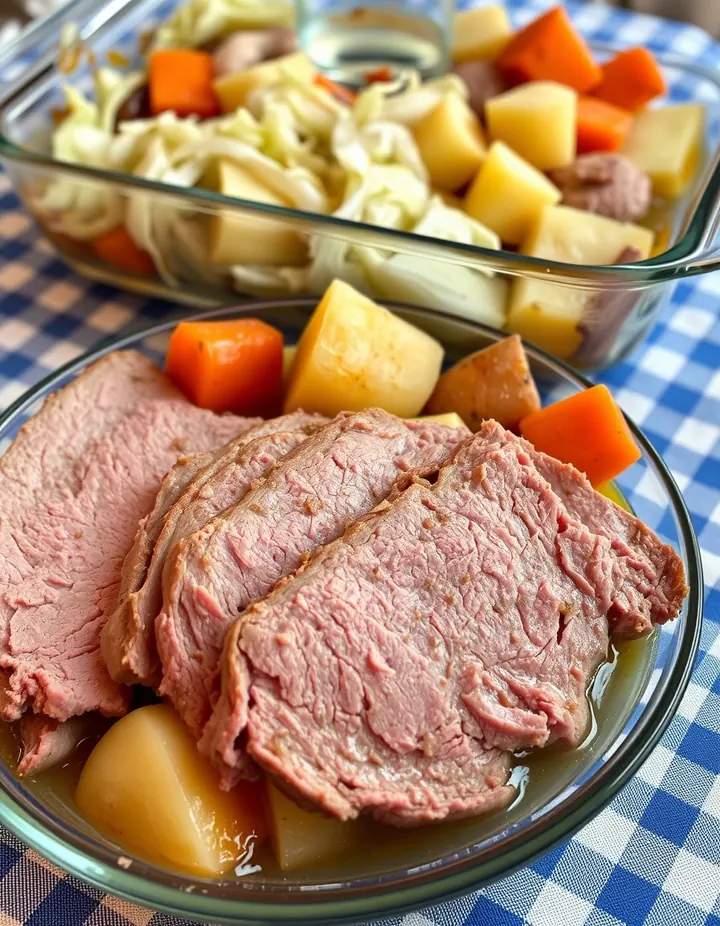 Corned Beef87 recipes
 Beef Broth67 recipes
The free Flavor Lab newsletter: one surprising pairing a week and the molecular reason it works, in 60 seconds. No spam, unsubscribe anytime.
Prefer an account? Create a free account to save pairings and unlock the full chemistry.