Why it works: Butter and cream are a kitchen classic. They rank in the top 8% of all ingredient pairs, and cooks put them together in 41,516 recipes. Both carry delta-dodecalactone, which smells sweet, creamy. The science ↓
Muscadine Pudding Tarts
Ingredients
Directions
Prepare the shells
Unfold 1 piecrust and roll into a 16‑inch circle on a lightly floured surface.
Cut the circle into 4 (5½‑inch) circles.
Fit each circle into a 4½‑inch round tart pan with removable bottom, and place pans on a baking sheet.
Prick the bottom and sides of the pastry with a fork.
Repeat the procedure with the remaining piecrust.
Bake at 450 °F for eight minutes or until lightly browned.
Remove the tart shells to wire racks to cool.
Make the filling
Cook sugar, flour, and Scuppernong juice in a medium saucepan over medium heat, whisking constantly, until the mixture coats the back of a spoon (about five minutes).
Remove from heat and stir in butter and vanilla.
Spoon about 1/3 cup of the mixture into each tart shell; cover and chill.
Finish and serve
Dollop sweetened whipped cream on top.
Garnish, if desired.
Nutrition, whole recipe (rough)
What these numbers assume: 5 portions
| Ingredient | Portion assumed | kcal |
|---|---|---|
| Flour | 1 cup (125g) all-purpose | 455 |
| Butter | 1 tbsp (14g) | 102 |
| Cream | 1 tbsp (15ml) heavy | 51 |
| Sugar | 1 tbsp (12.5g) granulated | 49 |
| Vanilla | 1 tsp extract (4ml) | 12 |
One typical portion per ingredient; the recipe's quantities are not counted. A rough guide only, not for medical or dietary planning.
Steps grouped into stages for easier reading; the method is the source's own.
Explore the science
The flavor team
The pairs that carry this dish. Each one is judged two ways: how much their aromas overlap, and how often cooks already put them together.
-
Butter + creamtop 8% of all pairsSmell alikemoderateCooked together41,516 recipes
Shared aroma: delta-dodecalactone (sweet, creamy).
-
Sugar + vanillatop 8% of all pairsSmell alikelowCooked together35,032 recipes
Shared aroma: beta-damascenone (apple, rose).
-
Sugar + creamtop 9% of all pairsSmell alikemoderateCooked together43,450 recipes
Shared aroma: 2,3-butanedione (butter, sweet).
-
Flour + buttertop 12% of all pairsSmell alikelowCooked together124,287 recipes
Shared aroma: isobutyraldehyde (malty, green).
-
Flour + vanillatop 12% of all pairsSmell alikemoderateCooked together19,241 recipes
Shared aroma: isobutyraldehyde (malty, green).
Sugar and vanilla barely smell alike, yet cooks put them together in 35,032 recipes: they work on texture and structure more than aroma.
Ranks compare each pair with 20,000 random ingredient pairs on CompKitchen. How we score pairs
What each ingredient does
- Piecrusts
- Form the crisp, flaky tart shells that hold the filling.
- Sugar
- Adds sweetness and, with the juice, helps thicken the filling as it cooks.
- Self-rising flour
- Thickens the filling so it sets into a spoonable pudding.
- Scuppernong juice
- Supplies the main muscadine flavor and liquid for the pudding.
- Butter or margarine
- Adds richness and a smooth, silky texture to the filling.
The step that matters
Cooking the filling until it coats a spoon. Flour starch thickens only when the mixture reaches a simmer and is whisked constantly; undercooking leaves the pudding runny, while scorching on the bottom of the pan can happen if it is not stirred.
Swap the vanilla
How well each one fits the dish's main ingredients (sugar, flour, butter, cream):
- Vanillathe original
- Raisinfits about as well
- Coconutfits less well
- Strawberryfits less well
Fit is the average pairing score against sugar, flour, butter, cream. Candidates are from the same food group and used in at least 100 recipes.
“What each ingredient does” and “The step that matters” were written by Claude from this recipe’s own method and reviewed in samples by CompKitchen.
You might also like
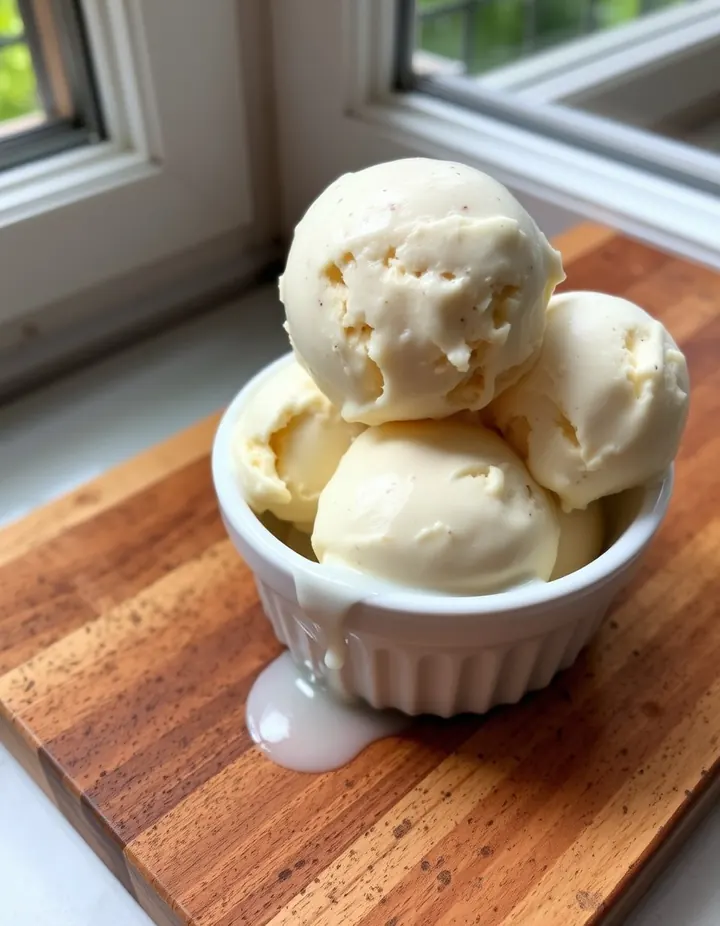 Vanilla Ice Cream108 recipes
 White Cake431 recipes
 Pound Cake373 recipes
 Orange Bundt Cake349 recipes
The free Flavor Lab newsletter: one surprising pairing a week and the molecular reason it works, in 60 seconds. No spam, unsubscribe anytime.
Prefer an account? Create a free account to save pairings and unlock the full chemistry.