Why it works: Pasta and garlic match in chemistry and in kitchens. They rank in the top 2% of all ingredient pairs, and cooks put them together in 2,079 recipes. Both carry acetic acid, which smells sour, vinegar. The science ↓
Chicken, Pesto and Roasted Peppers Fettucine
4 bowlsIngredients
Directions
Prepare the pasta and pesto
Put the pesto in a large bowl.
Cook the pasta according to package instructions.
Drain the pasta.
Reserve 1/3 cup of the pasta water.
Whisk the pasta water into the pesto.
Make the chicken mixture
While the pasta is cooking, heat the oil in a large skillet over medium‑high heat.
Add the garlic and sauté until soft and fragrant, about 30 seconds.
Add the chicken, peppers, and olives. Cook, stirring until hot, about 3 minutes.
Season with salt and pepper.
Combine and serve
Add the pasta and cheese to the pesto and toss and combine.
Add the chicken mixture and combine.
Divide the pasta among 4 bowls and serve immediately.
Pass parmesan at the table.
Nutrition, whole recipe (rough)
Counts 10 of 11 ingredients. The other 1 aren't in our nutrition table and add nothing above, so the real totals are higher.
What these numbers assume: 10 portions
| Ingredient | Portion assumed | kcal |
|---|---|---|
| Pasta | 1 cup cooked (140g) | 220 |
| Chicken | 100g cooked | 165 |
| Olive Oil | 1 tbsp (14g) | 119 |
| Parmesan Cheese | 1 oz (28g) | 110 |
| Bell Pepper | 1 medium (119g) | 31 |
| Black Pepper | 1 tsp ground (2.3g) | 6 |
| Garlic | 1 clove (3g) | 4 |
| Olive | 1 large (4g) | 4 |
| Basil | 5 leaves fresh (2.5g) | 1 |
| Salt | 1 tsp (6g) | 0 |
| Meat | not in our table | 0 |
One typical portion per ingredient; the recipe's quantities are not counted. A rough guide only, not for medical or dietary planning.
Steps grouped into stages for easier reading; the method is the source's own.
Explore the science
The flavor team
The pairs that carry this dish. Each one is judged two ways: how much their aromas overlap, and how often cooks already put them together.
-
Pasta + garlictop 2% of all pairsSmell alikestrongCooked together2,079 recipes
Shared aroma: acetic acid (sour, vinegar).
-
Olive + garlictop 2% of all pairsSmell alikemoderateCooked together25,665 recipes
Shared aroma: linalool (floral, citrus).
-
Basil + olivetop 3% of all pairsSmell alikemoderateCooked together5,063 recipes
Shared aroma: 3-hexenal (apple, fruity).
-
Basil + garlictop 4% of all pairsSmell alikemoderateCooked together4,805 recipes
Shared aroma: linalool (floral, citrus).
-
Basil + peppertop 4% of all pairsSmell alikestrongCooked together5,294 recipes
Shared aroma: methyl cinnamate (strawberry).
Ranks compare each pair with 20,000 random ingredient pairs on CompKitchen. How we score pairs
What each ingredient does
- Basil pesto
- Supplies the main flavor and coats the pasta with oil and herbs.
- Fettuccine pasta
- Provides the starchy base that holds the sauce and chicken.
- Pasta water
- Its starch helps the pesto emulsify into a smooth, clinging sauce.
- Chicken
- Adds protein and substance to the dish.
- Roasted bell peppers
- Add sweetness and soft texture against the pasta.
- Parmesan cheese
- Adds salty, savory depth and helps bind the sauce.
The step that matters
Whisk the pasta water into the pesto. Pesto alone is thick and oily. Adding starchy pasta water while whisking helps the fat and liquid emulsify, so the sauce loosens and clings to the fettuccine instead of pooling or separating.
Swap the clove
How well each one fits the dish's main ingredients (basil, pasta, olive, garlic, chicken, meat, pepper):
- Thymefits better
- Oreganofits better
- Rosemaryfits better
- Clovethe original
Fit is the average pairing score against basil, pasta, olive, garlic, chicken, meat, pepper. Candidates are from the same food group and used in at least 100 recipes.
“What each ingredient does” and “The step that matters” were written by Claude from this recipe’s own method and reviewed in samples by CompKitchen.
You might also like
 Chicken Broth257 recipes
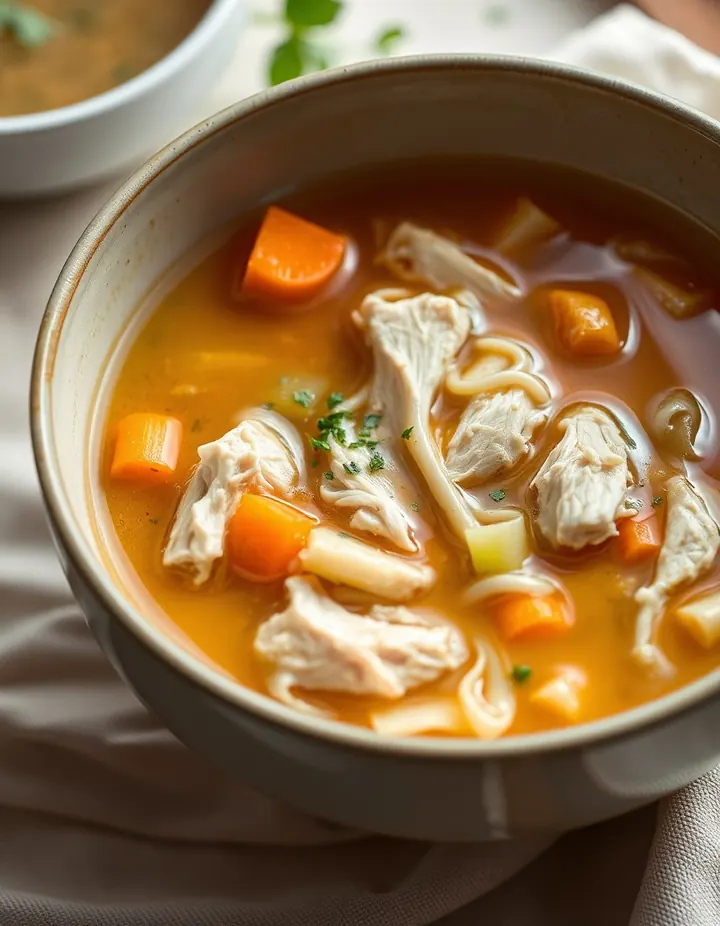 Chicken Soup156 recipes
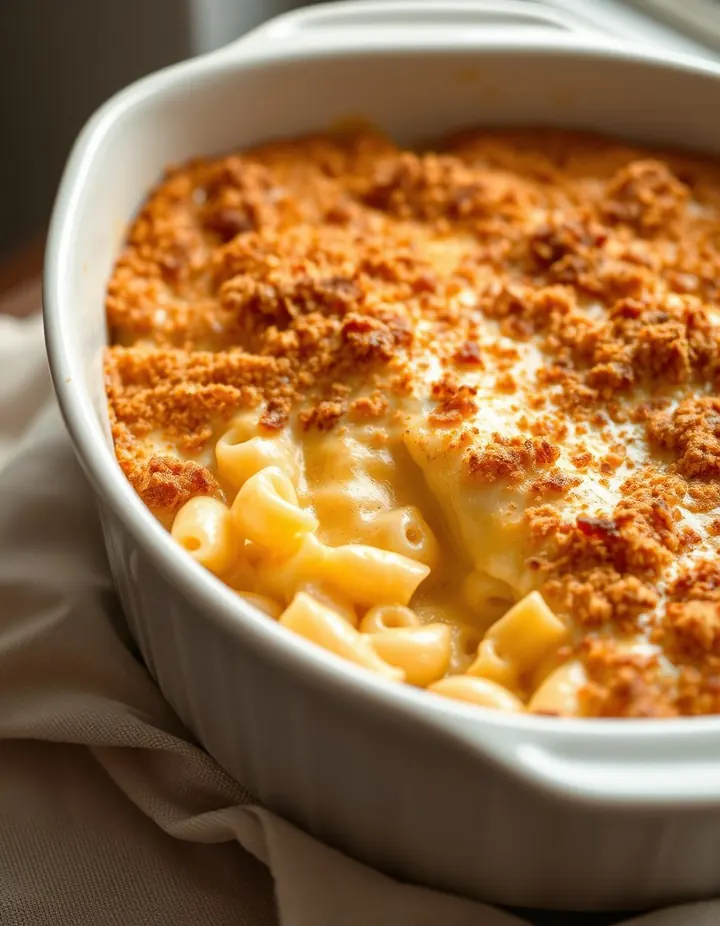 Macaroni and Cheese102 recipes
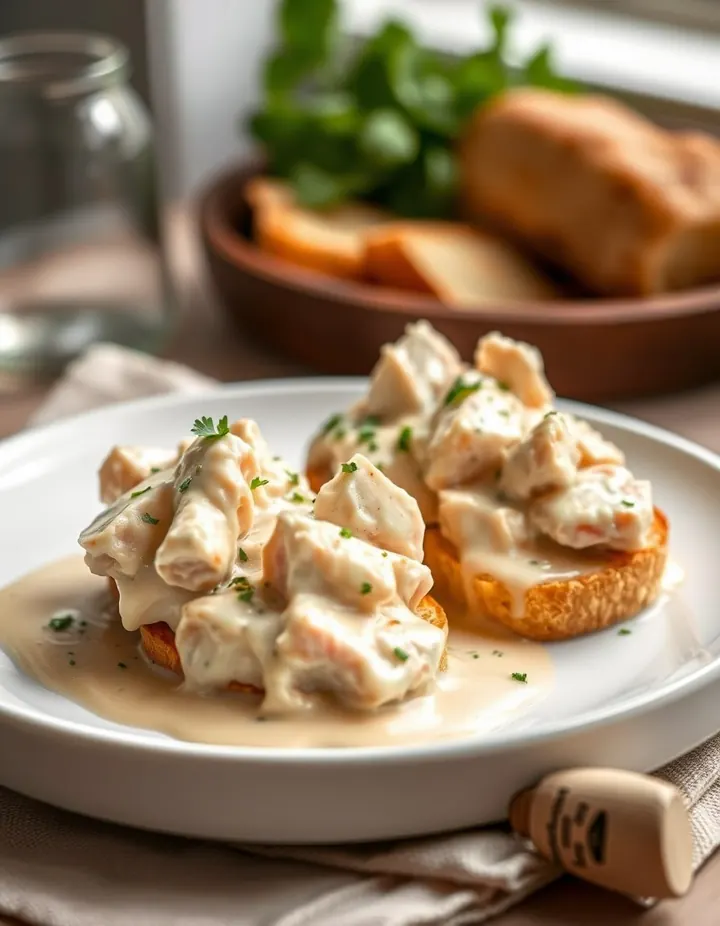 Creamed Chicken89 recipes
The free Flavor Lab newsletter: one surprising pairing a week and the molecular reason it works, in 60 seconds. No spam, unsubscribe anytime.
Prefer an account? Create a free account to save pairings and unlock the full chemistry.