Why it works: Pasta and meat work together. They rank in the top 12% of all ingredient pairs, and 115 recipes mention both. Both carry nonanal, which smells fat, citrus. The science ↓
The recipe
Ingredients
Contains: milk, wheat (auto-detected from the ingredients and method; we can miss things, so check labels)
Directions
Prepare the pasta and meat
Prepare the pasta with 1 tsp of oil and a pinch of salt.
Strain and set aside.
Marinate the meat with salt, chilli, coriander, and 1 tsp of chopped garlic.
Make the white sauce
Prepare the white sauce.
In a pan, melt the butter.
Add remaining chopped garlic and fry until golden.
Add the cornflour and reduce flame.
Pour the milk while stirring continuously until the mixture thickens and no lumps form.
Add salt.
Reduce until the mixture roughly fills 2 cups.
Make the bourbon sauce
Brush another pan with a little oil.
Caramelise the sugar.
Fry the sliced onions until golden brown.
Pour 1 cup of the white sauce and mix with the onions.
Sizzle with a dash of red wine.
Reduce flame and add the meat.
Add salt.
Cover and cook until the meat is done.
Assemble and bake
Mix the remaining white sauce with the pasta.
Preheat an oven to 150°C.
Layer a baking dish with the pasta.
Spread the meat with the bourbon sauce on top.
Cover with the remaining pasta.
Scatter grated cheddar cheese on the surface.
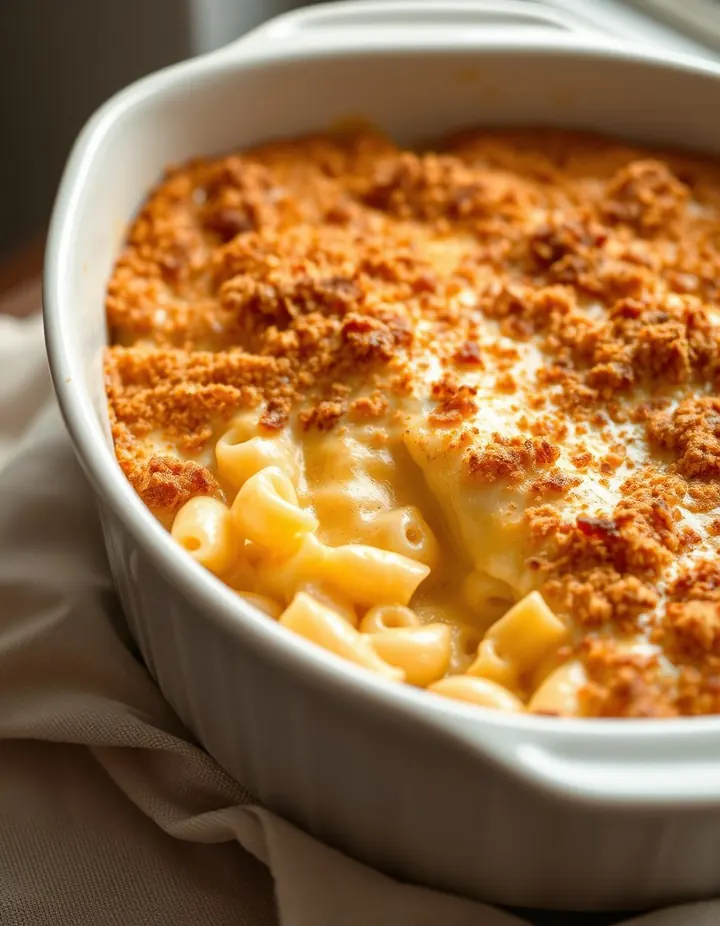
Place in oven and bake for 15 minutes until the cheese melts and turns brown.
Serve with toasted bread and soup.
Cook to a safe temperature. This method doesn't say how hot the inside should get. Check with a food thermometer in the thickest part:
- Chicken, turkey and other poultry: 165°F (74°C), and any stuffing inside it too.
Figures from the USDA's safe minimum internal temperatures.
This recipe comes from the Recipes Wiki on Fandom and is licensed CC BY-SA 4.0. Our formatting and summaries are shared under the same licence.
Steps grouped into stages for easier reading; the method is the source's own.
Found this recipe through an AI assistant? CompKitchen also shows which ingredients go well together and why, from the aroma molecules they share and how often recipes combine them. Try the pairing tools.
Explore the science
The flavor team
The pairs that carry this dish. Each one is judged two ways: how much aroma chemistry they share, and how many recipes mention both.
-
Pasta + meattop 12% of all pairsAroma overlaplowMentioned together115 recipes
Shared aroma: nonanal (fat, citrus).
-
Garlic + oniontop 1% of all pairsAroma overlapstrongMentioned together29,030 recipes
Shared aroma: furaneol (caramel, strawberry).
-
Milk + buttertop 3% of all pairsAroma overlapstrongMentioned together81,222 recipes
Shared aroma: (z)-4-heptenal (biscuit, cream).
-
Cheddar cheese + buttertop 3% of all pairsAroma overlapstrongMentioned together2,434 recipes
Shared aroma: delta-dodecalactone (sweet, creamy).
-
Pasta + garlictop 4% of all pairsAroma overlapmoderateMentioned together2,077 recipes
Shared aroma: acetic acid (sour, vinegar).
Ranks compare each pair with 20,000 random ingredient pairs on CompKitchen. How we score pairs
What each ingredient does
- Pasta
- Forms the bulk and structure of the baked dish, holding the layers together.
- Cornflour
- Thickens the milk into a smooth white sauce that coats the pasta.
- Low-fat milk
- Forms the liquid base of the white sauce, which sets creamy as it thickens.
- Cheddar cheese
- Melts and browns on top, adding richness and a golden crust.
- Minced meat or chicken
- Provides the savoury protein layer, cooked until tender in the sauce.
- Onion
- Browns to add sweetness and depth to the sauce.
The step that matters
Stirring the cornflour and milk until smooth. Cornflour clumps if the milk is added without constant stirring. Stirring while it heats lets the starch granules disperse and thicken evenly into a lump-free sauce.
“What each ingredient does” and “The step that matters” were written by Claude, an AI, from this recipe’s own method. They are not checked recipe by recipe, so they can be wrong.
Make it your own
Stand-ins, a drink, and quick taste fixes for this dish, ranked by how well each fits its other ingredients: shared aroma molecules and how often recipes combine them.
You might also like
 Illustration
 Illustration
 Illustration
 Illustration
The Sunday pairing: one pairing, the chemistry behind it, and how to cook it. No spam, unsubscribe anytime.
Prefer an account? Create a free account for sign-in; Pro adds the full results and chemistry.