Why it works: Olive and wheat match in chemistry and in kitchens. They rank in the top 6% of all ingredient pairs, and cooks put them together in 1,100 recipes. Both carry 2-undecenal, which smells sweet. The science ↓
Extraordinary Pizza Crust
Ingredients
Directions
Prepare the yeast
Proof the yeast for 10 minutes in 1 cup of warm water and a pinch of sugar until the yeast dissolves and the liquid begins to appear creamy.
Add the remaining water and 2 cups of flour, including the whole wheat flour.
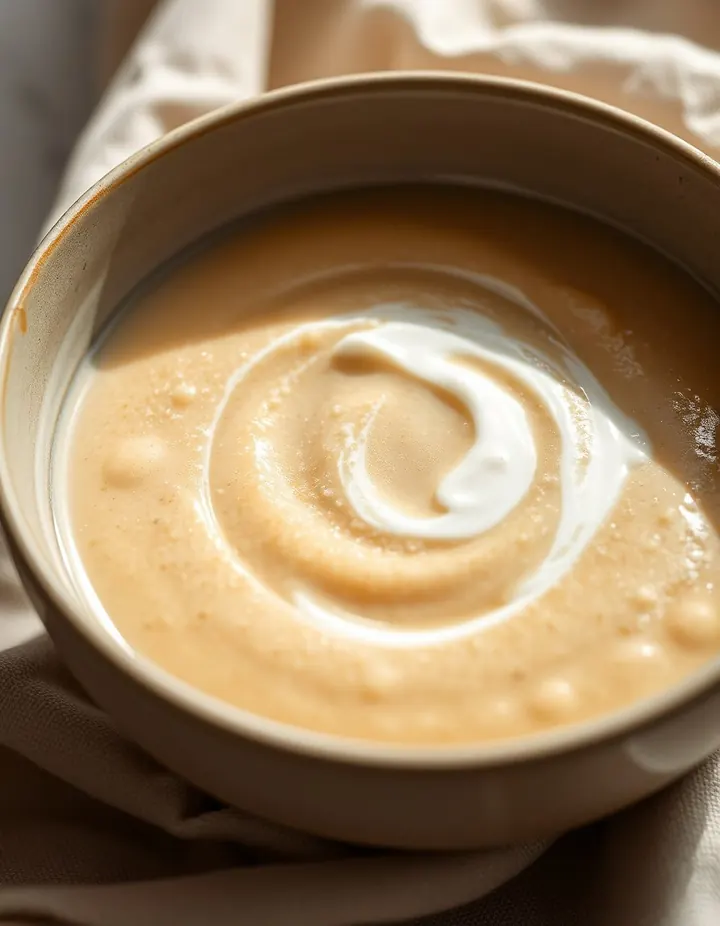
Beat the mixture well until it is smooth and soupy.
Let the mixture stand for 15 minutes until it is bubbly and swollen.
Add salt and olive oil.
Make the dough
Stir in the rest of the flour by the cupful until the dough is stiff but still slightly sticky.
When the dough forms a cohesive mass thick enough to hold its shape, turn it onto a lightly floured surface and let the dough rest.
Knead
Clean and oil the bowl.
Knead the dough, turning it clockwise by quarter turns.
Sprinkle a little flour on top and on the surface underneath, then fold the dough over.
Add just enough flour so the dough doesn't stick and tear.
Rise
Return the dough to the oiled bowl and cover with a damp cloth.
Let the dough rise until doubled.
The dough is ready for use.
Nutrition, whole recipe (rough)
Counts 4 of 5 ingredients. The other 1 aren't in our nutrition table and add nothing above, so the real totals are higher.
What these numbers assume: 4 portions
| Ingredient | Portion assumed | kcal |
|---|---|---|
| Flour | 1 cup (125g) all-purpose | 455 |
| Olive Oil | 1 tbsp (14g) | 119 |
| Sugar | 1 tbsp (12.5g) granulated | 49 |
| Salt | 1 tsp (6g) | 0 |
| Water | not in our table | 0 |
One typical portion per ingredient; the recipe's quantities are not counted. A rough guide only, not for medical or dietary planning.
Steps grouped into stages for easier reading; the method is the source's own.
Explore the science
The flavor team
The pairs that carry this dish. Each one is judged two ways: how much their aromas overlap, and how often cooks already put them together.
-
Olive + wheattop 6% of all pairsSmell alikestrongCooked together1,100 recipes
Shared aroma: 2-undecenal (sweet).
-
Flour + wheattop 12% of all pairsSmell alikemoderateCooked together4,373 recipes
Shared aroma: isobutyraldehyde (malty, green).
-
Sugar + flourtop 15% of all pairsSmell alikemoderateCooked together92,116 recipes
Shared aroma: phenylacetaldehyde (hawthorne, honey).
-
Olive + flourtop 19% of all pairsSmell alikemoderateCooked together16,871 recipes
Shared aroma: isobutyraldehyde (malty, green).
-
Sugar + wheattop 27% of all pairsSmell alikelowCooked together2,071 recipes
Shared aroma: beta-damascenone (apple, rose).
Ranks compare each pair with 20,000 random ingredient pairs on CompKitchen. How we score pairs
What each ingredient does
- Dry yeast
- Produces gas as it ferments, lifting the dough so it rises and becomes airy.
- All purpose flour
- Its proteins form gluten, giving the dough structure, elasticity and chew.
- Olive oil
- Adds fat that softens the crumb and keeps the dough supple and easier to handle.
The step that matters
Adding flour during kneading. Flour is added only as needed because extra flour absorbs moisture and stiffens the dough. Too much makes the crust dense and dry, while a slightly sticky dough stays tender.
“What each ingredient does” and “The step that matters” were written by Claude from this recipe’s own method and reviewed in samples by CompKitchen.
You might also like
 Wheat Gruel6 recipes
 Tomato Soup526 recipes
 Brown Bread461 recipes
 Mutton Broth292 recipes
The free Flavor Lab newsletter: one surprising pairing a week and the molecular reason it works, in 60 seconds. No spam, unsubscribe anytime.
Prefer an account? Create a free account to save pairings and unlock the full chemistry.