Why it works: Lemon and cardamom match in chemistry and in kitchens. They rank in the top 1% of all ingredient pairs, and cooks put them together in 405 recipes. Both carry beta-phellandrene, which smells minty, terpene. The science ↓
Tangy Curry-Tomato Chutney
Ingredients
Directions
Make the chutney
In a 2-quart saucepan, combine tomatoes, plums, green onions, brown sugar, vinegar, chile pepper, lemon peel and juice, curry powder, and cardamom.
Bring to a boil; reduce heat.
Simmer, uncovered, for 30 to 35 minutes or until slightly thickened, stirring frequently.
Remove from heat; cool to room temperature.
Chill and store
Transfer the chutney to a covered container and chill in the refrigerator for at least 8 hours before serving.
Store, tightly covered, in the refrigerator up to 1 week or in the freezer up to 3 months.
Nutrition, whole recipe (rough)
Counts 12 of 14 ingredients. The other 2 aren't in our nutrition table and add nothing above, so the real totals are higher.
What these numbers assume: 12 portions
| Ingredient | Portion assumed | kcal |
|---|---|---|
| Sugar | 1 tbsp (12.5g) granulated | 49 |
| Onion | 1 medium (110g) | 44 |
| Plum | 1 medium (66g) | 30 |
| Tomato | 1 medium (123g) | 22 |
| Lemon | juice of 1 lemon (48ml) | 12 |
| Lime | juice of 1 lime (44ml) | 11 |
| Turmeric | 1 tsp ground (3g) | 9 |
| Chili | 1 tsp (2.7g) | 8 |
| Black Pepper | 1 tsp ground (2.3g) | 6 |
| Cardamom | 1 tsp ground (2g) | 6 |
| Cinnamon | 1 tsp ground (2.6g) | 6 |
| Vinegar | 1 tbsp (15ml) distilled | 3 |
| Cider | not in our table | 0 |
| Scotch | not in our table | 0 |
One typical portion per ingredient; the recipe's quantities are not counted. A rough guide only, not for medical or dietary planning.
Steps grouped into stages for easier reading; the method is the source's own.
Explore the science
The flavor team
The pairs that carry this dish. Each one is judged two ways: how much their aromas overlap, and how often cooks already put them together.
-
Lemon + cardamomtop 1% of all pairsSmell alikestrongCooked together405 recipes
Shared aroma: beta-phellandrene (minty, terpene).
-
Pepper + lemontop 3% of all pairsSmell alikestrongCooked together27,047 recipes
Shared aroma: trans-2-nonenal (cardboard, fatty).
-
Tomato + plumtop 6% of all pairsSmell alikemoderateCooked together1,480 recipes
Shared aroma: 2,4-decadienal (seaweed).
-
Pepper + cardamomtop 6% of all pairsSmell alikestrongCooked together832 recipes
Shared aroma: beta-phellandrene (minty, terpene).
-
Tomato + peppertop 7% of all pairsSmell alikemoderateCooked together17,923 recipes
Shared aroma: 2-isopropyl-3-methoxypyrazine (earthy, pea).
Ranks compare each pair with 20,000 random ingredient pairs on CompKitchen. How we score pairs
What each ingredient does
- Tomatoes
- Provide the bulk and fresh tomato flavor, breaking down into the chutney's body as it simmers.
- Plums
- Add tartness and body, helping the chutney thicken as the fruit breaks down while simmering.
- Brown sugar
- Adds sweetness and helps balance the vinegar's acidity and the heat of the chile.
- White wine vinegar or cider vinegar
- Brings acidity that sharpens the flavor and helps preserve the chutney.
- Curry powder
- Supplies the warm, aromatic spice blend that defines the chutney's flavor.
The step that matters
Simmer until slightly thickened. Fruit and sugar thicken as water evaporates and pectin releases from the fruit. Stop too early and the chutney stays runny; cook too long and it turns stiff and sticky as it cools.
Swap the onion
How well each one fits the dish's main ingredients (tomato, plum, sugar, white wine, pepper, lemon, cardamom):
- Capsicumfits better
- Carrotfits better
- Sweet potatofits better
- Onionthe original
Fit is the average pairing score against tomato, plum, sugar, white wine, pepper, lemon, cardamom. Candidates are from the same food group and used in at least 100 recipes.
“What each ingredient does” and “The step that matters” were written by Claude from this recipe’s own method and reviewed in samples by CompKitchen.
You might also like
 Tomato Soup526 recipes
 Lemon Sauce236 recipes
 Cream of Tomato Soup107 recipes
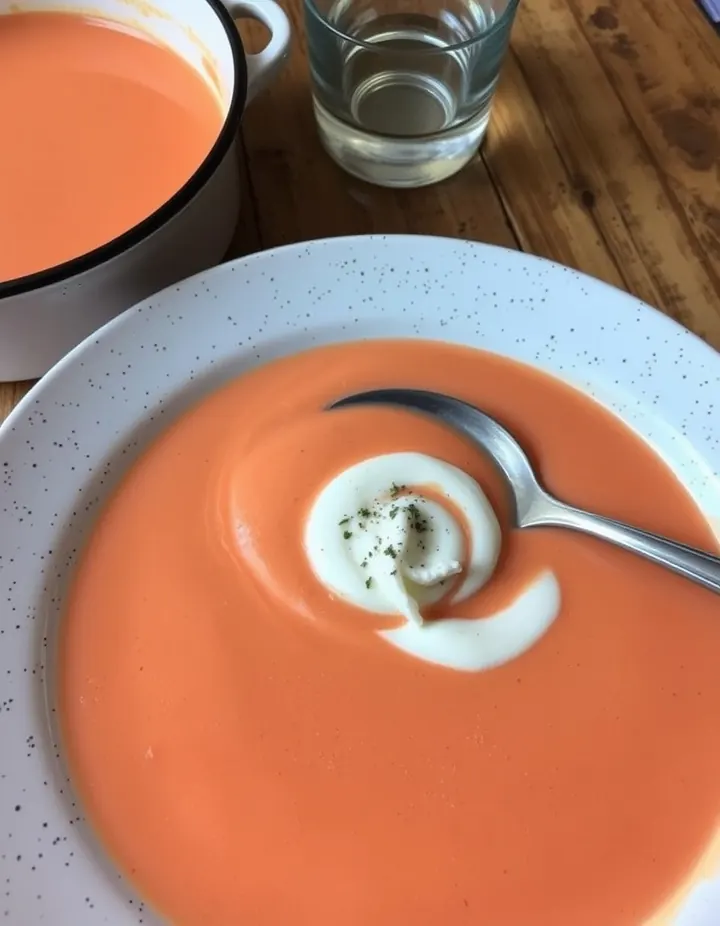 Tomato Bisque61 recipes
The free Flavor Lab newsletter: one surprising pairing a week and the molecular reason it works, in 60 seconds. No spam, unsubscribe anytime.
Prefer an account? Create a free account to save pairings and unlock the full chemistry.