Why it works: Vinegar and mustard are a kitchen classic. They rank in the top 7% of all ingredient pairs, and cooks put them together in 14,067 recipes. Both carry isobutyraldehyde, which smells malty, green. The science ↓
Barbecue Beef Brisket Sandwiches
Ingredients
Directions
Prepare
Place mesquite into the firebox of a 250°F smoker.
Trim the fat cap of the brisket to ¼ inch.
Place the brisket into a large foil pouch.
Pour the vinegar mixture, Worcestershire sauce, and honey into the pouch.
Smoke the brisket
Place the pouch in the smoker and cook for 6 hours, changing the mesquite chunks as needed.
Remove the brisket from the pouch.
Spread mustard evenly over the brisket.
Massage the barbecue rub into the meat.
Place the brisket back into the smoker and cook for 10 hours, changing the mesquite chunks as needed.
Slice and serve
Separate the brisket halves along the fat line.
Slice across the grain as thinly as possible, chopping roughly.
Place the serving portion into halved hamburger buns.
Place some vinegar mixture into a squirt bottle.
Serve the sandwiches with the vinegar mixture.
Nutrition, whole recipe (rough)
What these numbers assume: 5 portions
| Ingredient | Portion assumed | kcal |
|---|---|---|
| Beef | 100g cooked | 250 |
| Honey | 1 tbsp (21g) | 64 |
| Soy Sauce | 1 tbsp (15ml) | 9 |
| Vinegar | 1 tbsp (15ml) distilled | 3 |
| Mustard | 1 tsp (5g) yellow | 3 |
One typical portion per ingredient; the recipe's quantities are not counted. A rough guide only, not for medical or dietary planning.
Steps grouped into stages for easier reading; the method is the source's own.
Explore the science
The flavor team
The pairs that carry this dish. Each one is judged two ways: how much their aromas overlap, and how often cooks already put them together.
-
Vinegar + mustardtop 7% of all pairsSmell alikemoderateCooked together14,067 recipes
Shared aroma: isobutyraldehyde (malty, green).
-
Vinegar + honeytop 10% of all pairsSmell alikemoderateCooked together1,586 recipes
Shared aroma: beta-damascenone (apple, rose).
-
Sauce + mustardtop 13% of all pairsSmell alikemoderateCooked together2,120 recipes
Shared aroma: ethanol (alcoholic, ethereal).
-
Honey + mustardtop 15% of all pairsSmell alikemoderateCooked together919 recipes
Shared aroma: 2-acetyl-1-pyrroline (popcorn, roasted).
-
Beef + mustardtop 17% of all pairsSmell alikemoderateCooked together1,664 recipes
Shared aroma: 2-isopropyl-3-methoxypyrazine (earthy, pea).
Ranks compare each pair with 20,000 random ingredient pairs on CompKitchen. How we score pairs
What each ingredient does
- Beef brisket
- Tough connective tissue breaks down into tender, juicy meat during long, low cooking.
- Dijon mustard
- Its thin coating helps the barbecue rub adhere to the surface of the meat.
- Honey
- Adds sweetness and helps the surface brown and caramelize during smoking.
- Worcestershire sauce
- Adds savory, tangy depth to the liquid that flavors the meat inside the pouch.
- Vinegar mixture
- Adds acidity that brightens the rich meat and balances the sweetness of the sauce.
The step that matters
Cooking the brisket for the full 6 hours in the pouch and then the full 10 hours after. Brisket needs long, slow cooking so its collagen softens into gelatin; cooking too briefly or at high heat leaves the meat tough and dry.
Swap the mustard
How well each one fits the dish's main ingredients (beef, vinegar, sauce, honey):
- Mustardthe original
- Tomatofits about as well
- Capsicumfits about as well
- Onionfits less well
Fit is the average pairing score against beef, vinegar, sauce, honey. Candidates are from the same food group and used in at least 100 recipes.
“What each ingredient does” and “The step that matters” were written by Claude from this recipe’s own method and reviewed in samples by CompKitchen.
You might also like
 Roast Beef211 recipes
 Beef Loaf175 recipes
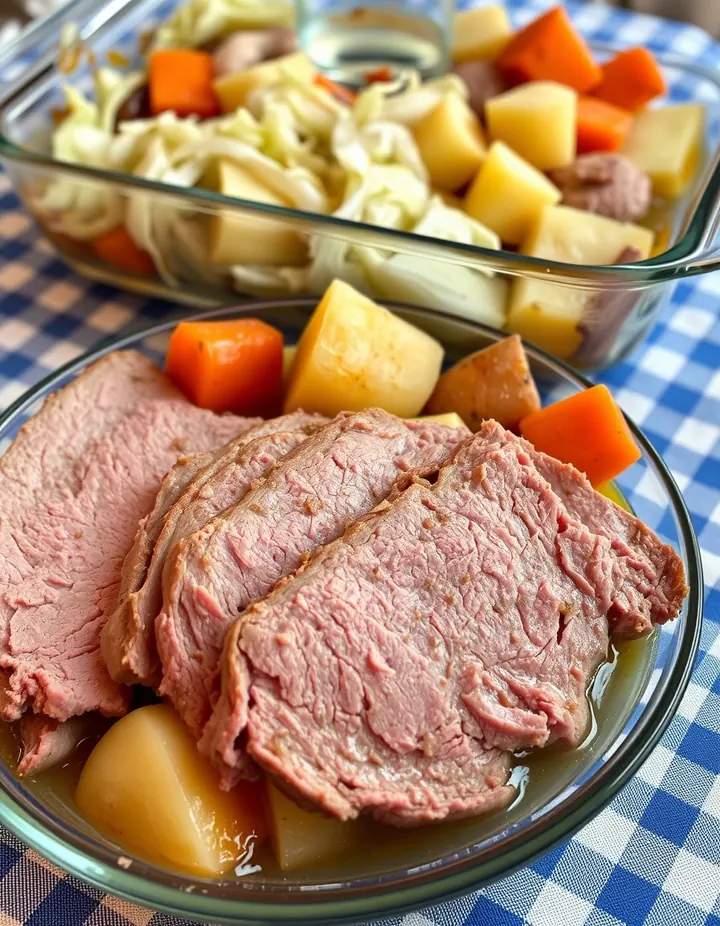 Corned Beef87 recipes
 Beef Broth67 recipes
The free Flavor Lab newsletter: one surprising pairing a week and the molecular reason it works, in 60 seconds. No spam, unsubscribe anytime.
Prefer an account? Create a free account to save pairings and unlock the full chemistry.