Why it works: Almond and flour are a kitchen classic. They rank in the top 5% of all ingredient pairs, and cooks put them together in 8,673 recipes. Both carry isobutyraldehyde, which smells malty, green. The science ↓
Basic French Macarons
Ingredients
Directions
Prepare the dry mix
Combine the almond flour and icing sugar.
Sift to remove lumps, and set aside.
Make the meringue
Add the superfine sugar to the egg whites, and whip them to stiff peaks.
Add the food coloring to the egg whites and continue beating until incorporated.
Make the batter
Use a wooden spoon or rubber spatula to fold the almond flour mixture into the meringue in 3 batches.
Mix until you get a lava-like batter (see notes).
Pipe, rest and bake
Transfer the batter to a pastry bag fitted with an 8 mm round nozzle.
Pipe 3 cm rounds on a baking sheet lined with baking paper.
Tap the sheet lightly on your work surface to even and flatten the mixture.
Leave to air-dry for 30 minutes until a film forms on the surface of the cookies.
Bake for 12 minutes at 150°C with convection.
Remove from the oven and let cool completely.
Move the parchment onto a cooling rack to avoid carryover cooking.
Assemble
Peel the shells from the parchment, and sort them into pairs of equally sized shells.
Sandwich the cookies together with your desired filling.
Nutrition, whole recipe (rough)
What these numbers assume: 4 portions
| Ingredient | Portion assumed | kcal |
|---|---|---|
| Flour | 1 cup (125g) all-purpose | 455 |
| Egg | 1 large egg (50g) | 78 |
| Sugar | 1 tbsp (12.5g) granulated | 49 |
| Almond | 1 almond (1.2g) | 7 |
One typical portion per ingredient; the recipe's quantities are not counted. A rough guide only, not for medical or dietary planning.
Steps grouped into stages for easier reading; the method is the source's own.
Explore the science
The flavor team
The pairs that carry this dish. Each one is judged two ways: how much their aromas overlap, and how often cooks already put them together.
-
Almond + flourtop 5% of all pairsSmell alikemoderateCooked together8,673 recipes
Shared aroma: isobutyraldehyde (malty, green).
-
Sugar + flourtop 15% of all pairsSmell alikemoderateCooked together92,116 recipes
Shared aroma: phenylacetaldehyde (hawthorne, honey).
-
Flour + eggtop 15% of all pairsSmell alikelowCooked together106,462 recipes
Shared aroma: isobutyraldehyde (malty, green).
-
Sugar + almondtop 18% of all pairsSmell alikemoderateCooked together15,679 recipes
Shared aroma: 1-penten-3-one (fish, pungent).
-
Sugar + eggtop 21% of all pairsSmell alikemoderateCooked together122,807 recipes
Shared aroma: 2-nonenal (fatty, green).
Flour and egg barely smell alike, yet cooks put them together in 106,462 recipes: they work on texture and structure more than aroma.
Ranks compare each pair with 20,000 random ingredient pairs on CompKitchen. How we score pairs
What each ingredient does
- Egg whites
- Whipped into a meringue that provides the airy structure of the shells.
- Almond flour
- Forms the body of the shells and gives a tender, slightly chewy texture.
- Icing sugar
- Sweetens the shells and, being fine, helps produce a smooth surface.
- White superfine sugar
- Stabilises the meringue so it holds its peaks and stays glossy.
The step that matters
Mix until a lava-like batter forms. Under-mixing leaves the batter too stiff to spread and form smooth tops, while over-mixing deflates the meringue so the shells spread flat and crack. The batter should flow slowly off the spatula.
“What each ingredient does” and “The step that matters” were written by Claude from this recipe’s own method and reviewed in samples by CompKitchen.
You might also like
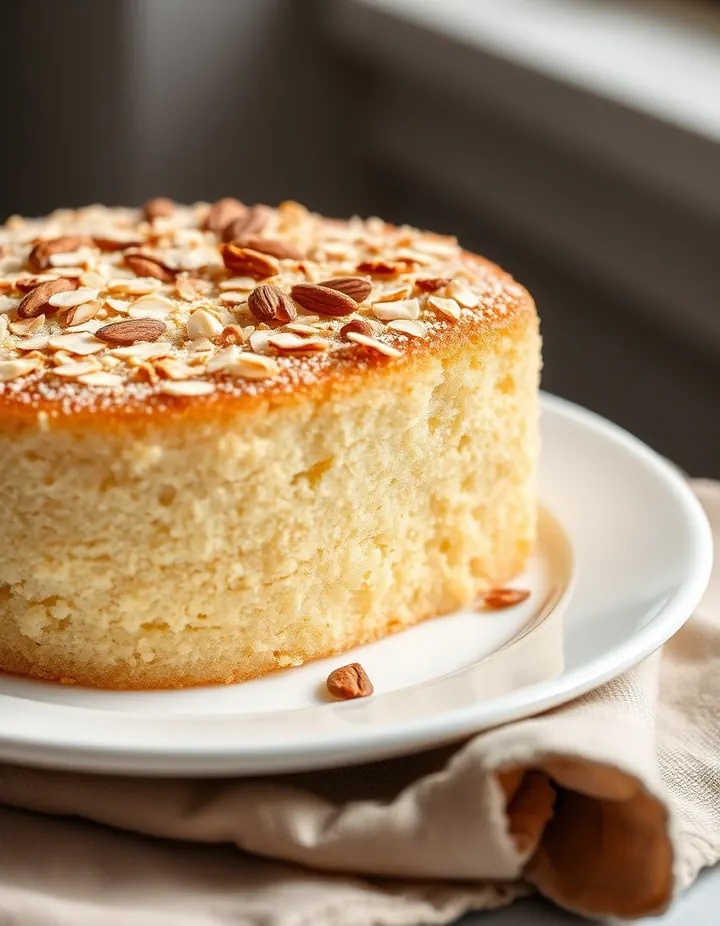 Almond Sponge Cake26 recipes
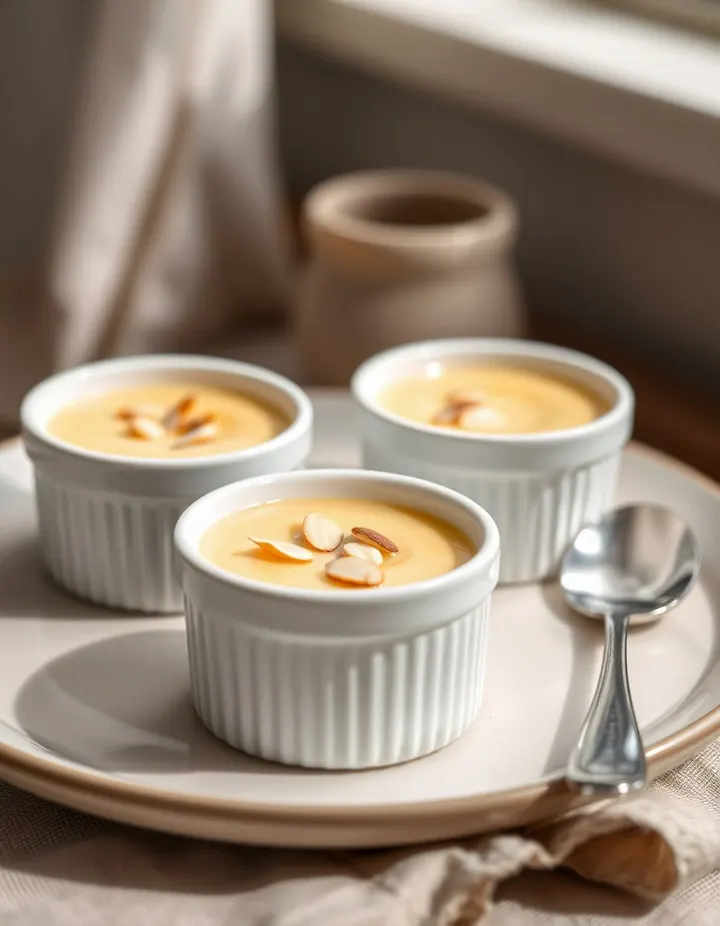 Almond Custard22 recipes
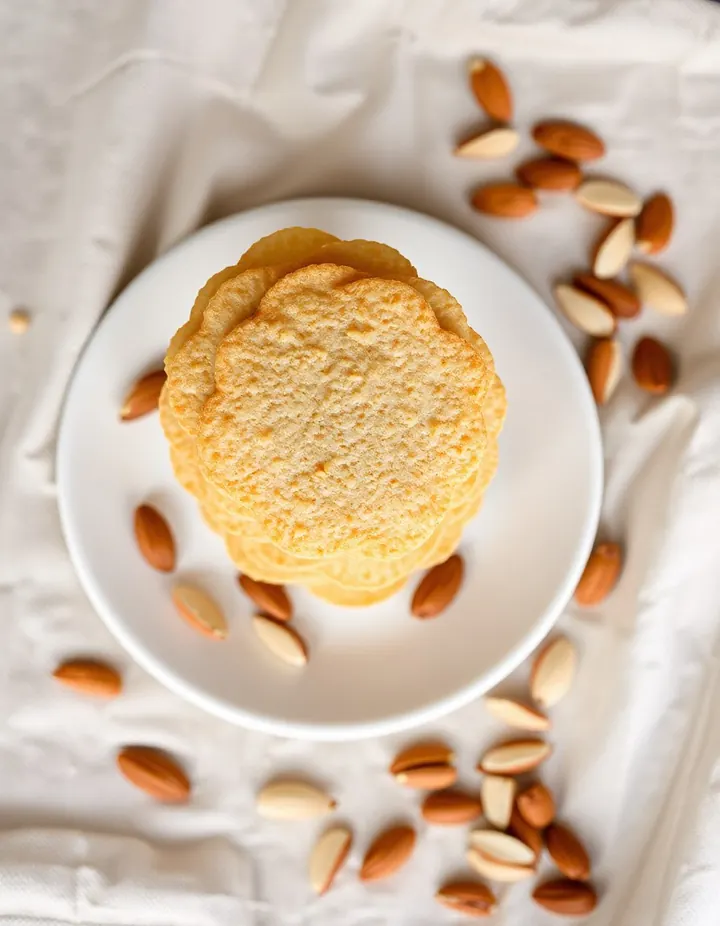 Almond Wafers22 recipes
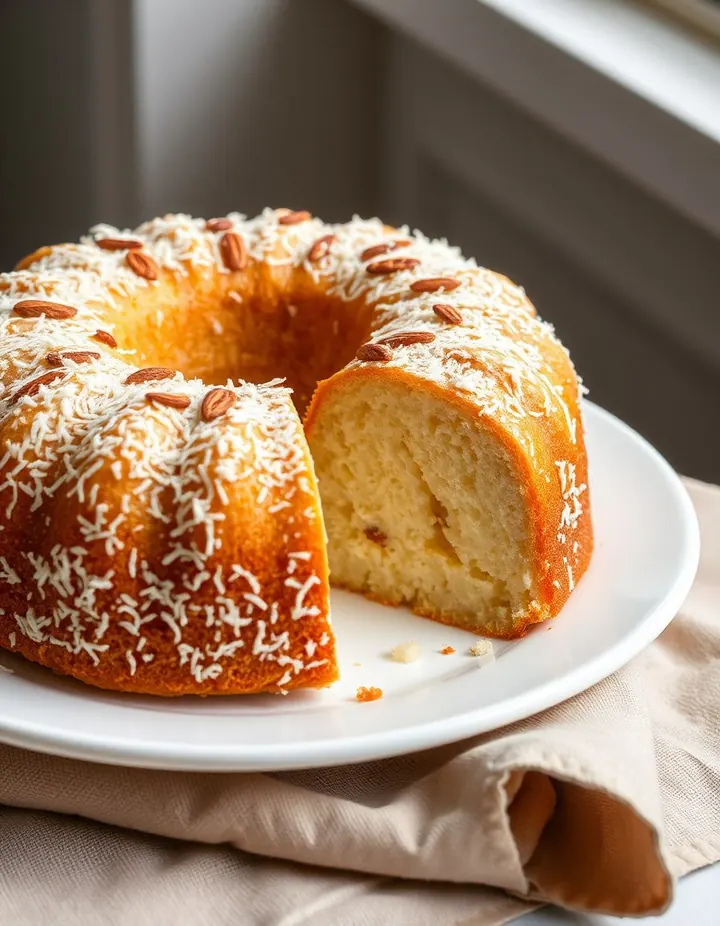 Coconut Almond Cake17 recipes
The free Flavor Lab newsletter: one surprising pairing a week and the molecular reason it works, in 60 seconds. No spam, unsubscribe anytime.
Prefer an account? Create a free account to save pairings and unlock the full chemistry.