Why it works: Cider and vinegar are a kitchen classic. They rank in the top 6% of all ingredient pairs, and cooks put them together in 3,431 recipes. Both carry 4-ethyl-2-methoxyphenol, which smells smoky, clove. The science ↓
Homemade Tempeh
Ingredients
Directions
Prepare the soybeans
Cover soybeans with water and soak overnight or at least 12 hours.
Remove the hulls (skins) from the beans by rubbing between both hands.
Skim off most of the hulls by washing them away or using a skimmer or strainer; some hulls may remain.
Cook beans until just tender, not mushy; undercooked is best for tempeh.
Drain beans and spread to dry somewhere with airflow.
Inoculate and pack
Collect beans into a bowl and mix in the cider vinegar to acidify the beans slightly.
Sprinkle the tempeh starter over the beans and mix in well.
Pack the beans loosely into banana leaves, zip‑lock bags, or shallow dishes for incubating; puncture zip‑lock bags at roughly 1 cm (½ inch) intervals to allow oxygen.
Incubate and serve
Load the soon‑to‑be tempeh into your incubator, preferably on racks that allow air circulation; an electric oven with a light on can serve as a good incubator.
Incubate for about 12 hours at around 30–35 °C (86–95 °F) with a heat source if needed.
After 12 hours, remove or turn off the heat source; the fermenting beans will generate their own heat.
Monitor periodically and remove when the beans are fully consumed by fluffy white tempeh with no gaps.
After fermentation is complete, serve straight away, refrigerate for two to three days, or freeze for up to two months.
Nutrition, whole recipe (rough)
Counts 2 of 5 ingredients. The other 3 aren't in our nutrition table and add nothing above, so the real totals are higher.
What these numbers assume: 2 portions
| Ingredient | Portion assumed | kcal |
|---|---|---|
| Tempeh | 100g | 160 |
| Vinegar | 1 tbsp (15ml) distilled | 3 |
| Soybean | not in our table | 0 |
| Water | not in our table | 0 |
| Cider | not in our table | 0 |
One typical portion per ingredient; the recipe's quantities are not counted. A rough guide only, not for medical or dietary planning.
Steps grouped into stages for easier reading; the method is the source's own.
Explore the science
The flavor team
The pairs that carry this dish. Each one is judged two ways: how much their aromas overlap, and how often cooks already put them together.
-
Cider + vinegartop 6% of all pairsSmell alikemoderateCooked together3,431 recipes
Shared aroma: 4-ethyl-2-methoxyphenol (smoky, clove).
-
Soybean + vinegartop 12% of all pairsSmell alikemoderateCooked together40 recipes
Shared aroma: sotolon (curry, maple).
-
Soybean + cidertop 43% of all pairsSmell alikemoderateCooked together1 recipe
Shared aroma: 1-octen-3-one (mushroom, metallic).
Ranks compare each pair with 20,000 random ingredient pairs on CompKitchen. How we score pairs
What each ingredient does
- Dried soybeans
- Provide the protein and starch base that the mold binds together into a firm cake.
- Tempeh starter
- Introduces the Rhizopus mold whose growth fuses the beans into solid tempeh.
- Cider vinegar
- Slightly acidifies the beans, which helps favor the starter mold over unwanted bacteria.
The step that matters
Incubating at the right temperature. The starter mold grows best in a warm, steady range of about 30–35 °C. Too cold slows fermentation, and too hot can let bacteria spoil the beans or kill the mold.
Swap the soybean
How well each one fits the dish's main ingredients (cider, vinegar):
- Sesamefits better
- Kidney beansfits better
- Beansfits better
- Soybeanthe original
Fit is the average pairing score against cider, vinegar. Candidates are from the same food group and used in at least 100 recipes.
“What each ingredient does” and “The step that matters” were written by Claude from this recipe’s own method and reviewed in samples by CompKitchen.
You might also like
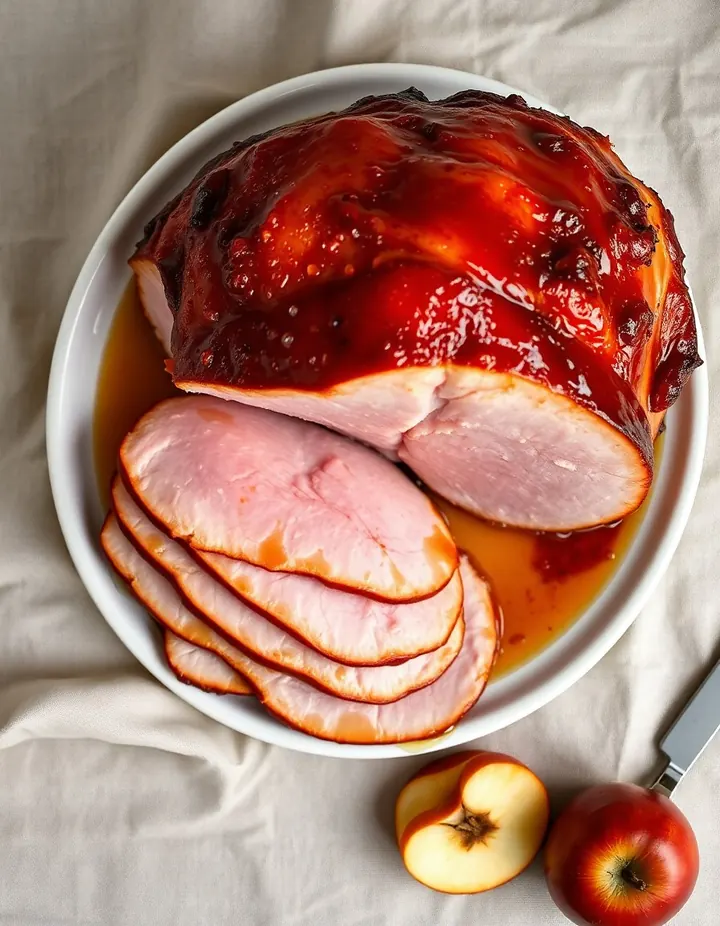 Ham in Cider10 recipes
 Tomato Soup526 recipes
 Brown Bread461 recipes
 Mutton Broth292 recipes
The free Flavor Lab newsletter: one surprising pairing a week and the molecular reason it works, in 60 seconds. No spam, unsubscribe anytime.
Prefer an account? Create a free account to save pairings and unlock the full chemistry.