Why it works: Semolina and wheat work together. They rank in the top 8% of all ingredient pairs, and 22 recipes mention both. Both carry 1-octen-3-ol, which smells mushroom, earthy. The science ↓
The recipe
8–10Ingredients
Contains: milk, wheat (auto-detected from the ingredients and method; we can miss things, so check labels)
Directions
Prepare the semolina
Combine semolina and ½ cup lukewarm water in a bowl.
Bring the mixture to a boil in a saucepan.
Remove from heat, place in a bowl, and leave to thicken.
Make the batter
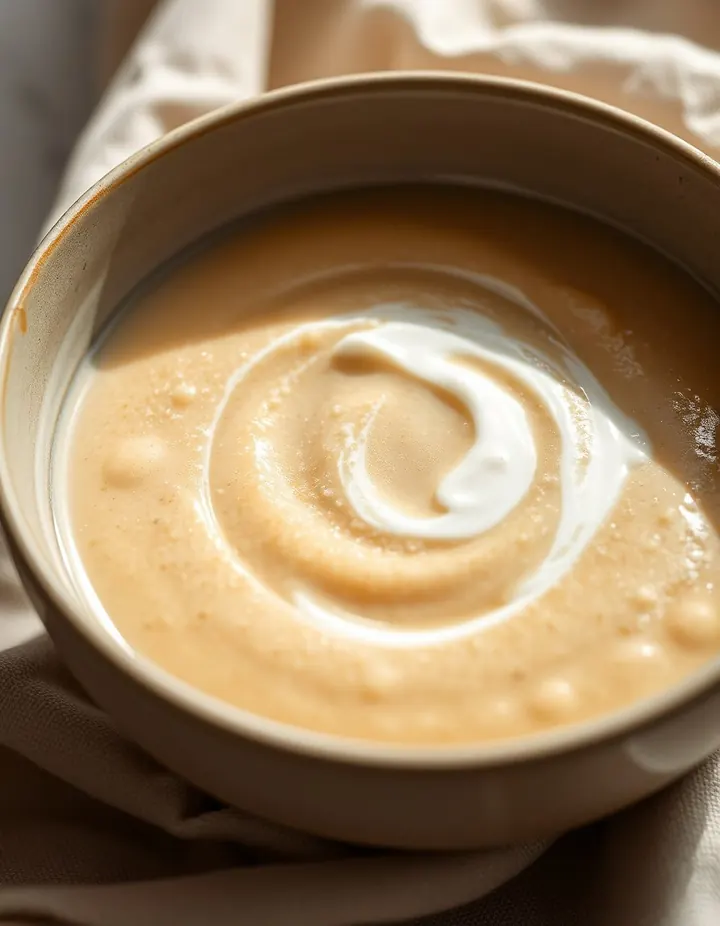
Stir cold water into the semolina mixture.
Stir in rock salt until fully dissolved.
Stir in the wheat flour and yeast.
Mix in another 2 cups lukewarm water until you get a thin batter.
Cover the batter and let it rest until it is risen and bubbly.
Cook and serve
Grease a skillet or frying pan with a little margarine, and heat over medium heat.
Ladle some batter into the pan, let it spread out, and sprinkle a tiny bit of flour to prevent sticking.
Cook the batter until the top surface is covered with air pockets like a sponge.
Flip to the other side and cook for about 5 seconds.
Remove and let cool.
Repeat the cooking process with the remaining batter.
Steps grouped into stages for easier reading; the method is the source's own.
Explore the science
The flavor team
The pairs that carry this dish. Each one is judged two ways: how much aroma chemistry they share, and how many recipes mention both.
-
Semolina + wheattop 8% of all pairsAroma overlapmoderateMentioned together22 recipes
Shared aroma: 1-octen-3-ol (mushroom, earthy).
Ranks compare each pair with 20,000 random ingredient pairs on CompKitchen. How we score pairs
What each ingredient does
- Wheat flour or sorghum flour
- Provides the main body of the batter and sets into a soft, sturdy pancake.
- Yeast
- Produces gas as it ferments, creating the risen, bubbly batter and the airy sponge-like holes.
- Semolina
- Cooked with water and thickened, it gives the batter a smooth body and a slightly firmer texture.
The step that matters
Let the batter rise until risen and bubbly. Yeast needs time to ferment and produce gas. A batter that has not risen enough will cook into a dense, flat pancake instead of one full of air pockets.
“What each ingredient does” and “The step that matters” were written by Claude from this recipe’s own method and reviewed in samples by CompKitchen.
You might also like
 Illustration
 Illustration
 Illustration
 Illustration
The Sunday pairing: one pairing, the chemistry behind it, and how to cook it. No spam, unsubscribe anytime.
Prefer an account? Create a free account for sign-in; Pro adds the full results and chemistry.