Why it works: Honey and raisin work together. They rank in the top 13% of all ingredient pairs, and 104 recipes mention both. Both carry beta-damascenone, which smells apple, rose. The science ↓
The recipe
Ingredients
Contains: wheat (auto-detected from the ingredients and method; we can miss things, so check labels)
Directions
Prepare the starter
Sanitize all equipment.
If desired, create a starter culture by mixing fruit juice and yeast, placing into a 1‑quart container fitted with a rubber stopper and airlock, and keep at room temperature out of direct sunlight for 1–2 days until bubbling.
Make the must
Heat the water over medium heat and slowly stir in the honey until completely dissolved; boiling is optional.
Remove the pot from heat and cool to 170°F (76°C).
Stir in the raisins and transfer the mixture to the fermentation vessel; cool to room temperature (~68°F/20°C).
If no starter culture was made, rehydrate the yeast, then transfer the yeast mixture to the honey mixture in the vessel and attach the airlock.
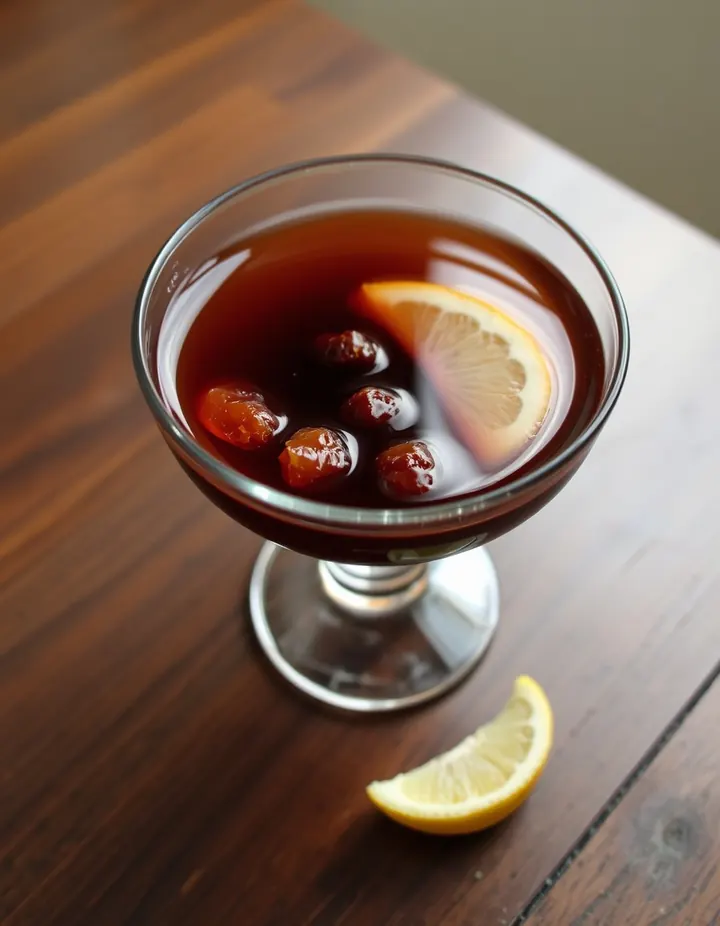
Place the vessel in a cool, dark place; after about a day the airlock should allow bubbles to escape, indicating fermentation has begun; raisins will rise to the surface. Avoid stirring or agitating the mixture.
Ferment and rack
Let the mead ferment for 4–6 weeks.
If desired, rack the mead by carefully siphoning it into a second carboy with a sanitized tube, avoiding sediment and splashing, and attach an airlock.
Ferment for another 3 months or until fermentation stops and the mead has cleared enough to read a newspaper through it.
Rack the mead once more.
Bottle and age
Bottle the mead by sealing in sterilized bottles with airtight caps or corks; if fermentation is not complete, pressure may build up and cause bottles to explode.
Age the mead in the bottle for at least 6 months before drinking.
Steps grouped into stages for easier reading; the method is the source's own.
Found this recipe through an AI assistant? CompKitchen also shows which ingredients go well together and why, from the aroma molecules they share and how often recipes combine them. Try the pairing tools.
Explore the science
The flavor team
The pairs that carry this dish. Each one is judged two ways: how much aroma chemistry they share, and how many recipes mention both.
-
Honey + raisintop 13% of all pairsAroma overlapmoderateMentioned together104 recipes
Shared aroma: beta-damascenone (apple, rose).
Ranks compare each pair with 20,000 random ingredient pairs on CompKitchen. How we score pairs
What each ingredient does
- Honey
- Provides the sugar that yeast ferments into alcohol, and the main flavour of the mead.
- Dry winemaker's yeast
- Converts the sugars in the honey into alcohol and carbon dioxide during fermentation.
- Water
- Dissolves the honey and forms the bulk of the liquid that ferments.
- Raisins
- Add fruity flavour and nutrients that feed the yeast.
The step that matters
Cool the honey mixture before adding yeast. Yeast is killed by high heat, so the mixture must be cooled to about room temperature before the yeast goes in. Adding yeast too early can stop fermentation before it starts.
“What each ingredient does” and “The step that matters” were written by Claude, an AI, from this recipe’s own method. They are not checked recipe by recipe, so they can be wrong.
Make it your own
Stand-ins, a drink, and quick taste fixes for this dish, ranked by how well each fits its other ingredients: shared aroma molecules and how often recipes combine them.
More mead recipes
You might also like
 Illustration
 Illustration
 Illustration
 Illustration
The Sunday pairing: one pairing, the chemistry behind it, and how to cook it. No spam, unsubscribe anytime.
Prefer an account? Create a free account for sign-in; Pro adds the full results and chemistry.