Why it works: Sweet potato and beans match in chemistry and in kitchens. They rank in the top 1% of all ingredient pairs, and cooks put them together in 165 recipes. Both carry damascenone, which smells apple, rose. The science ↓
Pinakbet
Ingredients
Directions
Make the base
Heat a skillet over medium heat.
Add the oil to the pan.
Add the garlic to the pan and sauté briefly until aromatic.
Add the onion to the pan and cook until softened.
Add the tomato, bagoong alamang, and salt to the pan and simmer for 5 minutes.
Cook the vegetables
Add the bitter melon and sweet potato to the pan, cover, and cook until almost, but not quite, tender.
Add the string beans, eggplant, and okra to the pan, cover, and cook for a few minutes until all the vegetables are tender.
Serve the vegetables with rice.
Nutrition, whole recipe (rough)
Counts 10 of 12 ingredients. The other 2 aren't in our nutrition table and add nothing above, so the real totals are higher.
What these numbers assume: 10 portions
| Ingredient | Portion assumed | kcal |
|---|---|---|
| Rice | 1 cup cooked (158g) white | 206 |
| Potato | 1 medium (173g) baked | 161 |
| Olive Oil | 1 tbsp (14g) | 119 |
| Onion | 1 medium (110g) | 44 |
| Eggplant | 1 cup cubed (82g) | 35 |
| Okra | 1 cup (100g) | 33 |
| Plum | 1 medium (66g) | 30 |
| Tomato | 1 medium (123g) | 22 |
| Garlic | 1 clove (3g) | 4 |
| Salt | 1 tsp (6g) | 0 |
| Melon | not in our table | 0 |
| Bean | not in our table | 0 |
One typical portion per ingredient; the recipe's quantities are not counted. A rough guide only, not for medical or dietary planning.
Steps grouped into stages for easier reading; the method is the source's own.
Explore the science
The flavor team
The pairs that carry this dish. Each one is judged two ways: how much their aromas overlap, and how often cooks already put them together.
-
Sweet potato + beanstop 1% of all pairsSmell alikestrongCooked together165 recipes
Shared aroma: damascenone (apple, rose).
-
Garlic + oniontop 1% of all pairsSmell alikestrongCooked together29,058 recipes
Shared aroma: furaneol (caramel, strawberry).
-
Tomato + beanstop 1% of all pairsSmell alikestrongCooked together2,713 recipes
Shared aroma: 2-isopropyl-3-methoxypyrazine (earthy, pea).
-
Garlic + tomatotop 3% of all pairsSmell alikemoderateCooked together14,076 recipes
Shared aroma: furaneol (caramel, strawberry).
-
Plum + melontop 4% of all pairsSmell alikestrongCooked together54 recipes
Shared aroma: damascenone (apple, rose).
Ranks compare each pair with 20,000 random ingredient pairs on CompKitchen. How we score pairs
What each ingredient does
- Bagoong alamang
- Provides the salty, savory fermented-shrimp flavour that defines the stew.
- Tomatoes
- Add moisture and acidity that help build the sauce around the vegetables.
- Bitter melon
- Contributes its characteristic bitter flavour, balanced by the savory base.
- Sweet potato
- Adds body and natural sweetness, and holds its shape during the simmer.
- Eggplant
- Softens into the sauce, adding creamy texture and absorbing flavour.
- Okra
- Releases mild thickening starch into the liquid as it cooks.
The step that matters
Cook the vegetables in stages. Vegetables differ in density, so adding the firm bitter melon and sweet potato first and the softer string beans, eggplant, and okra later keeps each at the right tenderness. Covering the pan traps steam so the vegetables cook through evenly.
Swap the melon
How well each one fits the dish's main ingredients (garlic, clove, onion, plum, tomato, sweet potato, beans):
- Avocadofits better
- Limefits better
- Cherryfits better
- Melonthe original
Fit is the average pairing score against garlic, clove, onion, plum, tomato, sweet potato, beans. Candidates are from the same food group and used in at least 100 recipes.
“What each ingredient does” and “The step that matters” were written by Claude from this recipe’s own method and reviewed in samples by CompKitchen.
You might also like
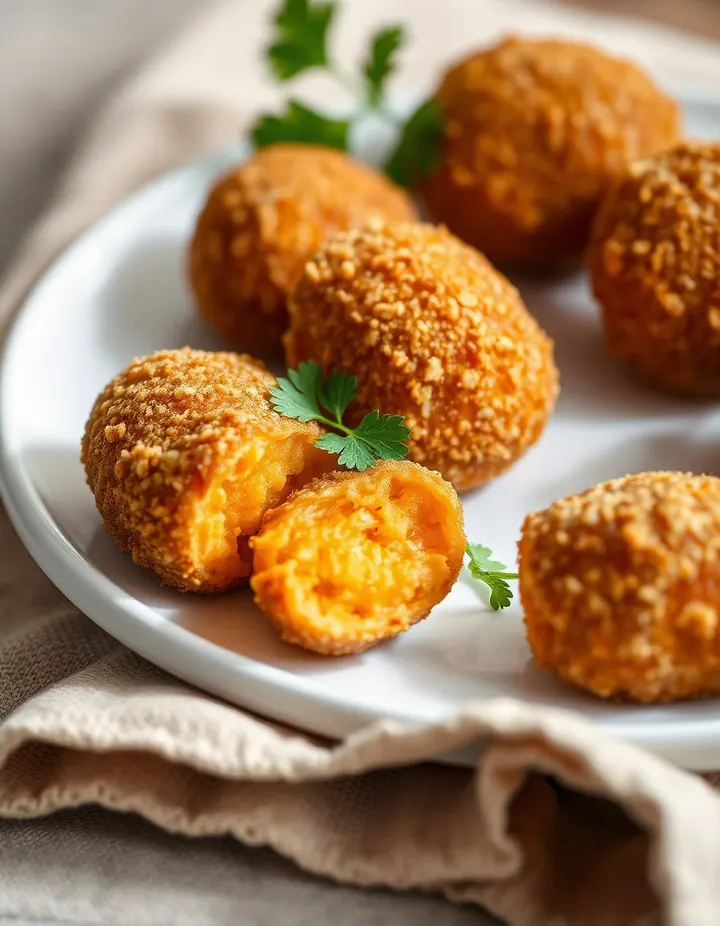 Sweet Potato Croquettes53 recipes
 Tomato Soup526 recipes
 Potato Croquettes255 recipes
 Cream of Tomato Soup107 recipes
The free Flavor Lab newsletter: one surprising pairing a week and the molecular reason it works, in 60 seconds. No spam, unsubscribe anytime.
Prefer an account? Create a free account to save pairings and unlock the full chemistry.