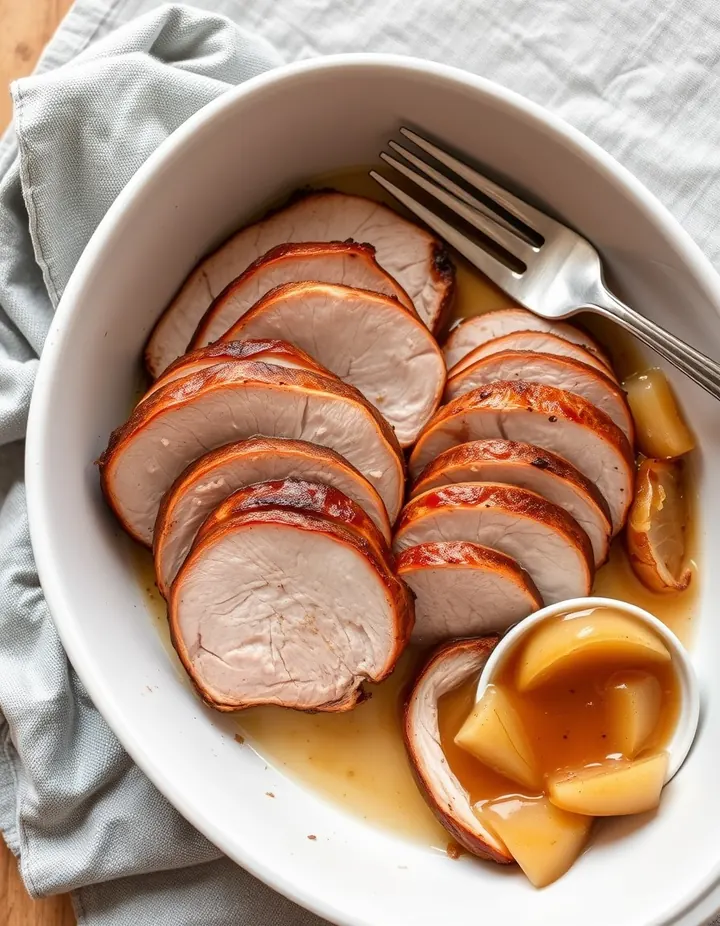
 Illustration
Why it works: Pork and onion match in chemistry and in kitchens. They rank in the top 4% of all ingredient pairs, and 18,199 recipes mention both. Both carry 2-isopropyl-3-methoxypyrazine, which smells earthy, pea. The science ↓
The recipe
Serves 4Ingredients
Directions
Prepare
Take the pork joint out of the refrigerator and let it come to room temperature.
Preheat the oven to 220 °C (400 °F) and heat the roasting tin. If you have a spare tin, place an onion in it while it heats.
If desired, remove the skin from the pork and butterfly the joint.
Season the pork all over with herbs or spices, rubbing them into the meat. If desired, poke whole cloves into the meat and sprinkle with dried sage.
If desired, cut a wide slit in the middle of the joint and place fresh sage or basil, chopped apples, and garlic inside.
If the skin has been removed, place it on an open rack at the top of the oven with nothing underneath, and leave it to crisp.
Roast
Spread the chopped onion in the bottom of a roasting pan, add a little water, and place the pork joint on top of the onions.
Place the pan on the middle shelf of the preheated oven and roast for about 20 minutes per pound (50 minutes per kg) until the juices run clear when a skewer or knife is inserted.
Rest and serve
Loosely cover the joint with aluminum foil and let it rest for about 15 minutes in a warm part of the kitchen. If the crackling is not yet crisp, raise the oven to its highest setting and watch carefully.
Carve the pork as desired and serve with vegetables.
Cook to a safe temperature. This method doesn't say how hot the inside should get. Check with a food thermometer in the thickest part:
- Beef, pork, lamb and veal steaks, chops and roasts: 145°F (63°C), then rest 3 minutes.
Figures from the USDA's safe minimum internal temperatures.
Steps grouped into stages for easier reading; the method is the source's own.
Found this recipe through an AI assistant? CompKitchen also shows which ingredients go well together and why, from the aroma molecules they share and how often recipes combine them. Try the pairing tools.
The picture is an illustration, not a photo of this recipe · Contact us to use it
Explore the science
The flavor team
The pairs that carry this dish. Each one is judged two ways: how much aroma chemistry they share, and how many recipes mention both.
-
Pork + oniontop 4% of all pairsAroma overlapstrongMentioned together18,199 recipes
Shared aroma: 2-isopropyl-3-methoxypyrazine (earthy, pea).
-
Pork + olivetop 5% of all pairsAroma overlapstrongMentioned together5,980 recipes
Shared aroma: 2-undecenal (sweet).
-
Olive + oniontop 5% of all pairsAroma overlapmoderateMentioned together26,431 recipes
Shared aroma: ethyl butyrate (apple, fruity).
-
Pepper + olivetop 6% of all pairsAroma overlapstrongMentioned together27,398 recipes
Shared aroma: 2-heptenal (green).
-
Pepper + oniontop 7% of all pairsAroma overlapmoderateMentioned together68,463 recipes
Shared aroma: 2-isopropyl-3-methoxypyrazine (earthy, pea).
Ranks compare each pair with 20,000 random ingredient pairs on CompKitchen. How we score pairs
What each ingredient does
- Pork joint
- Provides the main meat, whose fat and connective tissue keep the roast moist and tender as it cooks.
- Olive oil
- Carries fat that helps the outside brown and the seasoning stick to the meat.
- Onion
- Sweetens and flavours the pan juices as it softens under the roast.
The step that matters
Test for doneness with a skewer. Pork is safe and juicy when cooked through, but overcooking dries the lean meat. Checking that the juices run clear at the thickest point shows whether the centre is done without guessing from time alone.
Flavor stand-ins for the onion
How well each one fits the dish's main ingredients (pork, pepper, olive):
- Capsicumbetter flavor fit
- Tomatobetter flavor fit
- Potatobetter flavor fit
- Onionthe original
Fit is the average pairing score against pork, pepper, olive. Candidates are from the same food group and used in at least 100 recipes. This compares flavor only: it does not check the job the ingredient does in the dish (bulk, moisture, acidity, structure).
“What each ingredient does” and “The step that matters” were written by Claude, an AI, from this recipe’s own method. They are not checked recipe by recipe, so they can be wrong.
Make it your own
Stand-ins, a drink, and quick taste fixes for this dish, ranked by how well each fits its other ingredients: shared aroma molecules and how often recipes combine them.
More roast pork recipes
You might also like
 Illustration
 Illustration
 Illustration
 Illustration
The Sunday pairing: one pairing, the chemistry behind it, and how to cook it. No spam, unsubscribe anytime.
Prefer an account? Create a free account for sign-in; Pro adds the full results and chemistry.