Why it works: Pork and mustard are a kitchen classic. They rank in the top 5% of all ingredient pairs, and 2,440 recipes mention both. Both carry 2-isopropyl-3-methoxypyrazine, which smells earthy, pea. The science ↓
The recipe
Ingredients
Contains: egg, milk, wheat (auto-detected from the ingredients and method; we can miss things, so check labels)
Also mentioned in the method: bread
Directions
Brine the pork
Combine salt, honey, and vinegar in a gallon-size zip-top bag until the salt is dissolved. Add ice and shake until the brine has cooled and the ice is almost completely melted.
Add the pork roast and toss to coat. Refrigerate for 3–4 hours.
Stuff and season
Combine the bread and fruit. Gently fold the beaten egg whites into the bread mixture. Set aside.
Almost split the roast horizontally, not cutting through either side or the bottom. Pack the stuffing into the pocket and brush the edge of the opening with Dijon mustard. Press the roast closed.
Brush all sides of the roast with mustard. Press peppercorns into the meat and place the roast on a rack in a roasting pan.
Roast and serve
Insert a probe thermometer into an area of the center of the roast that does not contain stuffing. Bake in a 425°F oven until the internal temperature reaches at least 145°F.
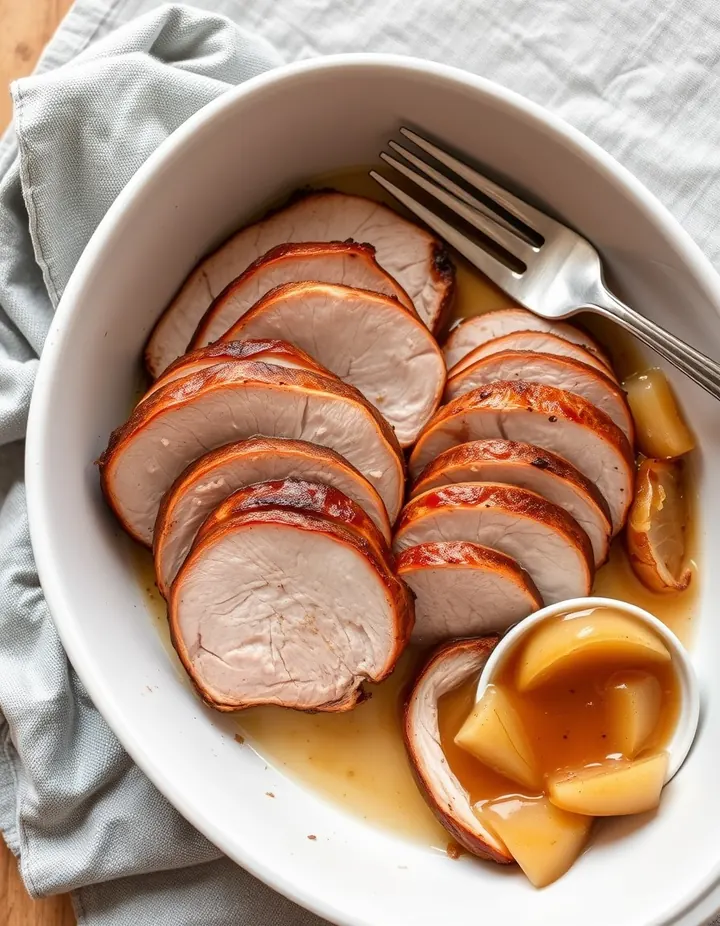
Remove the roast to a plate and let it rest for 10 minutes before slicing. Serve with cider gravy.
Steps grouped into stages for easier reading; the method is the source's own.
Explore the science
The flavor team
The pairs that carry this dish. Each one is judged two ways: how much aroma chemistry they share, and how many recipes mention both.
-
Pork + mustardtop 5% of all pairsAroma overlapmoderateMentioned together2,440 recipes
Shared aroma: 2-isopropyl-3-methoxypyrazine (earthy, pea).
-
Honey + appletop 3% of all pairsAroma overlapstrongMentioned together567 recipes
Shared aroma: beta-damascenone (apple, rose).
-
Honey + apple cider vinegartop 4% of all pairsAroma overlapmoderateMentioned together169 recipes
Shared aroma: ethyl octanoate (fruity).
-
Pork + appletop 6% of all pairsAroma overlapstrongMentioned together1,577 recipes
Shared aroma: 4-heptenal (creamy, biscuit).
-
Apple cider vinegar + mustardtop 6% of all pairsAroma overlaplowMentioned together254 recipes
Shared aroma: guaiacol (smoky, sweet).
Ranks compare each pair with 20,000 random ingredient pairs on CompKitchen. How we score pairs
What each ingredient does
- Pork loin roast
- Provides the main meat, which stays moist when cooked gently to a safe internal temperature.
- Egg whites
- Whipped to stiff peaks, they lighten the cornbread stuffing and help it set as it bakes.
- Cornbread
- Forms the bulk of the stuffing and soaks up juices, adding a soft, tender texture.
- Honey
- Adds sweetness and helps the surface brown during roasting.
- Apple cider vinegar
- Adds acidity to the brine, which helps the pork stay moist and tender.
- Cranberries
- Dried fruit that adds chewy texture and tart sweetness to the stuffing.
The step that matters
Folding the egg whites into the stuffing. Whipped egg whites trap air that gives lift. Folding gently keeps that air in; stirring or overmixing deflates the foam and makes the stuffing dense.
Flavor stand-ins for the mustard
How well each one fits the dish's main ingredients (pork, honey, apple cider vinegar, cornbread, apple, egg, cream):
- Capsicumbetter flavor fit
- Potatobetter flavor fit
- Onionabout as good a flavor fit
- Mustardthe original
Fit is the average pairing score against pork, honey, apple cider vinegar, cornbread, apple, egg, cream. Candidates are from the same food group and used in at least 100 recipes. This compares flavor only: it does not check the job the ingredient does in the dish (bulk, moisture, acidity, structure).
“What each ingredient does” and “The step that matters” were written by Claude from this recipe’s own method and reviewed in samples by CompKitchen.
You might also like
 Illustration
 Illustration
 Illustration
 Illustration
The Sunday pairing: one pairing, the chemistry behind it, and how to cook it. No spam, unsubscribe anytime.
Prefer an account? Create a free account for sign-in; Pro adds the full results and chemistry.