Why it works: Parsley and lemon match in chemistry and in kitchens. They rank in the top 1% of all ingredient pairs, and cooks put them together in 14,037 recipes. Both carry beta-phellandrene, which smells minty, terpene. The science ↓
Landmarks Club Cook Book
Ingredients
Directions
Make the forcemeat
Shred the ham or bacon, chop the suet, lemon peel, and herbs, and add seasoning.
Blend all thoroughly together with the bread crumbs before wetting.
Work in the eggs (well beaten) with the other ingredients.
For forcemeat for hare, boil liver for five minutes, mince very fine, and add to the other ingredients.
Shape into balls.
Fry in boiling lard, or put them on a tin and bake in the oven.
Roast the hare
Stuff the hare with the forcemeat mixture.
Sew or skewer the stuffed hare.
Rub the stuffed hare with butter and sprinkle with seasoned flour.
Baste often and cook in a hot oven for one hour.
Serve with currant jelly.
Nutrition, whole recipe (rough)
Counts 7 of 8 ingredients. The other 1 aren't in our nutrition table and add nothing above, so the real totals are higher.
What these numbers assume: 7 portions
| Ingredient | Portion assumed | kcal |
|---|---|---|
| Flour | 1 cup (125g) all-purpose | 455 |
| Pork | 100g cooked | 242 |
| Egg | 1 large egg (50g) | 78 |
| Lemon | juice of 1 lemon (48ml) | 12 |
| Cayenne | 1 tsp (1.8g) | 6 |
| Parsley | 1 tbsp chopped fresh (3.8g) | 1 |
| Salt | 1 tsp (6g) | 0 |
| Mace | not in our table | 0 |
One typical portion per ingredient; the recipe's quantities are not counted. A rough guide only, not for medical or dietary planning.
Transcribed from a scanned cookbook and modernised for today's kitchens. Where the book gave no heat or time, or said "a moderate oven", the temperatures and times here may be modern equivalents rather than the book's own figures. See the original page.
Explore the science
The flavor team
The pairs that carry this dish. Each one is judged two ways: how much their aromas overlap, and how often cooks already put them together.
-
Parsley + lemontop 1% of all pairsSmell alikestrongCooked together14,037 recipes
Shared aroma: beta-phellandrene (minty, terpene).
-
Ham + breadtop 7% of all pairsSmell alikemoderateCooked together2,536 recipes
Shared aroma: 2-acetyl-1-pyrroline (popcorn, roasted).
-
Bread + eggtop 13% of all pairsSmell alikemoderateCooked together22,662 recipes
Shared aroma: (e)-2-octenal (fatty, green).
-
Parsley + macetop 15% of all pairsSmell alikemoderateCooked together4,268 recipes
Shared aroma: myristicin (spice, warm).
-
Parsley + breadtop 15% of all pairsSmell alikemoderateCooked together8,588 recipes
Shared aroma: 2,4-decadienal (seaweed).
Ranks compare each pair with 20,000 random ingredient pairs on CompKitchen. How we score pairs
What each ingredient does
- Eggs
- Bind the forcemeat so it holds together when shaped or cooked.
- Bread crumbs
- Add bulk and absorb moisture, giving the forcemeat a soft, tender body.
- Suet
- Adds fat that keeps the forcemeat moist and rich as it cooks.
- Ham
- Contributes savoury, salty flavour to the forcemeat.
The step that matters
Blend thoroughly before wetting. Mixing the dry ingredients evenly first spreads the fat and seasoning through the crumbs, so no pockets are greasy or bland and the eggs bind the mixture evenly.
Swap the mace
How well each one fits the dish's main ingredients (ham, parsley, bread, egg, lemon):
- Marjoramfits better
- Thymefits better
- Tarragonfits better
- Macethe original
Fit is the average pairing score against ham, parsley, bread, egg, lemon. Candidates are from the same food group and used in at least 100 recipes.
“What each ingredient does” and “The step that matters” were written by Claude from this recipe’s own method and reviewed in samples by CompKitchen.
You might also like
 Brown Bread461 recipes
 Lemon Sauce236 recipes
 White Bread80 recipes
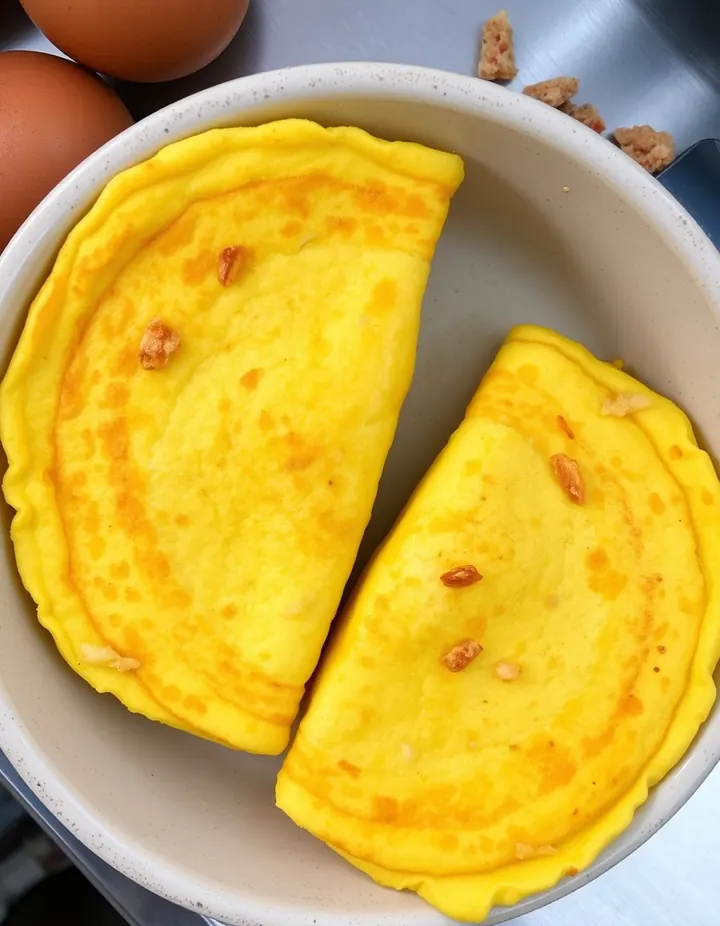 Bread Omelette60 recipes
The free Flavor Lab newsletter: one surprising pairing a week and the molecular reason it works, in 60 seconds. No spam, unsubscribe anytime.
Prefer an account? Create a free account to save pairings and unlock the full chemistry.