Why it works: Sugar and quince are a kitchen classic. They rank in the top 12% of all ingredient pairs, and 1,444 recipes mention both. Both carry 1-penten-3-one, which smells fish, pungent. The science ↓
The recipe
Ingredients
Directions
Prepare the quinces
Wash one peck of quinces.
Add three quarts of water to the quinces and boil until the fruit is soft.
Place the quinces in a cullender and let the liquid drain through.
Strain the liquid through a flannel.
Make the marmalade
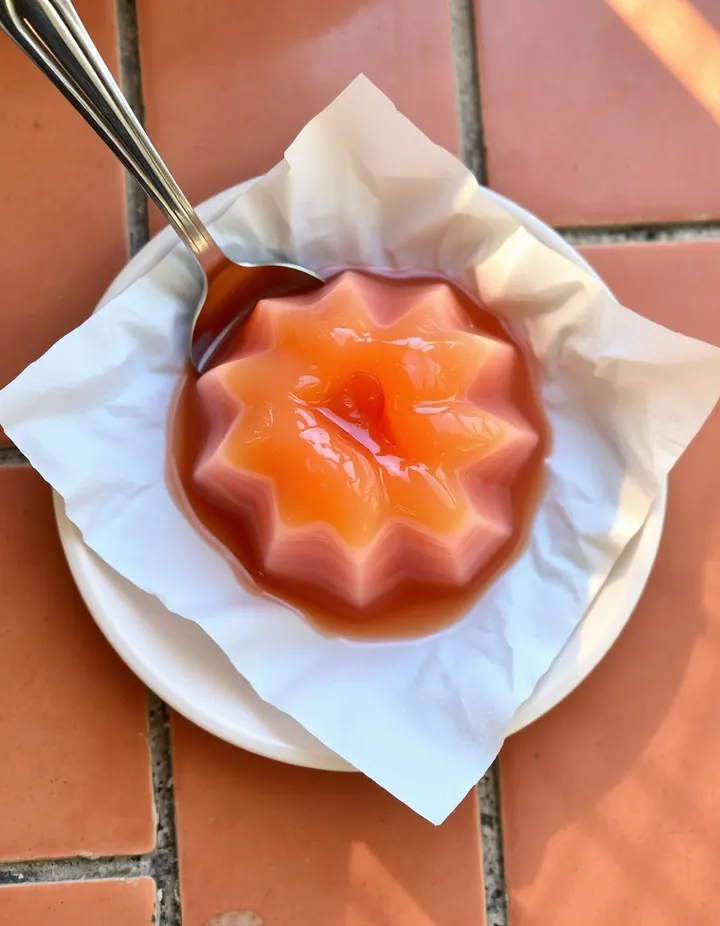
Add one pound of sugar to one pint of liquid and boil until it jellies.
Sift the remaining solids through the cullender.
In two quart bowls of quince, add three pints of sugar and stir well.
Put the mixture over the fire and stir for twenty minutes.
Transfer the mixture into bowls and cover with paper.
Transcribed from a scanned cookbook and modernised for today's kitchens. Where the book gave no heat or time, or said "a moderate oven", the temperatures and times here may be modern equivalents rather than the book's own figures. See the original page.
Found this recipe through an AI assistant? CompKitchen also shows which ingredients go well together and why, from the aroma molecules they share and how often recipes combine them. Try the pairing tools.
Explore the science
The flavor team
The pairs that carry this dish. Each one is judged two ways: how much aroma chemistry they share, and how many recipes mention both.
-
Sugar + quincetop 12% of all pairsAroma overlapmoderateMentioned together1,444 recipes
Shared aroma: 1-penten-3-one (fish, pungent).
Ranks compare each pair with 20,000 random ingredient pairs on CompKitchen. How we score pairs
What each ingredient does
- Quinces
- Provide the fruit body and natural pectin that help the marmalade set.
- Sugar
- Sweetens the marmalade and, with the fruit pectin, helps it thicken and set as it boils.
- Water
- Softens the quinces during boiling and extracts their juice for the liquid.
The step that matters
Boil the liquid with sugar until it jellies. Sugar and pectin only set into a gel at a high enough concentration and boiling temperature. Undercooked liquid stays runny, while overcooking can make the marmalade stiff and sugary.
“What each ingredient does” and “The step that matters” were written by Claude, an AI, from this recipe’s own method. They are not checked recipe by recipe, so they can be wrong.
Make it your own
Stand-ins, a drink, and quick taste fixes for this dish, ranked by how well each fits its other ingredients: shared aroma molecules and how often recipes combine them.
You might also like
 Illustration
 Illustration
 Illustration
 Illustration
The Sunday pairing: one pairing, the chemistry behind it, and how to cook it. No spam, unsubscribe anytime.
Prefer an account? Create a free account for sign-in; Pro adds the full results and chemistry.