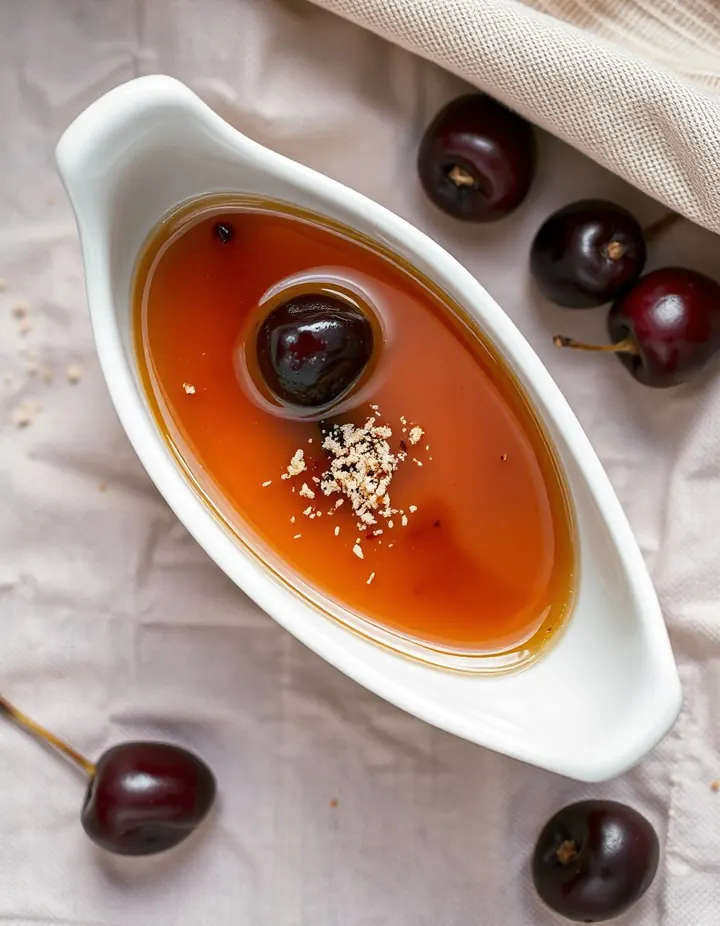
Why it works: Butter and nutmeg are a kitchen classic. They rank in the top 16% of all ingredient pairs, and cooks put them together in 24,377 recipes. Both carry eucalyptol, which smells eucalyptus, herbal. The science ↓
Bee-hive Sauce
Ingredients
Directions
Make the sauce
Cream butter and sugar until hard.
Set aside three tablespoonfuls of the mixture for coloring.
Beat in lemon juice, lemon peel, and nutmeg into the larger quantity.
Whip currant jelly or cranberry syrup into the colored portion until rich pink.
Decorate the cone
Shape the white sauce into a conical mound.
Roll a sheet of note paper into a long narrow funnel, tie a string around it to keep shape, and fill with colored sauce.
Squeeze the colored sauce gently through the aperture at the smaller end, beginning at the base, winding around the cone to the top, guiding it so that the white shows between the pink ridges.
Nutrition, whole recipe (rough)
Counts 3 of 4 ingredients. The other 1 aren't in our nutrition table and add nothing above, so the real totals are higher.
What these numbers assume: 3 portions
| Ingredient | Portion assumed | kcal |
|---|---|---|
| Butter | 1 tbsp (14g) | 102 |
| Sugar | 1 tbsp (12.5g) granulated | 49 |
| Nutmeg | 1 tsp ground (2.2g) | 12 |
| Currant | not in our table | 0 |
One typical portion per ingredient; the recipe's quantities are not counted. A rough guide only, not for medical or dietary planning.
Transcribed from a scanned cookbook and modernised for today's kitchens. Where the book gave no heat or time, or said "a moderate oven", the temperatures and times here may be modern equivalents rather than the book's own figures. See the original page.
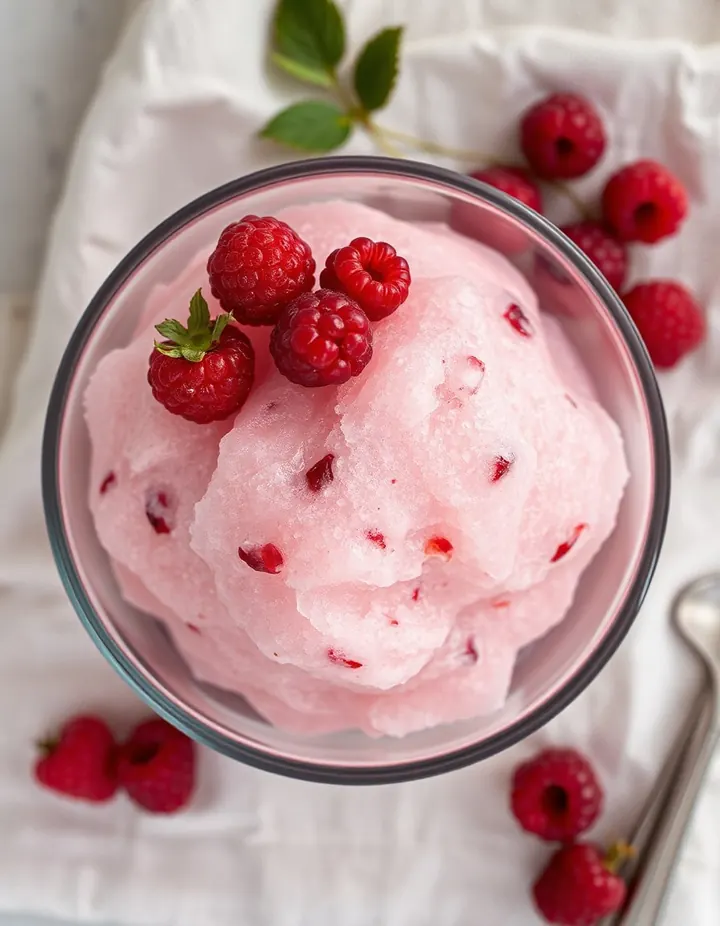
Photo for illustrative purposes only · Contact us to use it
Explore the science
The flavor team
The pairs that carry this dish. Each one is judged two ways: how much their aromas overlap, and how often cooks already put them together.
-
Butter + nutmegtop 16% of all pairsSmell alikemoderateCooked together24,377 recipes
Shared aroma: eucalyptol (eucalyptus, herbal).
-
Currant + nutmegtop 16% of all pairsSmell alikelowCooked together4,983 recipes
Shared aroma: alpha-pinene (pine, turpentine).
-
Butter + curranttop 17% of all pairsSmell alikemoderateCooked together7,856 recipes
Shared aroma: isoamyl acetate (banana, pear).
-
Butter + sugartop 17% of all pairsSmell alikemoderateCooked together98,233 recipes
Shared aroma: guaiacol (smoky, sweet).
-
Sugar + nutmegtop 20% of all pairsSmell alikelowCooked together23,364 recipes
Shared aroma: 1-penten-3-one (fish, pungent).
Sugar and nutmeg barely smell alike, yet cooks put them together in 23,364 recipes: they work on texture and structure more than aroma.
Ranks compare each pair with 20,000 random ingredient pairs on CompKitchen. How we score pairs
What each ingredient does
- Butter
- Creams with sugar to give the sauce a rich, soft body.
- Sugar
- Creamed with butter to add sweetness and structure to the sauce.
- Currant jelly
- Adds fruit flavor and pink color to the colored portion of the sauce.
The step that matters
Squeezing the colored sauce through the paper funnel. Squeezing gently keeps the pink stream even and the white sauce visible between the ridges; pressing too hard can break the stream and smear the colors together.
Swap the currant
How well each one fits the dish's main ingredients (butter, sugar, nutmeg):
- Vanillafits better
- Figfits better
- Raisinfits better
- Currantthe original
Fit is the average pairing score against butter, sugar, nutmeg. Candidates are from the same food group and used in at least 100 recipes.
“What each ingredient does” and “The step that matters” were written by Claude from this recipe’s own method and reviewed in samples by CompKitchen.
You might also like
 Red Currant Jelly65 recipes
 Currant Ice Cream32 recipes
 Currant Sherbet9 recipes
 Currant and Raspberry Ice7 recipes
The free Flavor Lab newsletter: one surprising pairing a week and the molecular reason it works, in 60 seconds. No spam, unsubscribe anytime.
Prefer an account? Create a free account to save pairings and unlock the full chemistry.