Why it works: Parsley and pepper match in chemistry and in kitchens. They rank in the top 2% of all ingredient pairs, and cooks put them together in 34,122 recipes. Both carry 4'-methylacetophenone, which smells bitter almond. The science ↓
Hoks-d'osuvre
Ingredients
Directions
A selected list of the hors-d'ceuvre comprises the following : radishes, gherkins, olives, anchovies, cucumber, artichokes, pickled herrings, pickled oysters, mixed })ickles.
To PFCKLE GHERKINS. — Brush or wipe the gherkins very clean, throw them into plenty of fast-boiling water, and give them a single boil ; take them out quickly, and throw them immediately into a large quantity of very cold water; change it once, and when the gherkins themselves are quite cold drain them well, spread them 011 sieves or dishes, and dry them in the air. When this is done, put them into stone jars, and pour on them as much boiling vinegar as will cover them well ; heat it anew, and pour it on them again the fol- lowing day; and on the next throw them into it for a minute so soon as it boils, with plenty of tarragon in branches, a few very small silver onions, and salt and whole pepper in pro- portion. It should be observed that the French vinegar, from its superior excellence, being made from wine, will have a very different effect, in many preparations, to that which is made up for sale generally.
VEGETABLES 67
POTATOES A LA MAITRE D'HoiTi.. — Cold potatoes that have been boiled should be used for this purpose. Lay them in a frying pan with sufficient milk (or cream) to cover them, add a Jiule butter, salt and chopped parsley, and fry tnem until the milk thickens. They will be sufficiently cooked in a quarter ot an hour, and make an excellent dish for breakfast.
CABBAGES should be boiled an hour. They should first be well examined lest insects be lurking in the folds.
To dress CAULIFLOWERS, separate the green part, and cut the! Mower close at the bottom from the stalk ; let it soak an hour in clear cold water, and then lay it in boiling milk and wa- ter, or water alone, observing to skim it well. When the flow- er or stalk feels tender, it is done enough, and should be in- stantly taken up. Drain it for a minute, and serve it up in a dish by itself, with plain melted butter in a sauce- tureen.
SPINACH. — Pick it clean, and wash it in five or six waters. Drain it, and put it in boiling water. Ten minutes is generally sufficient time to boil spinach. Be careful to remove the scum. When it is quite tender take it up, and drain and squeeze it well. Chop it fine, and put it into a sauce-pan with a piece of butter and a little pepper and salt. Set it on hot coals, and let it stew five minutes, stirring it all the time.
TURNIPS. — White turnips require about as mucn boiling as potatoes. When tender, take them up, peel and mash them — season them with a little salt and butter. Yellow turnips re- quire about two hours boiling — if very large, split them in two. The tops of white turnips make a good salad.
BEETS. — Beets should not be cut or scraped before they are boiled, or the juice will run out, and make them insipid. In summer they will boil in an hour — in winter, it takes three nours to boil them tender. The tops in summer are good boiled for greens. Boiled beets cut in slices, and put in cold spiced vinegar for several days, are very nice.
PARSNIPS AND CARROTS. — Wash them, and split them in two -lay them in a stew pan, with the flat side down, turn on boiling water enough to cover them — boil them till tender, then take them up, and take off the skin, and butter them. Many cooks boil them whole, but it is not a good plan, as the outside gets done too much, before the inside is cooked sufficiently. Cold boiled parsnips are good cut in slices and fried brown.
A PPARAGUS — Great attention is necessary to boil asparagus ;
it must be carefully washed and cleaned, the horny part mu?t be cut away, leaving only enough to take it up with the lingers. After the white horny part has been well scraped, cut. tht-m all oft' at one length, and tie them up m separate bundles; lay them in boiling water with a little salt. Boil them briskly, and they are done enough when tender. Dip a round of toasted bread in the liquor, and lay it in the dish , then pour some melted butter over the toast, and lay the asparagus on the toast entirely round the dish. Serve with melted butter in a sauce- tureen.
GREEN PEAS should be boiled from twenty minutes to sixty, according to their age. STRING BEANS the same DANDELIONS half an hour, or three quarters, according to age. Dandelions are much improved by cultivation.
SW.ET CORN. — Corn is much sweeter to be boiled on the cob If made into sucatash, cut it from the cobs, and boil it with Lima beans, and a few slices of salt pork. It requires boiling from fifteen to thirty minutes, according to its age.
ONIONS. — It is a good plan to boil onions in milk and water it diminishes the strong taste of that vegetable. It is an ex- cellent way of serving up onions, to chop them after they are boiled, and put them in a stewpan, with a little milk, butter, salt, and pepper, and let them stew about fifteen minutes. This gives them a fine flavor, and they can be served up very hot.
TOMATOES. — If very ripe, will skin easily ; if not, pour scald ing water on them, and let them remain in it four or five min- utes. Peel and put them into a stew-pan, with a table spoon- ful of water, if not very juicy; if so, no water will be required. Put in a little salt, and stew them for half an hour ; then turn them into a deep dish with buttered toast. Another way of cooking them, which is considered very nice by epicures, is to put them in a deep dish, with fine bread crumbs, crackers pounded fine, a layer of each alternately ; put small bits of but' ter, a little salt and pepper on each layer — some cooks add a little nutmeg and sugar. Have a layer of bread crumbs on the top. Bake it three quarters of an hour.
GUMBO.— Take an equal quantity of young tender ocra chopped tine, and ripe tomatoes skinned, an onion cut into slices, a small lump of butter, a little salt and pepper. Put the whole in a stew-pan, with a table-spoonful of water, and stew it till tender
EGG PLANT. — Cut the egg plant in slices half an inch thick.
VEGETABLES. 6v)
and let it lay for several hours in salted water, to remove the bitter taste. To fry it put the slices in the frying-pan with a small quantity of butter, and turn them when one side is done. Be sure that they are thoroughly cooked. Stuffed egg plant is sometimes preferred to fried. Peel the plant whole, cut it in two, and let it lay in salted water. Then scoop out the inside of the plant, chop it up fine, mixing crumbs of bread, salt and butter w th it ; fry it, return it to the hollow e-gg plant — join the cut pieces together, and let them bake awhile in an oven.
SALSIFY on OYSTEU PLANT. — Scrape the salsify, cut it in long slips and parboil it, then chop it up fine and fry it with egg l»ai- ler.
It is sometimes served with the roots whole, having been first thoroughly boiled and then fried in egg batter.
BAKED BEANS. — Soak a quart of dried beans over night, in cold water ; drain off the water in the morning and stew for half an hour in a little water, put them in a deep dish, with one pound of salt pork, cut the rind in strips, and place in the cen- tre of the dish. The pork should be sunk a little below the surface of the beans. Bake for three hours and a half. A lump of saleratus should be thrown in Avhile the beans are boiling, and a pint of water be added when they are put in to the bake-pan.
LIMA BEANS should be gathered young. Shell them, lay them in a pan of cold water, and then boil them about two hours, till they are quite soft. Drain them well, and add to them some butter.
SQUASHES OR CYMBELINS. — Cut up the squashes m pieces of an inch thick, having first pared the squash; if old, extract the seeds and boil the pieces until they break, rnash them with a spoon, boil them a little longer, and when they are done, squeeze them through a colander. Mix them with a little salt and a sn.all quantity of butter.
WINTER SQUASH. — Winter squashes are stewed in the same manner as others, but they require to remain over the fire a lit- tle longer..
If kept in a dry place, they will remain good all winter ; but if they are once frozen, they lose their flavour, and are apt to decay.
They are richer and firmer than the summer kind. After paring a winter squash, cut it in pieces, and, having taken out the seeds, boil it till it is tolerably soft in a small quantity of water. When you think it sufficiently done, press out all the
70 RICE, MACARONI, HOMINY.
water, mash the squash, and add a little butter, salt, and, if you fancy it, pepper.
MUSHROOMS. — The mushrooms proper to be used m cookery grow in the open pasture land, for those that grow near or un- der trees, are poisonous. The eatable mushrooms first appear very small, and of a round form, on a little stalk. They grow very rapidly, and the upper part and stalk are white. As they increase in size, the under part gradually opens, and shows a fringed fur of a very h'ne salmon color, which continues more or less till the mushroom has gained some size, and then turn? to a dark brown. These marks should be attended to, and likewise whether the skin can be easily parted from the edge, and middle, and whether they have a pleasant smell. Those A\ hich are poisonous have a yellow skin, and the under part has not the clear flesh color of the real mushroom; besides which, they smell rank and disagreeable, and the fur is white or yel- low.
In STEWING, if you wish to have the full taste of the mush- room only, after washing, trimming, and peeling them, put them into a stew-pan with a little salt and no water. Set them on coals, and stew them slowly till tender, adding nothing to them but a little butter rolled in flour, or else a little cream. Be sure to keep the pan well covered.
Nutrition, whole recipe (rough)
Counts 9 of 11 ingredients. The other 2 aren't in our nutrition table and add nothing above, so the real totals are higher.
What these numbers assume: 9 portions
| Ingredient | Portion assumed | kcal |
|---|---|---|
| Pork | 100g cooked | 242 |
| Rice | 1 cup cooked (158g) white | 206 |
| Potato | 1 medium (173g) baked | 161 |
| Vegetable | 1 tbsp (14g) | 120 |
| Butter | 1 tbsp (14g) | 102 |
| Nutmeg | 1 tsp ground (2.2g) | 12 |
| Black Pepper | 1 tsp ground (2.3g) | 6 |
| Parsley | 1 tbsp chopped fresh (3.8g) | 1 |
| Salt | 1 tsp (6g) | 0 |
| Beans | not in our table | 0 |
| Water | not in our table | 0 |
One typical portion per ingredient; the recipe's quantities are not counted. A rough guide only, not for medical or dietary planning.
Transcribed from a scanned cookbook and modernised for today's kitchens. Where the book gave no heat or time, or said "a moderate oven", the temperatures and times here may be modern equivalents rather than the book's own figures. See the original page.
Explore the science
The flavor team
The pairs that carry this dish. Each one is judged two ways: how much their aromas overlap, and how often cooks already put them together.
-
Parsley + peppertop 2% of all pairsSmell alikestrongCooked together34,122 recipes
Shared aroma: 4'-methylacetophenone (bitter almond).
-
Parsley + nutmegtop 3% of all pairsSmell alikestrongCooked together5,062 recipes
Shared aroma: 4'-methylacetophenone (bitter almond).
-
Beans + ricetop 4% of all pairsSmell alikestrongCooked together1,017 recipes
Shared aroma: trans-2-nonenal (cardboard, fatty).
-
Potato + parsleytop 5% of all pairsSmell alikemoderateCooked together2,855 recipes
Shared aroma: 4'-methylacetophenone (bitter almond).
-
Beans + potatotop 5% of all pairsSmell alikestrongCooked together655 recipes
Shared aroma: 2-isobutyl-3-methoxypyrazine (green bell pepper, earthy).
Ranks compare each pair with 20,000 random ingredient pairs on CompKitchen. How we score pairs
Swap the nutmeg
How well each one fits the dish's main ingredients (pork, butter, beans, potato, rice, parsley, pepper):
- Thymefits better
- Marjoramfits better
- Celeryfits about as well
- Nutmegthe original
Fit is the average pairing score against pork, butter, beans, potato, rice, parsley, pepper. Candidates are from the same food group and used in at least 100 recipes.
You might also like
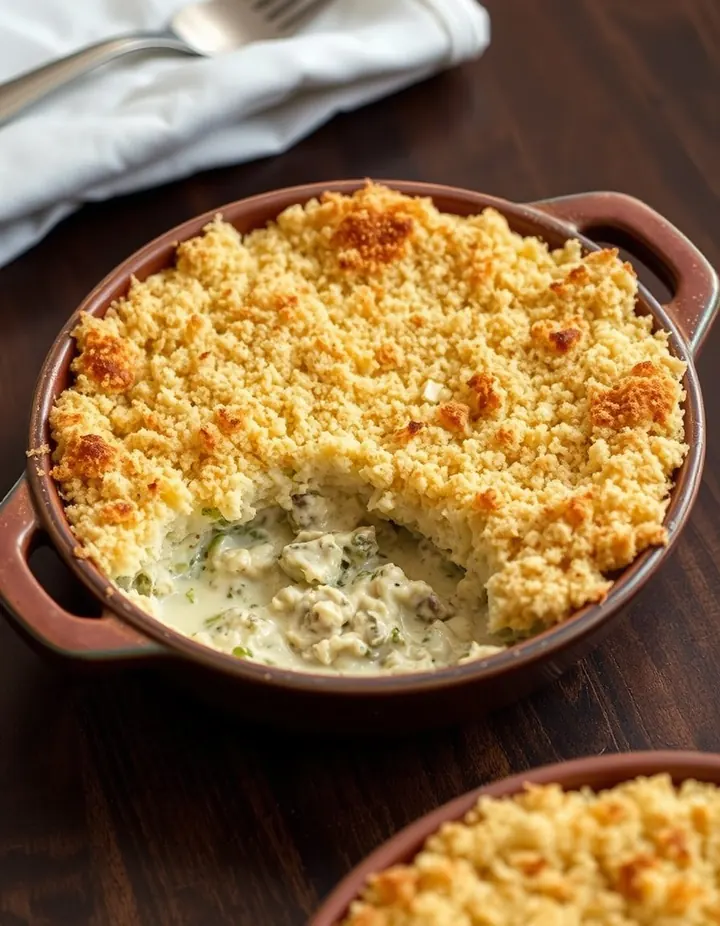 Deviled Oysters25 recipes
The free Flavor Lab newsletter: one surprising pairing a week and the molecular reason it works, in 60 seconds. No spam, unsubscribe anytime.
Prefer an account? Create a free account to save pairings and unlock the full chemistry.