Why it works: Pork and beef match in chemistry and in kitchens. They rank in the top 1% of all ingredient pairs, and cooks put them together in 5,690 recipes. Both carry 12-methyltridecanal, which smells tallowy, beefy. The science ↓
Black Bean Soup
Ingredients
Directions
Prepare and simmer
Soak one pint of black beans overnight in a gallon of water.
Add half a pound of beef, quarter pound of salt pork cut into slices, pepper, salt, grated carrot, and two finely cut onions to the beans.
Let the mixture boil for four or five hours.
Finish the soup
Strain the soup through a colander and add two hard-boiled eggs cut into slices.
Add sliced lemon with a little wine or brandy just before serving.
(Optional) Boil the salt pork separately, then add the water it boiled in to the soup, fry the pork, and serve in the soup cut into small pieces.
Strain all soup stock through a thin cloth to remove the jelly.
Add a red onion two hours before the soup is finished.
If no red onions are available, roast them in the oven before adding to the stock.
Nutrition, whole recipe (rough)
Counts 7 of 8 ingredients. The other 1 aren't in our nutrition table and add nothing above, so the real totals are higher.
What these numbers assume: 7 portions
| Ingredient | Portion assumed | kcal |
|---|---|---|
| Beef | 100g cooked | 250 |
| Pork | 100g cooked | 242 |
| Black Bean | 1/2 cup canned (120g) drained | 114 |
| Egg | 1 large egg (50g) | 78 |
| Onion | 1 medium (110g) | 44 |
| Black Pepper | 1 tsp ground (2.3g) | 6 |
| Salt | 1 tsp (6g) | 0 |
| Water | not in our table | 0 |
One typical portion per ingredient; the recipe's quantities are not counted. A rough guide only, not for medical or dietary planning.
Transcribed from a scanned cookbook and modernised for today's kitchens. Where the book gave no heat or time, or said "a moderate oven", the temperatures and times here may be modern equivalents rather than the book's own figures. See the original page.
Explore the science
The flavor team
The pairs that carry this dish. Each one is judged two ways: how much their aromas overlap, and how often cooks already put them together.
-
Pork + beeftop 1% of all pairsSmell alikestrongCooked together5,690 recipes
Shared aroma: 12-methyltridecanal (tallowy, beefy).
-
Beef + oniontop 7% of all pairsSmell alikemoderateCooked together17,092 recipes
Shared aroma: 2-isopropyl-3-methoxypyrazine (earthy, pea).
-
Beans + oniontop 7% of all pairsSmell alikestrongCooked together5,242 recipes
Shared aroma: 2-isopropyl-3-methoxypyrazine (earthy, pea).
-
Beef + peppertop 10% of all pairsSmell alikemoderateCooked together18,971 recipes
Shared aroma: 2-isopropyl-3-methoxypyrazine (earthy, pea).
-
Pork + oniontop 10% of all pairsSmell alikemoderateCooked together18,214 recipes
Shared aroma: 2-isopropyl-3-methoxypyrazine (earthy, pea).
Ranks compare each pair with 20,000 random ingredient pairs on CompKitchen. How we score pairs
What each ingredient does
- Black beans
- Break down during long simmering to thicken the soup and give it body.
- Beef
- Adds savory meaty flavor and richness to the broth as it simmers.
- Onions
- Cook down to add sweetness and aroma to the soup base.
- Salt pork
- Contributes fat and smoky, savory flavor to the broth.
Swap the beans
How well each one fits the dish's main ingredients (pork, beef, onion, egg, pepper):
- Sesamefits better
- Beansthe original
- Peanutfits about as well
- Soybeanfits about as well
Fit is the average pairing score against pork, beef, onion, egg, pepper. Candidates are from the same food group and used in at least 100 recipes.
“What each ingredient does” and “The step that matters” were written by Claude from this recipe’s own method and reviewed in samples by CompKitchen.
You might also like
 Roast Beef211 recipes
 Beef Loaf175 recipes
 Pork Cake107 recipes
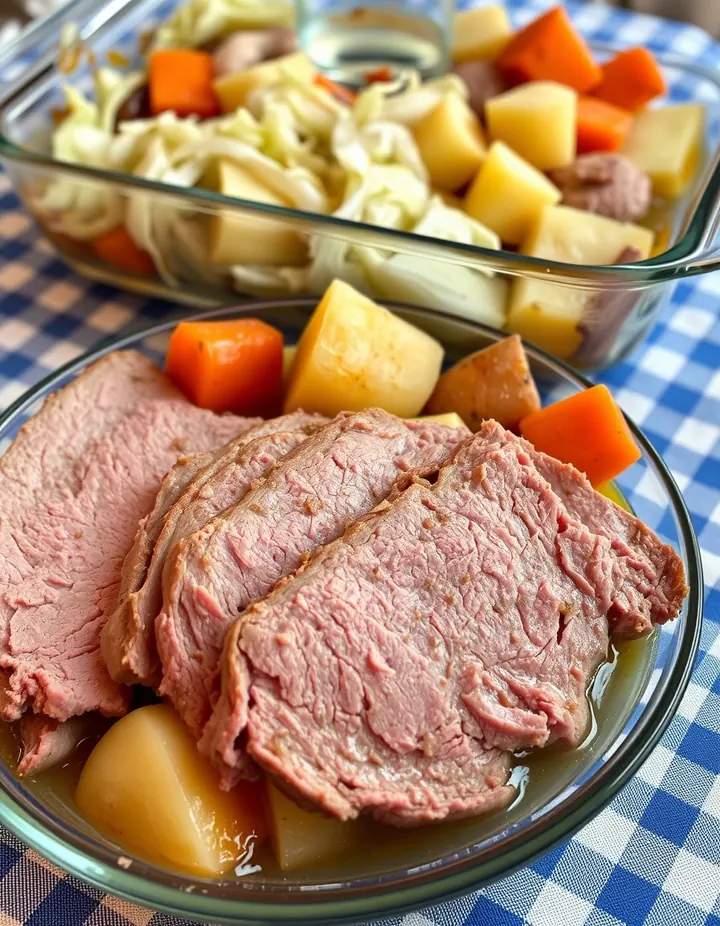 Corned Beef87 recipes
The free Flavor Lab newsletter: one surprising pairing a week and the molecular reason it works, in 60 seconds. No spam, unsubscribe anytime.
Prefer an account? Create a free account to save pairings and unlock the full chemistry.